Prayer for a New Day

Psalm 19 – Contemporary English Version

The heavens keep telling the wonders of God, and the skies declare what he has done.
Each day informs the following day; each night announce to the next.
They don’t speak a word and there is never the sound of a voice.
Yet their message reaches all the earth, and it travels around the world.
In the heavens a tent is set up for the sun.
It rises like a bridegroom and gets ready like a hero eager to run a race.
It travels all the way across the sky.
Nothing hides from its heat.
The Law of the LORD is perfect; it gives us new life.
His teachings last forever, and they give wisdom to ordinary people.
The LORD’s instruction is right; it makes our hearts glad.
His commands shine brightly, and they give us light.
Worshiping the LORD is sacred; he will always be worshiped.
All of his decisions are correct and fair.
They are worth more than the finest gold and are sweeter than honey from a honeycomb.
By your teachings, Lord, I am warned; by obeying them, I am greatly rewarded.
None of us know our faults.
Forgive me when I sin without knowing it.
Don’t let me do wrong on purpose, Lord, or let sin have control over my life.
Then I will be innocent, and not guilty of some terrible fault.
Let my words and my thoughts be pleasing to you, LORD, because you are my mighty rock and my protector.
(This new translation could definitely grow on me.) 

Verbage

I’m at a continuing education conference that is turning out to be really excellent. One of the things that happens when you get a bunch of people in the same profession together is that they will get on each other’s nerves. In clergy circles (of the same denomination), there can be little tweaks in verbage or theology that can cause eye-rolling and snarky comments like you wouldn’t believe.

(What? You thought we were all sitting around singing Kum-Ba- Yah?)

In reality, there is always truth to what is pointed out to you, it is just that it can be hard to hear it.

Two phrases that have been pointed out by people I know well (and like) are:

1) “We worship # on Sunday.” A phrase that I never use in my daily life comes up immediately with other clergy because one is quickly asked, “How many do you worship on Sunday”- meaning “How many people attend worship on Sunday?” The great pastor from Sitka Lutheran in Sitka, Alaska says, “We worship God with about this many people.”

It’s such an awesome point to make. Too often pastors and lay leaders are put in the position of being made to worship (or bow down to) statistics like attendance, activities and output. I don’t worship 50 people on Sunday. I worship God with about 50 others and we have a pretty good time.

2) The other phrase is a sneaky pronoun. “My congregation” “My building” “My people” It’s easy to become proprietary about one’s call, location and congregation. I very consciously refer to the church’s administrative assistant as just that- working for the congregation (with me), not for me. Occasionally, I know I’ve said “my building”, not because I have any designs on it, but it simply happened. I think (!) I most frequently say “our/ours”. Nevertheless, I do hear people talking about “my people”.

I think this is problematic in that we forget that we all belong to God, first and foremost. This language use first came to my attention in October through the pastor at Shishmaref Lutheran in Shishmaref, Alaska. For whom are we working? With whom are we working? The words we use matter.

Words have power.

Where Have All the Reading Materials Gone?

The NaBloPoMo prompt for today is: When was the first time you realized that your home was not like other peoples’ homes?

I recall roller skating in a friend’s garage in kindergarten. We didn’t have a garage, but that’s not the memory that sticks out in my mind. Nor is it when I think about playing with Barbies at other peoples’ homes, but not having them at home.

When I was in eighth grade, I went to spend the night with a friend and I remember her house looked totally different than either my (parents’) house or other houses I knew. There was something odd about the place that I couldn’t put my finger on for a while. Finally, we were dancing in the living room and I stopped and said, “Where are all your books?”

I was used to a house that had reading material everywhere. In the living room on shelves and by chairs. In the laundry room on the “brown table” that collected everything. By my parents’ bed. Both sets of grandparents had many books as well.

This pristine house had lovely shelves of knickknacks and picture frames, but no books that I could see.

For me, it’s just a house until I put my books all over it. Then it’s home.

If I Were A Rich Man

A couple weeks ago I went to an excellent production of Fiddler on the Roof, one of my favorite musicals. John Preece was Tevye and he was AMAZING. I was seated in the front row (a friend picked the tickets) and Preece’s expressions and emotions were mesmerizing. (I can’t find any videos that show Preece, but you can hear him here.)

Her characterization of Tevye was of a man who prayed without ceasing, in continuous give and take conversation with God. His wrestling and faith were evident in each sideways glance, tap of a mezuzah or fidget with his tzitzit.

One of the scenes that has stuck with me is the song “If I were a Rich Man”. Preece ambled around the stage and it was as though each new verse struck him as an epiphany. My wife could have servants! I would be respected! We could live in a bigger, better house!

Then the last verse came very poignantly and I heard it in a way I’ve never heard before. “If I were rich, I’d have the time that I lack to sit in the synagogue and pray. Maybe have a seat by the eastern wall. I’d sit and study the holy books with the learned men- seven hours every day! And that would be the sweetest thing of all.”

Preece’s eyes teared up and he clasped his hands to his chest and you knew he meant it. This wasn’t a promise to get something from God, but his fervent hope that he could have enough wealth to have free time to pray and study scripture.

Would I do that? Would you?

A Meditation from St. Francis of Assisi

For All Saints’ Day- a meditation on the Lord’s Prayer from St. Francis of Assisi: 

Our Father. 
Our Creator, Redeemer, Comforter and Savior.
Who art in heaven. 

You are with the angels and the saints, bathing them in your light that they may be enlightened by your love, and dwelling within them that they may be filled with your joy. You are the supreme good, the eternal good, from whom comes all goodness, and with- out whom there is no goodness.
Hallowed be your name. 

May our knowledge of you become ever clearer, that we may know the breadth of your blessings, the length of your promises, the height of your majesty, and the depth of your judgments.
Your kingdom come. 

Rule in our hearts with your grace, that we may become fit subjects for your kingdom. We desire nothing more than to dwell in your kingdom, where we can watch you on your throne, and enjoy your perfect love.
Your will be done, on earth as it is in heaven. 

May we love you with our whole heart by always thinking of you, with our whole soul by always desiring you, with our whole mind by directing all our intentions to you, and with our whole strength by spending all our energies in your service. And may we love our neighbors as ourselves, drawing them to your love, rejoicing in their good fortunes, and caring for them in their misfortunes.
Give us this day our daily bread. 

In memory and understanding and reverence of the love which our Lord Jesus Christ has for us, revealed by his sacrifice for us on the cross, we ask for the perfect bread of his body.
And forgive us our trespasses. 
We know that you forgive us, through the suffering and death of your beloved Son.
As we forgive those who trespass against us. 
Enable us to forgive perfectly and without reserve any wrong that has been committed against us. And strengthen our hearts truly to love our enemies, praying for them and striving to serve them.
And lead us not into temptation. 

Save us not only from obvious and persistent temptations, but also those that are hidden or come suddenly when our guard is lowered.
But deliver us from evil. 

Protect us from past evil, protect us against present evil, and free us from future evil.

Friday Five: Time with Friends Edition

Over at RevGalBlogPals, kathrynzj encourages us to write about five things we like to do with friends. The posts seem to take two directions- what you like to with friends in general and what you like to do with friends who visit your hometown.

In general, I like to travel, eat, read books, walk and have long, long talks with friends.

If out of town friends come to Anchorage, I like to:

1. Go to the Winner Creek trail and (maybe) do the hand tram!

This is not my video, but it’s pretty good. You can see how far you have to go and what the gorge looks like. The hike is fairly easy- a little hilly and beautiful. The tram is optional! 😉

View from the salmon deck

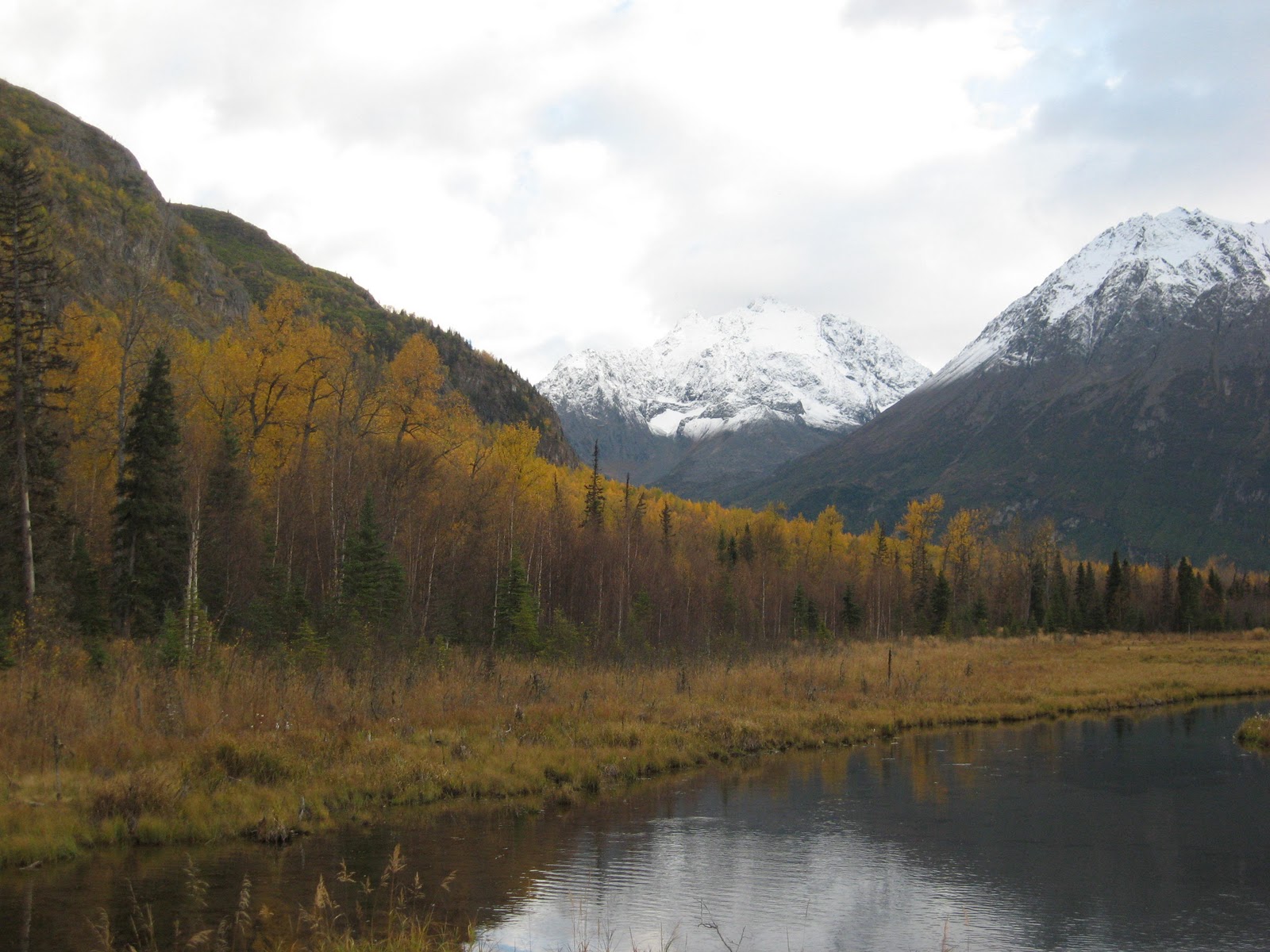
2. Visit the Eagle River Nature Center (and assorted trails). I got married here on the salmon viewing deck. It’s a great place- all supported by volunteers. The ERNC is only about eight miles from my house.

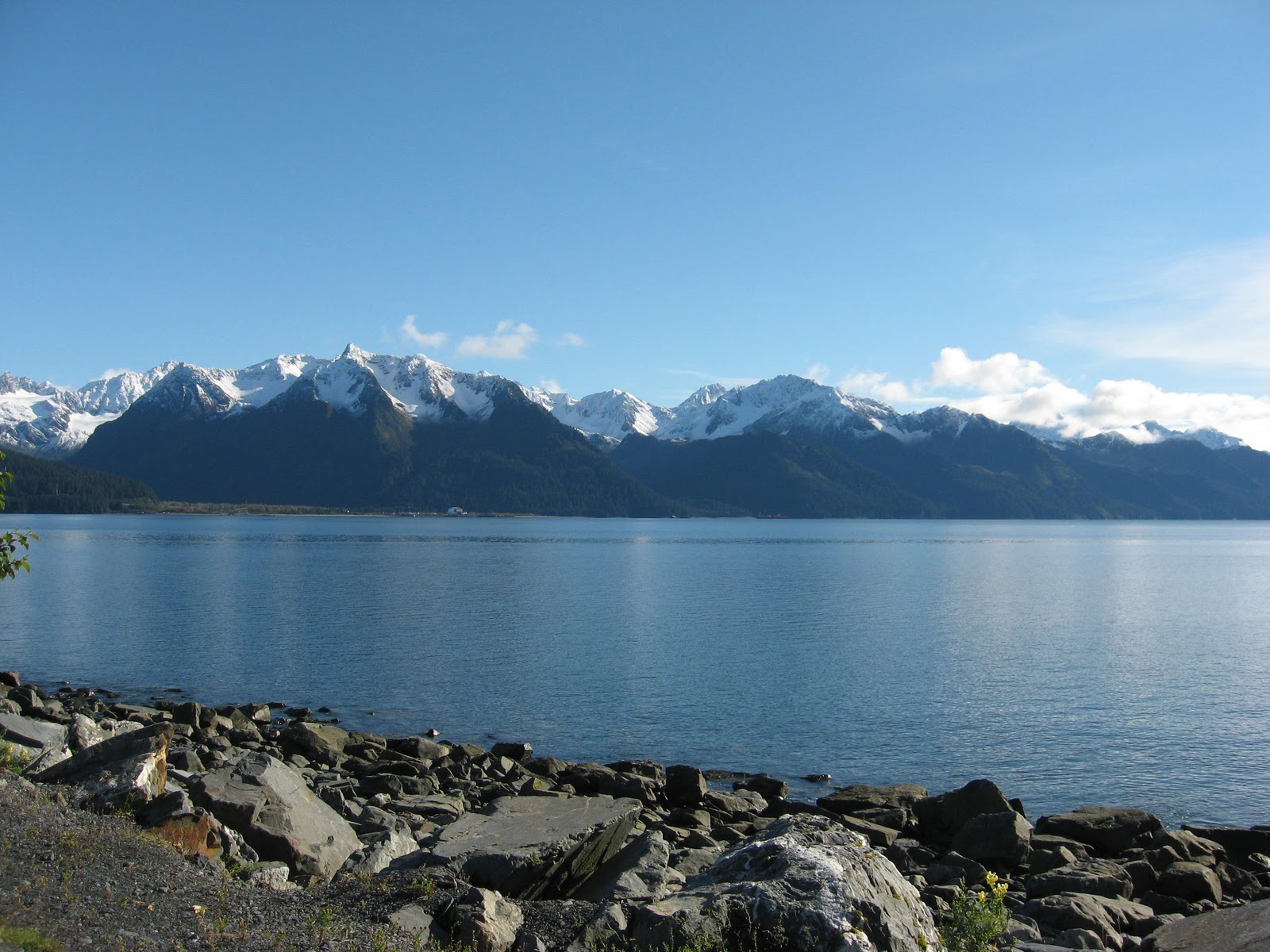
On a clear day in Seward, you can see forever.  

3. Drive to Seward and visit the Sealife Center. Seward is a really neat town. We could walk up to the face of Exit Glacier, eat salmon and halibut and relax at Sweet Darlings with handmade fudge and gelato! Mmm.

The face of Exit Glacier

4.  Drink a spiced ginger mojito at Simon and Seaforts– my favorite restaurant.

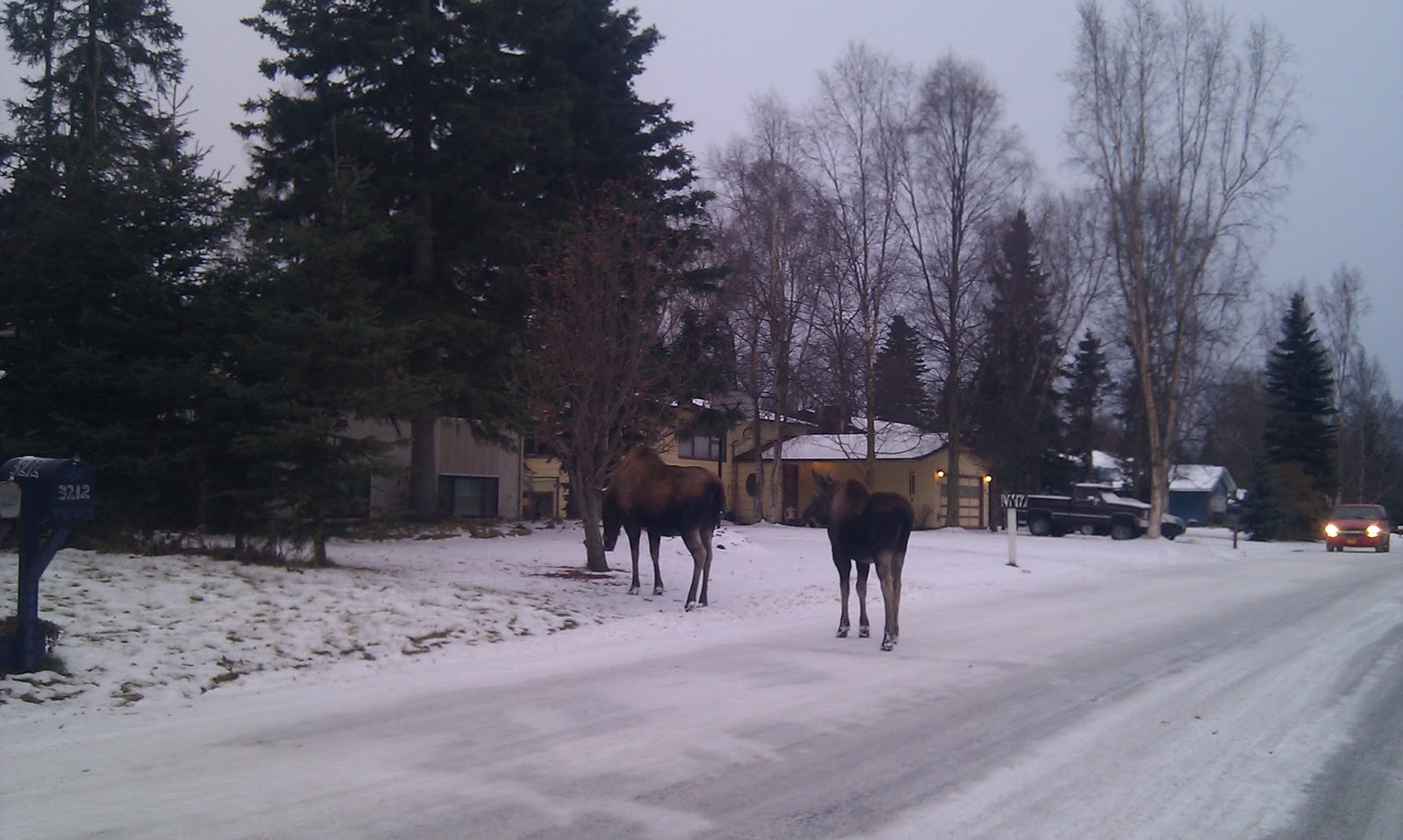
5. Walk a long way or a short way on the Coastal trail. We might see a moose. Maybe a bear. And we’d definitely go to Earthquake Park, where you can still see some of the devastation from the ’64 Earthquake.

When are you coming?

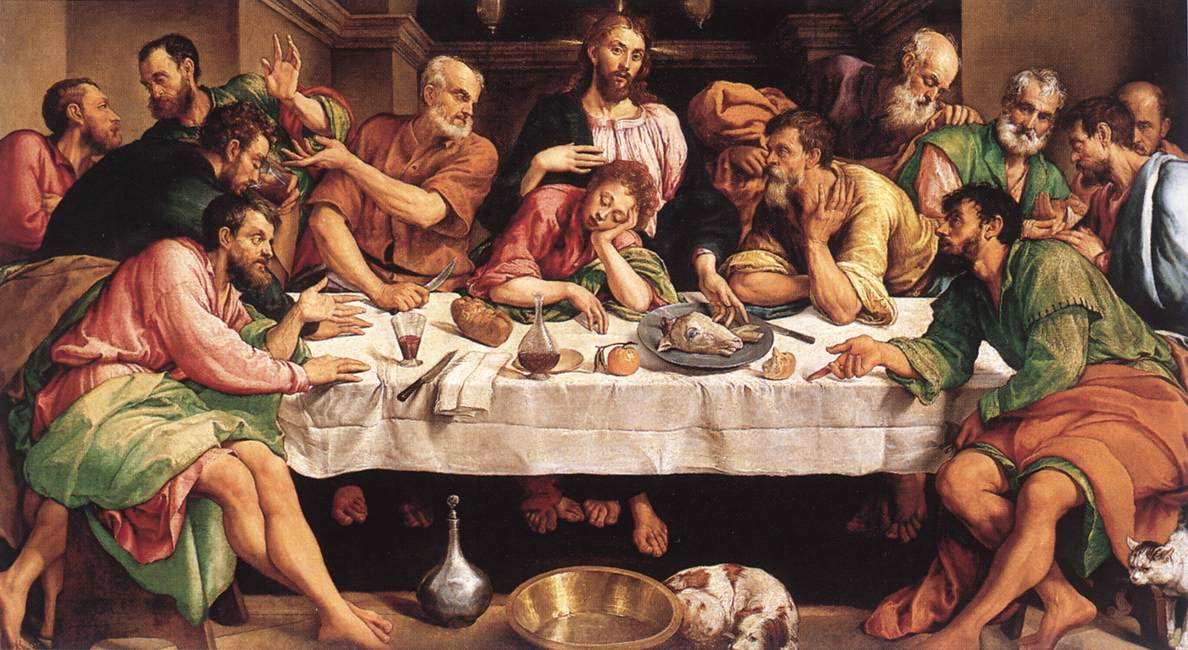
L’Ultima Cena

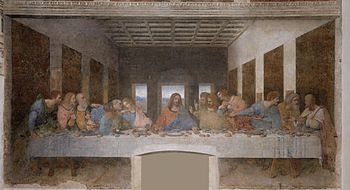
L’ultima Cena is the name of the painting you may know as “The Last Supper”. The Italian uses the phrase “ultimate” as in final, not as in awesome (though I enjoy a parsley salad and some lamb, so it may well have been awesome).

It never fails to move me to think about Jesus, gathered with those he loved, in that upper room- smoky and close- consuming their history and sanctifying their future. Powerful stuff.

On a more mundane thought, the NaBloPoMo prompt for the day is: “What would you want for your last meal?”

What would my ultimate, ultimate last meal be?

In truth, I’d prefer not to know it was my last. That would the best seasoning of all. I love food in general, so it’s hard to narrow it down to one meal. Several courses?

I’d like Greek salad with lemon and oil dressing, heavy on the lemon. Then a open-faced, hot turkey sandwich, with gravy. Mashed potatoes. Cranberry sauce. Steamed broccoli. And chocolate cream pie.

Comfort food, I guess. As I am writing this, it occurs to me that I haven’t eaten that meal in any form in recent memory. Maybe it’s just a craving.

It’s been a long time since I went more than a week without communion, but I can remember distinctly the last time I did. When I was on maternity leave, I didn’t go to church. While pastors came to visit, no one brought communion and I didn’t think to ask. I did start to crave it after a while. It wasn’t just the bread and wine, though, it was the experience of being at the table, of hearing the words, of sharing with another or others in something basic and mysterious.

In early Christianity (and still in some places), one strove to die with the elements in one’s mouth or only just there. Could there be a better last meal, a more ultimate meal? Comfort food and great company. L’ultima cena, indeed.

Death cannot destroy

For some reason, I’m thinking of both All Saints and the first law of thermodynamics today. 

Aren’t you? 
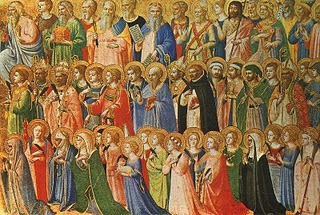
Today is the Feast of All Saints, the day upon which we celebrate the lives of the faithful who have gone on to their reward. I want to be able to say that I am celebrating, but mostly I am missing people today. My grandparents, a mentor, friends, classmates… all gone too soon to my way of thinking. 
The first law of thermodynamics is that energy can be transformed, but it cannot be created or destroyed. I could talk more about heat and energy conservation- the principles of thermodynamics- but that’s not what I want to say. 
Energy can be transformed, but it cannot be created or destroyed. 
There’s no way to talk about this without seeming a little out there, but stick with me. Scientifically, I know that our bodies decay, but spiritually I believe death is not the end God intends for us. We are transformed in ways we don’t understand after death. I can’t speculate as to how or where or even when, but I have a hard time thinking that we are fearfully and wonderfully made for a span of a few short years and that’s it. 
(Neither do I assume eternity is a like a long church service.) 
In thinking of the saints I have known, today I am pondering how God has transformed their energy. The work of their lives affected me and it touches people with whom I interact- sometimes daily. Their energy, in part, transfers to me and others who knew and loved them. 
And I think God is still using them- not just through the memories and works that remain, but in some way that is beyond our comprehension. 
In Revelation, the saints intercede for the believers who remain on earth. Perhaps they are praying for us. Maybe they are worshipping with us. Maybe they are doing work on a plane as yet beyond our understanding. 
However, on this day, I’m comforted by believing that their lives have been transformed, but not destroyed. That their energy is altered, but still powerful. That their lives continue to matter, even beyond our memories. 

Grant them eternal rest, O Lord, and let light perpetual shine upon them.