
Category Archives: Uncategorized

Not Safe for Children

Last week, I spent a lot of time thinking about how to explain the concept of the “Lamb of God” to children. It’s hard to make the leap, for kids, between Jewish heritage and Christian imagery, between a sacrificial lamb and Jesus, between the ideas of corporate and individual sin. I decided to talk about baptism again, but there were no kids for my children’s sermon.

I actually spend a lot of time thinking about to explain Bible stories to people of all ages. Since I have a background in developmental psychology, I have a very pressing awareness of the concepts a child might grasp at a given age, concepts that might be challenging, concepts that will be far over their head. Most of the children I’m around are still very concrete thinkers and Scripture is difficult to explain to concrete thinkers, unless you default to the object lesson. (Something I avoid.)

I like to joke that there are three basic story lines for young children: 1) God loves you, 2) God made everything and 3) God helps us to love other people. Lather, rinse, repeat.

But as I go through Bible stories, occasionally it’s hard to sort out what the concrete lesson could be from popular stories. The Flood? The Garden of Eden? The crucifixion? Hosea? Okay, maybe Hosea doesn’t come up that often, but I think you see my point.

Life-long church attendees say to me, “I grew up hearing those stories and I know what they mean. I don’t remember not knowing. I’m fine.” True enough, but if you’ve been in or around church for most of your life- there were people around you to absorb some of the more difficult details and walk you through them as you aged.

That’s not always the case. What happens when the 9 or 10-year-old suddenly asks, “What happened to all the people who weren’t on the ark?” What about the sensitive child who feels overwhelmed by the idea that Jesus died for her sins and who begins resisting going to church because of her confusion and guilt? What about the preschoolers who blink at the idea of the “Lamb of God”, “the sins of the world” and “mercy upon us”?

Children’s sermons and services have to be thought through very carefully, for the sake of the children, for the sake of the gospel and for the sake of Christ.

Then, of course, the question eventually becomes, “When do we deal with these things? When do we face the inadequacies of our understanding, the annoyances of translation, the bounds of time and space?” When do we want to talk about them with our children? When do we want to discuss them amongst ourselves?
World AIDS Day

I want to say that I don’t personally know anyone struggling with HIV or AIDS, but I assume I don’t. I could very well come into daily contact with someone(s) who have the disease and know it or who haven’t yet been diagnosed.

I have never forgotten the first time had a strong reaction to the reality of AIDS. In 2008, I was reading Bryce Courtenay’s book, April Fool’s Day,  about his son’s struggle with HIV/AIDS. His son was a hemophiliac and contracted the disease through blood transfusions. Bryce detailed the frustration of dealing with politicians who wanted to stop research into what became identified as AIDS as a way to punish homosexuals, who were presumed to be the only sufferers of the disease. Courtenay lays bare his own struggles, confusion and fear about his son’s struggles, as well as tangentially touching on the political issues around the diagnosis and the way his son, Damon, is treated in hospitals because of prejudices and misunderstandings about AIDS.

It’s easy to roll your eyes at World AIDS Day or even to toss off a prayer, but to keep on thinking it doesn’t affect you personally.

But if you take seriously, at all, the truth that we are all the body of Christ, then you must truly absorb the fact that some of the members are dying. That there is dis-ease in the body caused, in part, by AIDS.

It’s true that the spread of the disease is, in some cases, caused by sexual contact. But that sexual contact has innocent victims. Wives from husbands and husbands from wives. Mothers to children. Hemophiliacs and others receiving transfusions. Uninfected children who are orphaned by infected parents. The list goes on.

If we allow “condoms” to be the last word on AIDS prevention, we do a disservice to all people and to the body of Christ. We allow the disease, rampant and painful, to be cast into a sexual ghetto, wherein sufferers are getting what they deserve. On World AIDS Day, we are called to shine the light of Christ’s love into the reality of suffering due to this pandemic, to ponder our own reactions and to seek to support those missions and research facilities that are genuinely attempting to alleviate the suffering and stem the tide of this pandemic.

George W. Bush, former U.S. president, had a profound editorial in the Washington Post today. Among other comments, he urges current politicians to take the fight against AIDS to heart:

We still hope for an AIDS vaccine. In the meantime, there are millions on treatment who cannot be abandoned. And the progress in many African nations depends on the realistic hope of new patients gaining access to treatment. Why get tested if AIDS drugs are restricted to current patients? On AIDS, to stand still is to lose ground.

I am happily out of the political business. But I can offer some friendly advice to members of Congress, new and old. A thousand pressing issues come with each day. But there are only a few that you will want to talk about in retirement with your children. The continuing fight against global AIDS is something for which America will be remembered. And you will never regret the part you take.

Indeed, that message goes to all of us who follow Christ. We are called to prayerful action today (and all days). Today, let us pray for those who are suffering and for those who have yet to be diagnosed, for those who have been orphaned, widowed or lost friends and family, for those who are researching and for those who are on the frontlines of treatment, for those who wish to stop the research and for those who wish to hide from the truth. Let us pray that we, who are not suffering, will have the courage and the wisdom to bring awareness to the fight against AIDS and to use all the tools we have been given to bring a measure of healing to Christ’s own body. Amen. 

Sunday Poem: Christ’s Hands (Teresa of Avila)

Christ’s Hands

Christ has no body now on earth but yours, 
no hands but yours, 
no feet but yours. 
Yours are the eyes through which is to look out
Christ’s compassion in the world; 
Yours are the feet with which he is to go about doing good;
Yours are the hands with which he is to bless people now. 
– Teresa of Avila 
Teresa of Avila. “Christ’s Hands”. 1000 World Prayers. Marcus Braybrooke, ed. John Hunt Publishing, Ltd. Hampshire, UK, 2003. p. 147

Friday Five: Pie Edition

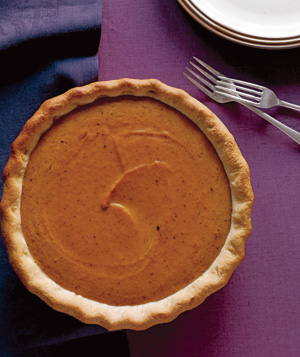
Friday Five: Pie-ola!!!

Please answer these five questions about pie:

1) Are pies an important part of a holiday meal?
Well, I love pie, but I don’t make them. Thus, pie is not a crucial feature of a holiday meal at my house. Again, though, I love pie. So, if you’re coming over, I’ll probably ask you to bring dessert. Bring pie. 
2) Men prefer pie; women prefer cake. Discuss.
I feel like this is a mood thing for me. Sometimes I want pie. Sometimes I want cake. Since I don’t make pies, that craving may typically go unfulfilled. I do like cake, though. Creamy chocolate frosting, dense poundcake, squishy angel food. Mmm, cake. 
3) Cherries–do they belong in a pie?
No, they belong in a cobbler. Except apple, I prefer all fruit in cobblers (no bottom crust, thicker top crust) to pie. And I like Apple Brown Betty better than apple pie. 
4) Meringue–if you have to choose, is it best on lemon or chocolate?
What is this “better”? It’s dessert. There might be preferences, but there is no “better”. Chocolate. 
5) In a chicken pie, what are the most compatible vegetables? Anything you don’t like to find in a chicken pie?
Peas, carrots, pearl onions. Yum. No potatoes in chicken pie and no tomatoes. 
Bonus “chicken pie” story: When I am in love with a food, I will eat it until I’m sick of it. At my college formal, I went with the roommate of a friend of mine and said friend went with my roommate. (Clear enough for you?) We went with a few other couples to dinner before the formal at a fairly nice restaurant in Raleigh, NC. The restaurant was famous for its wood-fired grill and everyone ordered fish or steak. However, I spotted artichoke hearts on something called “Fabulous Chicken Pie”. Artichoke hearts were my new food loooooove and I was thrilled to see them. The chicken pie in question, however, was about 1/3 of the cost of everyone else’s dinner. I asked if it was only for lunch and the waitress said that it was available for dinner. So I ordered Fabulous Chicken Pie, imagining a lovely chicken pot pie with my delicious artichoke hearts. As the other entrees arrived, plated and garnished within an inch of their life, the spot in front of me remained empty. Until, lastly, out came the Fabulous Chicken Pie, which turned out to be a pizza. A big pizza. With artichoke hearts, chicken and sun-dried tomatoes. Whoops. So I sat in my fancy hair-do and slinky dress and ate a pizza (or most of it) by myself while everyone else at the table at some very high-brow food. I suppose I could have been embarrassed, but those artichoke hearts were good. 🙂 To this day, I’ve never seen artichoke hearts in an actual chicken pie, though I’ve eaten them on pizza many, many more times. 

In Control

There has been a lot of buzz lately about Pope Benedict XVI and his stance on condoms. The pope has a new book out, called The Light of the World: The Pope, the Church and the Signs of the Times. The book explains the pope’s thinking on some controversial issues, but has not necessarily clarified the Roman Catholic Church’s position to the fullest extent. In a tiny section of the book, the pope mentions condom use by prostitutes to prevent the spread of HIV and AIDS. 


Even sight unseen, many hailed this as a change to Vatican policy, a sign that the RCC was relaxing its stance on birth control. However, as Vatican spokesmen have clarified in the past few days, this has nothing to do with birth control- it’s about disease prevention. Furthermore, this does not express a change in position, but a hope that a person willing to protect another person from a deadly disease might be moving along a moral path that would end with appropriate sexual behavior (i.e. abstinence until heterosexual marriage). The scope of the papal comments do not even include the use of condoms within the context of couples in which one of them is infected. 


Cardinal Raymond Burke explains the nuances of the pope’s words here

I don’t see any change in the Church’s teaching. What [the pope is] commenting on — in fact, he makes the statement very clearly that the Church does not regard the use of condoms as a real or a moral solution — but what he’s talking about in the point he makes about the male prostitute is about a certain conversion process taking place in an individual’s life. He’s simply making the comment that if a person who is given to prostitution at least considers using a condom to prevent giving the disease to another person — even though the effectiveness of this is very questionable — this could be a sign of someone who is having a certain moral awakening. But in no way does it mean that prostitution is morally acceptable, nor does it mean that the use of condoms is morally acceptable. The point the Pope is making is about a certain growth in freedom, an overcoming of an enslavement to a sexual activity that is morally repugnant [unacceptable] so that this concern to use a condom in order not to infect a sexual partner could at least be a sign of some moral awakening in the individual, which one hopes would lead the individual to understand that his activity is a trivialization of human sexuality and needs to be changed.


So, let’s be clear. The use of condoms is not a real or moral solution to sexual immorality. It does not undo the wrong of prostitution (the prostituting or the purchasing of services). This is true. 


If you notice, however, Burke does mention that the efficacy of condoms to prevent disease is questionable. Well, it’s not 100%, but it’s better then nothing. In fact, it’s a lot better than nothing. And the use of condoms to prevent the spread of disease is a step in moral progress. 


I’m still undecided, leaning toward no, however, on whether this statement represents moral progress on the part of the Vatican. It’s hard to believe that person could engage in sex for money, but refuse to use a condom because of the say so of the Holy See. Also, the condom use that desperately needs to be advocated (with regard to disease prevention) is in married couples that include an infected partner. The spread of HIV and AIDS in the global South is exponential in this regard. Presumably, the RCC feels she has already taken a firm stand against prostitution, but I’ve heard much more commentary on the evils of birth control in general than on the sex trade around the world. (Though, I will admit, I don’t look for information on the Church’s activities with regard to the sex trade, so I could be missing some amazing, significant and abundant work.) 


I’ve read several memoirs by nuns and priests (and ex-nuns and defrocked priests) who married shortly after Vatican 2, believing the advent of married clergy (if not women clergy) would be right on the heels of the sweeping reforms. It didn’t happen. And many chose their marriages over their vocations. To be fair, many didn’t have the option of returning to their vocation. 


Almost every Catholic I know has used birth control. Even those with larger families realized the blessing in reaching one’s limit and that God continues to bring fruitfulness into one’s life in many and various ways. I think those that hope the pope comments in The Light of the World might be a sign that of changes to the RCC stand on birth control are hoping in vain, just as those did who thought Vatican 2 was sign of further openness to come. 


In an interview on All Things Considered, Father Joseph Fessio gave this example to explain what Benedict meant by moral progress: 

[The pope is] not giving a scale of evil or good here. But let me give you a pretty simple example. Let’s suppose we’ve got a bunch of muggers who like to use steel pipes when they mug people. But some muggers say, gosh, you know, we don’t need to hurt them that badly to rob them. Let’s put foam pads on our pipes. Then we’ll just stun them for a while, rob them and go away. So if the pope then said, well, yes, I think that using padded pipes is actually a little step in a moral direction there, that doesn’t mean he’s justifying using padded pipes to mug people. He’s just saying, well, they did something terrible, but while they were doing that, they had a little flicker of conscience there that led them in the right direction. That may grow further, so they stop mugging people completely.


The way I see it, with their continued hardline on condom use in marriage, the Vatican might now be wrapping their pipe in foam pads for some people. But they’re still hitting people far and wide and they don’t show signs of stopping any time soon. 


A Pain in Year A

This week is a curious limbo in the church year. Even though is the week that follows Christ the King and, thus, the last full week in the church year, the Advent preparations are underway. It’s like the week between Christmas and New Year’s, you might not quite be ready to pull down that tree (and you shouldn’t until 6 January), but you’re ready to get on with the New Year and whatever that will look like.

This year, though, I experience a little hesitation. For churches that are on a lectionary cycle, meaning sets of readings prescribed through three years, this Sunday is the beginning of Year A- the year of Matthew. Matthew is not my favorite.

I adore Mark, the quick pacing, the sparse detail, abrupt beginning, the equally abrupt ending.  I savor the slow, unique parables of Luke, the inclusion of women and children, the surprise appearances of Samaritans and righteous Gentiles. I enjoy the special perspective of John- the classic verses, the unique metaphors, the secrets half-exposed for the exploring.

But Matthew… Matthew is the first gospel, not because it was written first, but because it was historically prominent in the Church. Matthew has the structure and instruction, from Jesus, about how church members should treat one another. Matthew has the beauty of the sermon on the mount, but it’s contrasted with the undertones of Jesus as the new Moses, leading the people to the final Promised Land. This would be great and gorgeous, if it didn’t come with some underlying anti-Semitic tones. (And, yes, those are in John as well, but this isn’t about John.) Some of the undertones are there in the gospel and some appear through the historical lens of interpretation that has been laid over Matthew for centuries.

In the year of Matthew, we have to deal with divorce. With the fig tree. With more specific passages about the paraousia (the Second Coming and judgment) than any other year.

In short, Matthew requires real pastoral work- wrestling for blessing and leaps of faith. And this work won’t just be on my part. It will be on the part of those who are listening. You too will have to consider where the good news is in this gospel. How Jesus Christ is revealed in, this, the church’s favorite gospel. What does it mean to say “Jew” and mean the religious Hebrews of Jesus’ day? What does it mean to break traditions, to have a Savior who brings not peace, but a sword, to see Jesus as the new Moses?

Due to the shape of the church year, it can be easy to feel like the Bible just happens to you. You show up and there are readings. But there is a shape, from anticipation to birth, from slow realization of God’s epiphany to the anger and crucifixion, from resurrection to the gifted Spirit, from the teaching and shaping of the church back to the triumphal hope in Christ’s return.

Matthew has a unique outlook on those events, an outlook that has shaped the church in years past and with which we are still shaped, by or against, today. Perhaps a good resolution for me (and maybe you) in the coming year, Year A, is to seek the good news of Jesus Christ according to Matthew and to be found by it.

Perfection

Iced in today, I never left the house. I did some work while Dear Son napped (and I napped a little myself). In the spare moments, I thought about the dinner I will be cooking on Thursday. We’re having friends over, a couple we’ve know for a long time and their 9-month old daughter.

I’ll be cooking the turkey and a few of the side dishes. Of all the things to consider when we had a baby, I didn’t realize I wouldn’t be able to the hostess with the mostess any more, at least for a while. You just can’t pull out all the stops when you are sitting down every few minutes to help put shapes in a shape sorter or to read a Sandra Boynton book. Again.

Nevertheless, I pondered a few alternate cranberry recipes today. Considered variations on mashed potatoes. Reflected on the nuances of green bean casserole, which I love. I moved the turkey from the freezer to the fridge to begin thawing. I’ve pondered brining, but my husband doesn’t like juicy turkey (I know!), so no brine this year. (Though I still strive for moist turkey.)

Even with all this thinking ahead, I’m no kitchen perfectionist. There won’t be garnishes on the side dishes. No fancy folded napkins. No hand-carved radishes, ice sculptures or centerpieces. Just family, food and fun.

The truth is, I’m not much of a perfectionist in anything. I don’t worry about the details (and, occasionally, I should) because I think they’ll either get taken care of or they won’t matter.

I’ve read historical accounts of buildings, tapestries, gardens, etc. that would have a small flaw worked in because no one creates anything perfect except for God. Yeah, allowing one flaw is not my problem.

In the end, though, if I can’t be gracious and forgiving to myself, what am I gaining? It’s not that I’m a slob with a microwaved turkey and Potato Buds. No, I’ll be roasting, mashing, sampling and attempting to plate attractively. But I do think what will matter most is the company, the memories, the thanksgiving. And that will be perfect through the work of the Spirit, regardless of my cooking.

Sunday Prayer: Psalm 103 (NRSV)

Bless the Lord, O my soul, and all that is within me, bless his holy name.
Bless the Lord, O my soul, and do not forget all his benefits—
who forgives all your iniquity, who heals all your diseases,
who redeems your life from the Pit, who crowns you with steadfast love and mercy,
who satisfies you with good as long as you live so that your youth is renewed like the eagle’s.
The Lord works vindication and justice for all who are oppressed.
He made known his ways to Moses, his acts to the people of Israel.
The Lord is merciful and gracious, slow to anger and abounding in steadfast love.
He will not always accuse, nor will he keep his anger forever.
He does not deal with us according to our sins, nor repay us according to our iniquities.
For as the heavens are high above the earth, so great is his steadfast love toward those who fear him;
as far as the east is from the west, so far he removes our transgressions from us.
As a father has compassion for his children, so the Lord has compassion for those who fear him.
For he knows how we were made; he remembers that we are dust.
As for mortals, their days are like grass; they flourish like a flower of the field;
for the wind passes over it, and it is gone, and its place knows it no more.
But the steadfast love of the Lord is from everlasting to everlasting on those who fear him, and his righteousness to children’s children,
to those who keep his covenant and remember to do his commandments.
The Lord has established his throne in the heavens, and his kingdom rules over all.
Bless the Lord, O you his angels, you mighty ones who do his bidding, obedient to his spoken word.
Bless the Lord, all his hosts, his ministers that do his will.
Bless the Lord, all his works, in all places of his dominion. Bless the Lord, O my soul.