Category Archives: Uncategorized

Sisterhood, Rah-rah-rah!

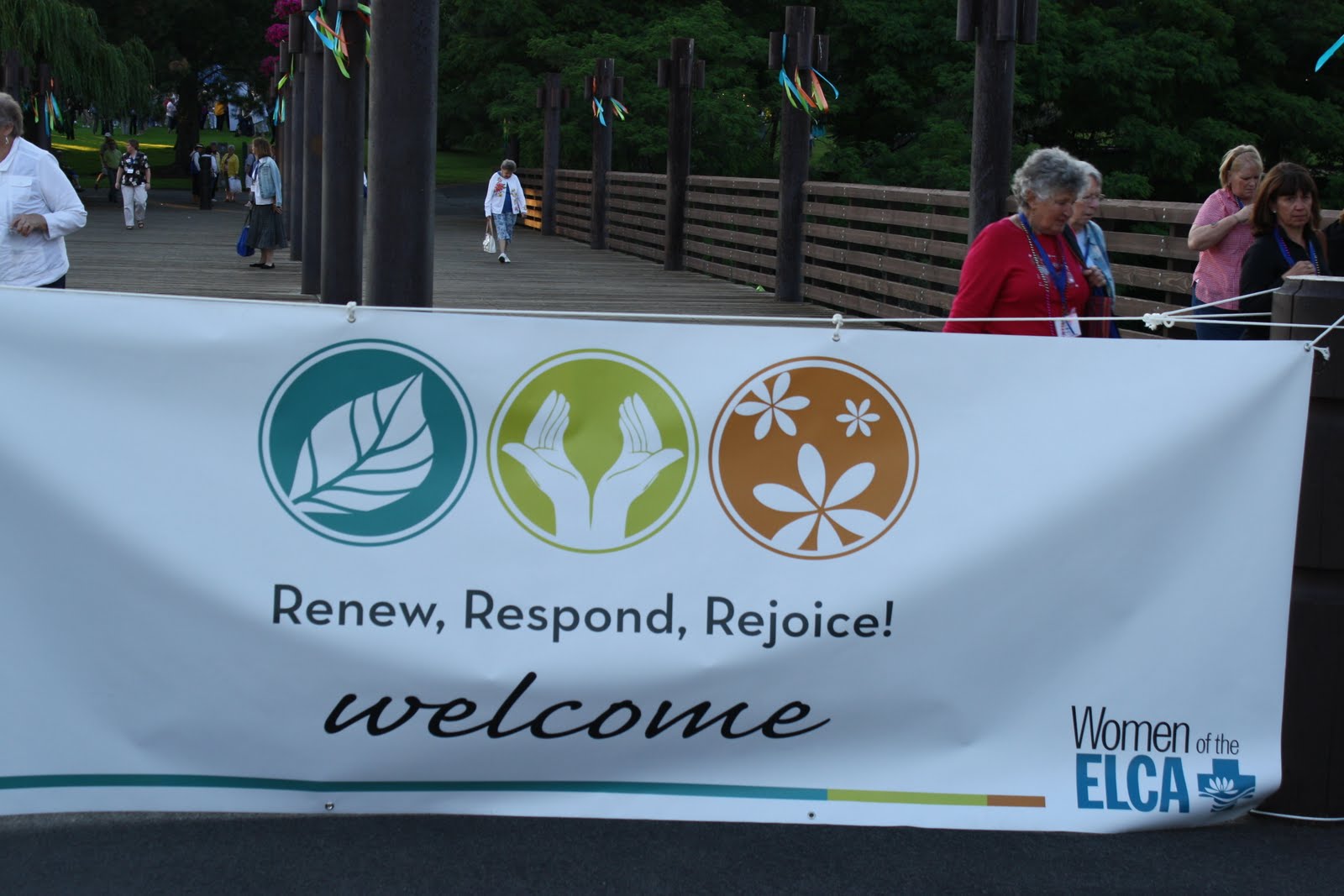
So I was a little bit of a foot-dragger when it came to signing up for the Women of the ELCA‘s Triennial gathering this year. If I went it was my first time, I didn’t have any friends going, it IS pricey and I was doing other traveling for continuing education. The theme and the speakers looked great, but I grumbled and mumbled. Finally, a bold woman in my congregation made an offer I couldn’t refuse (she paid for a hotel room!) and I signed up to come.

Once I decided to come, I was still apprehensive. Like many introverts with verbal processing needs, I can easily be mistaken for a person who welcomes a crowd, but that’s not me. Large groups of people make me nervous and large groups where I only know a handful of the people involved are the worst.

Nevertheless, I signed up for everything. To do the Run, Walk, Roll. For the Young Women’s Chocolate Lounge. Joining in means, for me, joining in!
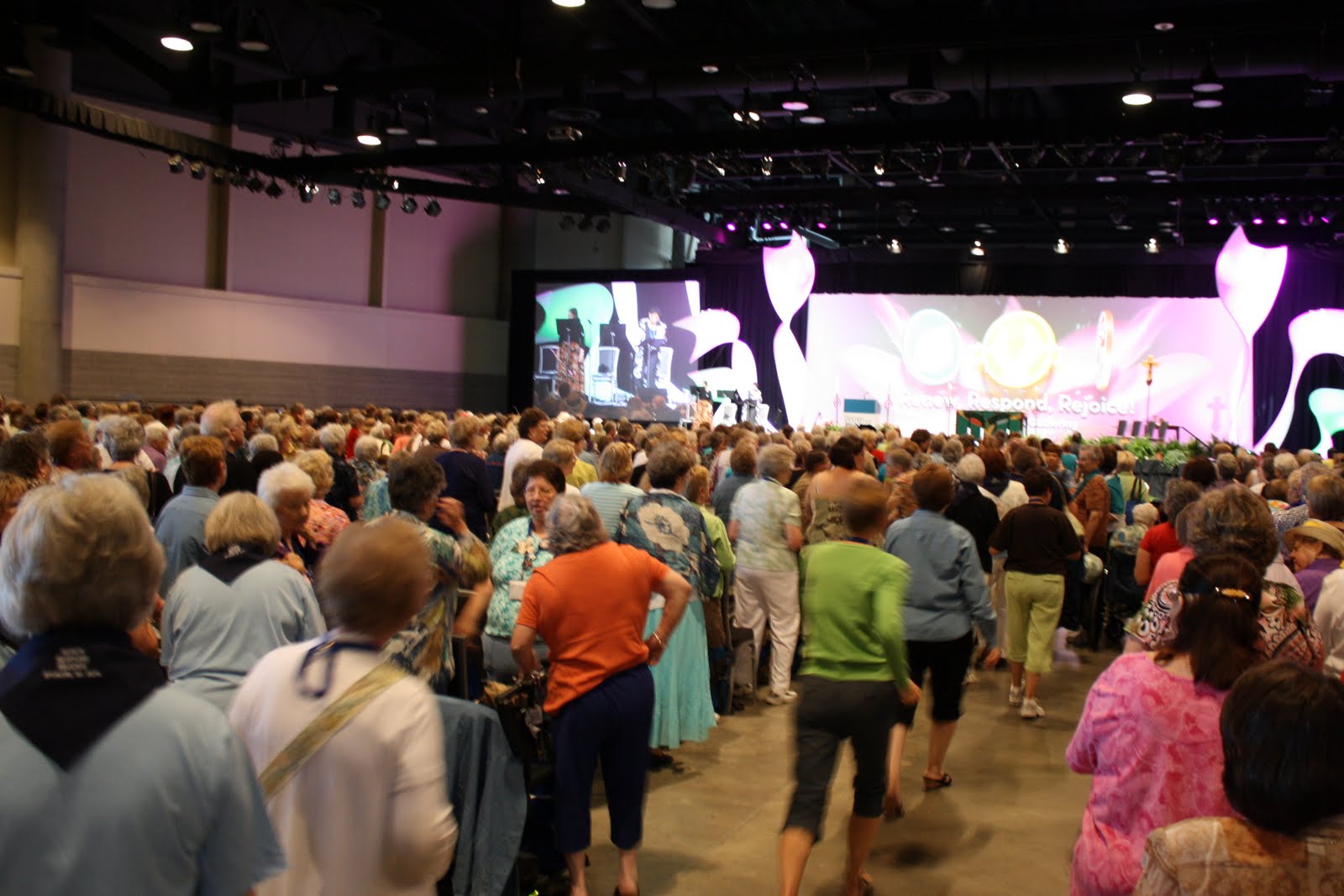
It’s a little early, yet, to reflect on all that this will come to mean, but this is a very powerful event. There are more than 2000 women here and you can hear us roaring. I had a hard time taking a non-blurry picture in worship this morning because people were dancing! Dancing, I say! Women of the ELCA!

I went on a garden tour yesterday and there were women from the Virgin Islands, the Dakotas, New York, Texas and all over (including, me, that event’s AK representative). We saw the gorgeous gardens of Manito Park in Spokane. Highly recommended! While I was considered the “baby” on the tour, I was heartened by the number of women who wanted to know about Alaska, about my congregation and about me.

I could fill pages about this morning’s speaker, Nora Gallagher, who told us that making a map of our faith (sharing our stories) is important because the coastline we describe can help someone else navigate life’s sometimes treacherous shores and shoals. I could tell you about the amazing mini-workshop I attended on how to make a picture prayer journal and the incredible leader, Esther Prabhakar, who showed us the one she’s been keeping for years. I could share my enthusiasm for the future of Joy Ranch in South Dakota, an all-accessible camp, or bubble over in anticipation of what we will hear tomorrow from Leymah Gbowee.

However I don’t think any of those things are the most amazing part of being here. The  strength of this Gathering is the truth of the power that is gathered. The hum and beat of the wings of the Spirit is practically audible as 2000 women commune together, in body, spirit and Christ. When the Real Presence seems like the Perceived Absence, here in this place- new light IS streaming.

Women have the greatest potential to hurt one another. We know exactly the power we have to wound with words, with what is left unsaid, with a glance. Yet we also know what heals, what helps, what builds hope. In the Gathering, the best comes out.

Sitting at a table together, one woman spoke to me about how much she admired Sarah Palin. Rather than launching into my criticisms, I calmly said how my opinion of her had changed and what I felt about her current circumstances. We were calm and smiling, gentle and caring. United by more than this minor division of opinion. And it IS minor.

There is power here to received and to be taken. The power to go back, loins girded, to the tasks we know are waiting. This is not Transfiguration. We are not seeing something new. What is being revealed to us is the truth about the power we have as women in the church, in this day, in our places, with Christ for us, with us, in us and through us. We are not being transformed so much as being brought into deeper understanding, through fellowship and teaching, about what is already true about us and those around us.

The theme is Renew, Respond, Rejoice- part of what we are experiencing here. We have a little time away, a few service opportunities and great communion, within worship and without. We are also receiving a challenge, a challenge of accountability and action. We are being challenged as half the church, half the creation, half of God’s kingdom builders to move into claiming and acclaiming the promises God has made.
Will we go back enlivened by the possibilities of God’s work in our world or will we go back to our regular to-do lists and busy-ness? The former takes focus, the latter takes nothing. The power will go out with us, available to those with whom we share these stories and mission opportunities. The Spirit goes out with us.

We are not alone. It’s not even just me and the Spirit. The power of this Gathering is the sense of “us” that is created. The understanding of the “WE” in WELCA. God is here. We are here. Renewing, responding and rejoicing… nothing can separate us.


Born of the Spirit

Day of Pentecost, Year A
12 June 2011
Numbers 11:24-30; 1 Corinthians 12:3b-12; John 7:37-39a
            How many of you expected to hear a different reading today? What did you think you would hear? (The story of tongues of fire on the disciples and the different languages) Can it still be Pentecost without that reading from Acts 2?
            Certainly it can. Pentecost means 50 days. It was already a Jewish festival, the Festival of Weeks (Shavuot), where people celebrated fifty days from the original Passover event in Egypt and the gift of the Torah- bringing the Hebrew people together as a nation to serve God. For us, it is still 50 days since Easter, since Jesus passed over from death into life and brought the reality of new life with him. We celebrate those fifty Easter days and come together for this festival and celebrate a new understanding of the Holy Spirit, drawing people together and inspiring them in God’s service.  
            I have some problems with that reading from Acts. The first is we sometimes forget that the Spirit existed before that day in Jerusalem. The shy member of the Trinity was present at the formation of creation with the Word and the Creator. The Holy Spirit came in a new way on that Pentecost Day, though, bringing the comfort and the challenge of the risen and ascended Christ.
            My second issue is that when we hear the traditional Pentecost text, it is easy to think of the gift of the Spirit as one of power and triumph and a gift that comes to God’s chosen few. The Spirit is a gift that comes to God’s chosen, but not to a few. The Spirit blows when and where it will, on whom God chooses. We don’t control it. We can’t control it.
            What the Spirit brings to each of us is an awareness of God in our lives. Sometimes, God’s peace. Sometimes, God’s challenge. The Holy Spirit alongside us and sets us on fire… for what?
            It’s my birthday today. We tend to treat the years that end in 5s and 0s as big deals. And they are. They are milestones of achievement for our lives. But does our age define us- the actual numbers? We are defined by how we use our days and our years. What we do with the moments and the gifts we have.
            In thirty years, I have some accomplishments and some failures, some wasted time and some well-used moments, some dark valleys and some glorious peaks. What’s going to happen to me from this point forward? I have no idea. I have some plans and hopes. I also know that God may well have some plans and ours might not line up in quite the same direction. But on this day, I celebrate the life I have and what I have known.
            And that’s not a story that’s totally about me. It’s about my family and this church, about my son and my husband, where I grew up and where I am now.
            In the same way, the Pentecost story, the coming of the Spirit, is a story that’s not about us. It’s not about you or me, specifically. On the birthday of the church, we celebrate God. God’s gifts, God’s plans, God’s wind and fire. We celebrate the life we have in God and the life to which we are called. We celebrate the gifts that are among us and we anticipate, with joy, the time that is to come.
            When I say the “time that is to come”, I don’t mean whatever happens after this life, I mean the time that is to come this afternoon, tomorrow and next week. The time for which God is preparing us right now, feeding us right now, calling us to… right now.
            The danger of our Pentecost celebration is that we can make a big deal about the Spirit coming and forget that the Spirit has been with us all along. We don’t skip from Pentecost to Pentecost anymore than we do from birthday to birthday. The road to 31 started on the same day that the road to 30 did for me. Just so with the church, the road to our future with God began at the cross and goes out, with the help of the Spirit, to where God leads.
            And we don’t simply receive our gifts for ministry on this day of the year. We receiving gifts for faithful living, through the Spirit, every day of our lives. Each of us has much less in common with Moses and the seventy elders than we do with Eldad and Medad. We weren’t in the tent of seeing Jesus in person, we weren’t in the tent of hearing Peter or Paul preach, we are outside the original camp. And yet the Spirit has been promised and delivered to us as well. Each of us has gifts from God to use for the sake of the world and God’s kin-dom.
            On our own birthdays, we tend to make assessment of our lives and make promises about the year to come, God willing that we see it to completion. So we should be on this birthday of the church. We have received the gift of the Spirit, who helps us to believe and go out with the risen Christ- on this day and all days.            
We should look at one another, at the feast that is before us, at the possibilities of learning through both failure and success. We should look at those things and we should feel on fire, not just the disciples or the elders or the priests, but each and every one of us should feel renewed and reborn and ready.
Happy birth day to you!
            Amen.

The Preaching of Trifolium

There must be a sermon in clover.
Interlocking roots proselytizing grass and garden,
Sheltering the lowest- spiders and earthworms,
Within the sweetness of ordinary time.

Evangelistic in children’s bouquets-
Converting hard hearts with tiny flowers
Squeezed with dandelions in small hands.

The undulating blanket crusades a landscape
Bringing singular trinitarian understanding with
Fear and adoration.

Consumed as solid and liquid, both cud and tea
There is no negative theology in clover-
No understanding through absentia.
Lucky is not the same as necessary.

Alter Call

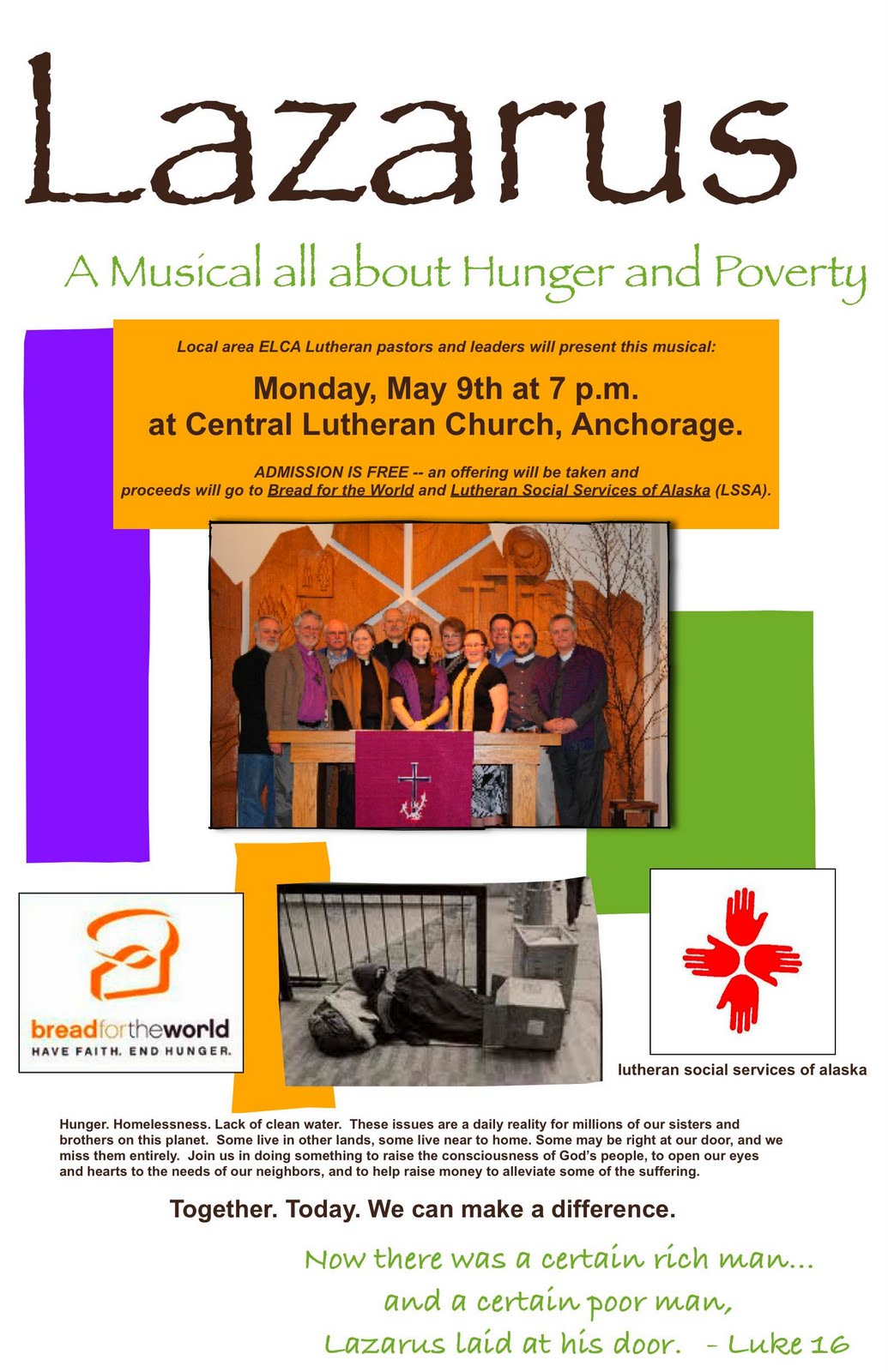
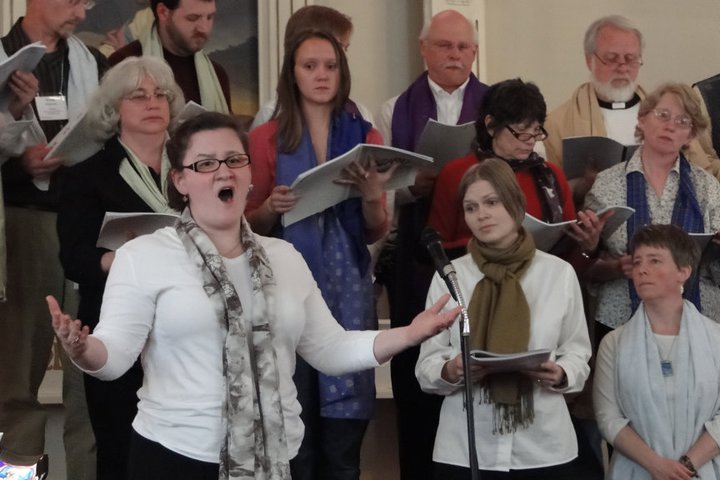
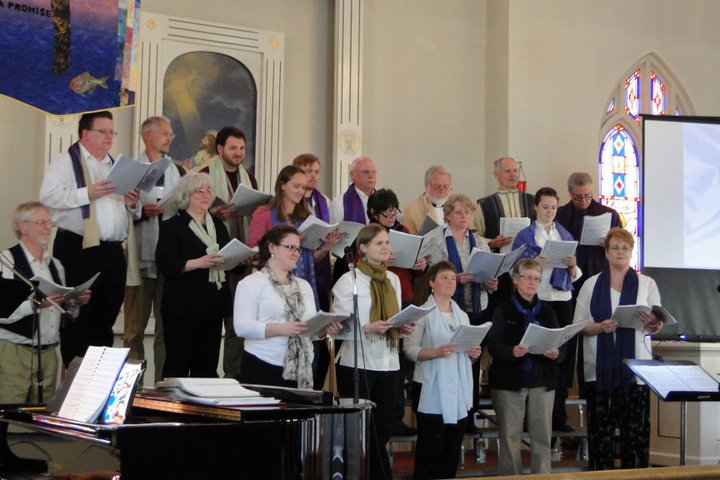
The Lutheran clergy (and a few friends) in my area recently embarked on a musical journey together. We decided to call attention to hunger issues in Alaska and around the world by staging a musical originally produced by Bread for the World. Lazarus: A Musical Call to End Hunger is based loosely on the biblical stories of Lazarus and the Rich Man. In the case of the musical, the Rich Man is offered a chance to change his ways and shares his vision of all eating and being satisfied.

The experience of singing with colleagues was both riotous in entertainment and frustration. We practiced throughout the Easter season when we were only slightly busy. (Ha!) Also, we’re all used to being in charge, but when we’re together, we eschew authority and, um, we don’t always respect it. (Just ask our bishop.) One of our accompanist’s noted, “I can’t really believe pastors are like this.” I said, “It’s our off-time. We’re like kindergartners who were taken to the zoo and then promised ice cream.”

Anyway, we performed during our Synod Assembly in Ketchikan, AK and then last night at Central Lutheran in Anchorage. We sang for about forty minutes and then the executive director of Lutheran Social Services of Alaska spoke about the food needs in Alaska, specifically Anchorage. Another pastor spoke about how to contact our senators and Congressman (we only have 1). He specifically talked about the difference between charity and effective and efficient use of dollars and legislation to change situations.

I leaned over to another pastor and said, “This is practically a revival. We have a big crowd who got charged up by the singing and now they’re hearing the preaching.” She replied, “Yes, then we’ll have an altar call.”

I said, “No, this is the altar call. It’s an alter call.” The end result of revivals in the Baptist tradition is, usually, to see how many people will come to Christ or rededicate their lives. This is well and good, but the way that plays out isn’t in what we say, but how we live.

In the end, faith-filled living either reflects Jesus’ love for neighbors in ways large and small or it doesn’t. Occasionally, we need revivals, mainly for the call to pay attention, to listen for God’s voice, to participate in how God desires to use us.

Jesus’ words that the poor are always among us aren’t an assurance that we can care for them tomorrow. Those words are our “alter call”.

Photo credits: Pastor Stan Berntson, MV Christian

A Litany for Mother’s Day

A: Loving God, You are everywhere the Lord and Giver of life. We praise You for the gift of mothers through whom You give us life.
C: We thank You for their willingness to nurture life, for their trust in You to guide them through the labor of childbirth, the uncertainties of youth, the letting go of young adulthood.
A: We thank You for all those women, who did not give us birth, but through whom You give us abundant life:
C: We thank You for school teachers, aunts, grandmothers, sisters, pastors, elders, Sunday School teachers, supervisors, co-workers, neighbors and friends who share wisdom.
A: We ask Your tender mercies on all those whose mothers now sing with the heavenly chorus, especially for those whose tears are not yet dry.
C: Grant them Your peace, which passes all our understanding.
A: We ask Your comforting presence on those mothers who have buried sons and daughters.
C: Comfort them with the knowledge of their children in Your eternal care.
A: We pray for those who are alienated from their mothers by harsh words, distance, and misunderstanding.
                                                                                           
C:  Grant both mothers and children the grace to forgive and to love again.
A: We pray for mothers whose children met a violent death.
C:   Deliver them from anguish.
A: We pray for mothers who work but cannot earn enough to feed and clothe and educate their children.
C: Wake us to our responsibility for common welfare.
A:  We pray for mothers who are sick or dying.
C: Raise up caregivers for their children, even from among us.
A: We pray for mothers who are guardians for grandchildren whose parents are unable or unwilling to care.
C:  Sustain them with the courage and strength and patience for the living of each day.
A:  We pray for mothers whose children face limitations of intelligence, emotional, or physical ability.
C: Deliver them from frustration and hopelessness. Grant them wisdom to encourage each child’s full potential with You.
A: We pray for mothers whose sons and daughters defend our way of life as firefighters, officers of the law, and in the military.
C:  Grant them confidence in Your presence with their children in life, in death, and in life beyond death.
A:  Compassionate God, be with all women on this day.
C:  Let Your light shine on them and be gracious to them. Bless them with peace and joy now and forever. Amen. 

Starting Over (Sermon for Easter 2)

Easter 2
1 May 2011

John 20:19-31
When trying to get an infant to sleep, sometimes they’re almost there and then they wake themselves up or you sneeze or a cold breeze comes by. It can be a small thing and then they’re awake again and crying and tired. And you have to start all over again, trying to get them to calm down and go back to sleep.
Parenthood, I’m finding, is often a few steps forward and then one step back. Thinking you’ve moved into a new stage, but then finding vestiges or remnants of the one you left behind.
I’m telling [the parents of the baptized] this, along with the rest of you, because that’s partially where the disciples are in today’s gospel. They’ve already heard about the resurrection from Mary Magdalene and yet they remain locked in the upper room, afraid of people who might still be angry with Jesus or about his missing body (not realizing the truth of the resurrection).
They’re afraid and their fear has fenced them into a place where they cannot act. All of them, except for one. Thomas is somewhere else during the first part of today’s story. Hearing the news of the resurrection, he’s out and about. Now he could be out because he believes that Jesus has risen. Or he could be out because he thinks it’s all over and he has to move on with his life.
When we see Thomas earlier in the gospel, he leads the rest of disciples in following Jesus back into dangerous territory, back to where they know people are plotting to kill him. Thomas encourages the other disciples by saying, “Come, let us go and die with him.”
Thomas is both pessimist and man of action. He intends to go with Jesus wherever he goes, but now that Jesus is gone, he isn’t sure what to do. However, he knows hiding isn’t the answer.
Jesus appears, then, first to the disciples in hiding and then to all of them, including Thomas. We look at how Jesus treats both the hiding disciples and Thomas, noting that he does not condemn their fear or Thomas’s unbelieving, but gives them peace and the gift of the Holy Spirit.
He gives them a chance to start over. Neither their fear nor unbelief puts them out of the range of where Jesus can get to them. They get a chance to begin again, to live into what they know to be true- that death is defeated and that the resurrected Christ meets them where they are, walks with them, offers tactile opportunities, brings them peace.
They get a chance to start over. That’s why baptism is so central for us today. It gives us a starting point, a place to go back to when we are afraid, struggling in belief or in need of a restart. We can go back to the place where we received the name, “Child of God”, where we welcomed into the family of God, where we received the sign of the cross- that marks us forever.
This is the gift we will watch [the baptized] receive from God today and that we will promise to help him understand, the gift of a new beginning and a location for starting over at any point in his life.
This is why we are encouraged to remember our baptisms daily, each time we wash our hands, each time we make the sign of the cross. We are able to start over, again and again. Not to take advantage of grace, but to take part in grace. What we are offered through baptism is the same consolation and encouragement that Jesus gives to his disciples in that room, all of them including Thomas. We receive the gift of the Holy Spirit and the understanding that there is nothing that we can do and nowhere we can go that can keep us from the love of God. With those gifts comes the peace that passes all understanding, the strength to forgive and accept forgiveness, the hope in the truth of the resurrection and God with us.
The font is our home base, the stump of our family tree, our orienting location. It gives us the coordinates for home, with water and God’s promise, a home to which we can always return. A place from which we can always, always start over.
Amen. 

Surprise Greetings (Easter Sermon)

Easter Sunday- Late Service
24 April 2011
Matthew 28:1-10
Alleluia! Christ is risen!
He is risen indeed! Alleluia!
            When I was prepping for this sermon, each time I read today’s gospel, it made me laugh. Not the part about the earthquake or the angel or the guards who appear dead. No giggling at the women who dare to show up when the disciples are still afraid and in hiding. Jesus makes me laugh.
            How does Matthew record Jesus’ words to the two Marys? They are hurrying back to find the disciples and “suddenly Jesus met them and said, ‘Greetings.’” I come from a family that loved to scare one another. Nothing was better than hiding, even if you had to wait 20 minutes in an uncomfortable position, so that you could jump out and get a squeal from a sibling or, even better, my dad. You can ask my husband sometime if I’ve outgrown that.
            Anyway, that’s what I imagine Jesus doing. Seeing the Marys coming down the road, hiding behind a tree and then jumping out, “Greetings!” The way Matthew records “greetings” is with a word that is sometimes translated as “Hail” or “Rejoice”. It’s basically like our “hello”, which we vary by saying “Hi” or “What’s up” or “Yo”.
            When I’m not picturing Jesus jumping out from behind a tree, I imagine him leaning against a tree, waiting for the women to pass him. They do a double-take and he says, “Fancy meeting you here.” Okay, maybe he wouldn’t say that, but more gently in a Savior-like way greet them with a “Good morning.” Anything has to be better than “Greetings”, which sounds a little science-fiction-y.
            Anyway, however it is that Jesus greets them, the women fall down and grab his feet. Do you know why? Ghosts don’t have feet. They’re stunned, falling down in front of him and grabbing a part of him that will have to be solid and real, if he’s actually alive.
            When they are assured and Jesus has pulled them back to their feet, I imagine they can’t stop talking. They can’t stop praising God and worshipping Jesus. Many of the questions they had no longer matter now that the answer is standing in front of them. And so Jesus reiterates what the angel told them, “Do not be afraid. Go and tell the disciples that I am waiting for them in Galilee.”
            Except Jesus doesn’t say disciples like the angel did, he says, “Tell my brothers.” Where are the disciples right now? They are hiding somewhere, afraid for their own lives. We haven’t seen most of them since the Garden of Gethsemane. If the two women show up and announce to them that Jesus is alive and waiting for them in Galilee and they’re hiding in Jerusalem… what kind of image do you think will be in their heads?
            They will be afraid that he’s waiting, impatiently, for them in Galilee, tapping his foot and looking at a sundial, wondering why he bothered with such a group of doubters. So Jesus gives the Marys a specific message with specific words, “Do not be afraid; go and tell my brothers to go to Galilee; there they will see me.”
            By using the word “brothers”, Jesus makes it clear that not only are there no hard feelings, but that everything is different now. In the light of the resurrection, the relationship has changed from Teacher and followers to a new family of God. The Marys are not only carrying the message of resurrection, they are carrying a message of reconciliation, a message of healing and hope, of renewed possibility.
            And I think that’s part of what most of us need to hear on this Easter Sunday. It is easy to come and feel guilty about many things in your life. I’m not saying that because I think you should feel guilty. I’m saying it because my experience is that many of you do feel guilty both for things you can change and for things that you can’t.
            And when you are overcome with that kind of darkness, even around the edges. It’s easy to have the same picture of Jesus in your head as the disciples. One of a man- tapping his foot, eyebrow cocked, waiting for you to show up and get it right.
            But that’s not who Jesus is. Not before the resurrection and certainly not after. The good news of Easter is that we are now called brothers and sisters, children of God, Easter people. The reality of resurrection in our lives is that Jesus meets on every road we walk. Sometimes he jumps out at us and we are surprised. Sometimes we don’t remember passing him until we think back. Sometimes we realize that he’s been keeping us company all along.
            The power of darkness could not keep him in the tomb. The mistakes and worry of the disciples could not prevent the resurrection. Our questions, our doubts, our wrestling, cannot stop the risen Christ from acting in, around and through us. Easter people hold fast to the truth that a light shines in the darkness and the darkness does not, cannot, will not overcome it.
            There is no frustrated, foot-tapping Jesus. There is only the risen Son of God, arms open, welcoming, calling softly and tenderly,  “Greetings. Do not be afraid. Go and tell my brothers and sisters that I am waiting for them.” Brothers and sisters, you have a home. You have a family.
            Surprise.
Greetings.
Alleluia! Christ is risen.
He is risen indeed. Alleluia. 

Technicolor Easter (Early Service Reflection)

Easter Sunday
24 April 2011
Matthew 28:1-10
            One of the things that are striking about how Matthew writes about that first Easter morning is how his account involves so many of the senses. The women going to the tomb feel an earthquake. They see an angel, that the stone has been moved and that the guards are laid out on the ground, stunned. They hear a message from the angel. They touch Jesus’ feet when they see him. I’m not sure what they could smell, probably not bacon cooking. Maybe they smelled the damp earth of early morning or the soft dust stirred up by the earth moving.
            This account of the resurrection is dynamic, active and all encompassing. Nothing is left behind. I think that’s intentional because God knows us well. God knows that in the face of good news, many of us will try to look behind the scenes and say, “How did this happen? How does this work?” We’re a little bit known, we early people to the tomb, for looking a gift horse in the mouth.
            We don’t get a how, though. However the resurrection happened, whatever occurred in the tomb in the hours between sealing and unsealing, we don’t know. And that’s intentional.
            Instead, we hear about the earthquake, a reminder like the star of Bethlehem that all creation is affected by the action of God on earth and in the earth. The earthquake can stir up for us thoughts about recent events in Japan, New Zealand and Haiti. As Alaskans, it can bring up memories or stories we’ve hear about the Good Friday quake of 1964. We know those destructive moments are harsh and horrible and we wrestle with why they are a part of this life. Yet, the presence of the earthquake on Easter morning reminds us that there is nothing on earth that is powerful enough to overcome God and God’s desire for life.
            We see the flowers, the lilies and carnations- symbols of life bursting forth. The flowers not only remind us of life and resurrection, they bring to mind vulnerability. The blossom is the soft part of the flower- housing the future seeds, the future of the plant. In order to survive, the plant must produce those seeds and then bloom so that the seeds can go forth. It has to risk showing softness. So God did in Jesus- take a chance on becoming like us, vulnerable and exposed. Yet, the bloom of Christ could not and cannot be crushed- it sends forth seeds of good news, of life and grace, even to this day.
            We hear Alleluias, trumpets and organs. We hear voices stretching to reach notes and hands keeping time against chairs. We know that what our words cannot express, God’s gift in music will. The joy of resurrection soars beyond your ability to sing and mine and unites us with people around the world and the chorus of saints who have gone before. No rock need sing for us on this day… Alleluia.
            We taste the promise of God and the promise of togetherness in the Holy meal at the Lord’s Table. The experience is both mundane and overwhelming. Christ is alive. Christ is present. He is risen!
            There is no understanding the how of resurrection on this day or any other. All we have is a feast for the senses that reminds of Who and Why. Who? God in Jesus. Why? Because God so loved the world.
            Love wins. That’s all we can know. All the rest is experience. Feel it. Taste it. See it. Hear it. Share it.
            This is the day that the Lord has made. Let us rejoice and be glad in it.
Amen. 

A Reflection on the Third Word

Third Word: John 19:26-27
When Jesus saw his mother and the disciple whom he loved standing beside her, he said to his mother, “Woman, here is your son.” Then he said to the disciple, “Here is your mother.” And from that hour the disciple took her into his own home.
            Jesus’ mother makes one other appearance in John. Do you remember where it is? At the wedding in Cana. She takes note that the wine is running out and alerts Jesus to that fact. When Jesus says to her, “Woman, my hour has not yet come.” She turns away from him and tells the servants, “Do whatever he tells you.”
            In John’s gospel, Jesus’ mother not only already knows what Jesus can do; she knows to expect him to do it. For the Evangelist, the author of the Fourth Gospel, Jesus’ mother believes in the capability of God in Jesus before Jesus does himself. She represents a group of people, of believers, who grasped the truth of the Living Word as John puts it in the Gospel prologue: “And the Word became flesh and lived among us, and we have seen his glory, the glory as of a father’s only son, full of grace and truth… No one has ever seen God. It is God the only Son, who is close to the Father’s heart, who has made him known.”
            Jesus’ mother believes in him from the beginning of his ministry and here she is at what seems like the end. She’s standing there on Golgotha, next to the disciple whom Jesus loved. Who is that? Didn’t Jesus love all of his disciples? It could be the author of this gospel or someone else, unknown to us. The disciple who Jesus loved represents, in a way, those who came to know Jesus and God’s power in him later in the day.
            The identity of the disciple isn’t known and doesn’t matter. What we need to know are two things. First, that Jesus loved this disciple and second, that the disciple took Jesus’ mother into his own home in that very hour.
            The disciple didn’t wait until after the resurrection or when there was more time or when things were a little more stable financially. There was no equivocation to Jesus about the hardship of caring for his mother, questions about reimbursement or reward or making a plan to move her somewhere else few years. And from that hour the disciple took her into his own home.
            From that hour, people who believed in Jesus were a new kind of family, drawn together in faith and given instruction through the commandment to love one another.
            From that hour, the family tree of God had bloodlines that were not defined by DNA, but by Christ and the cross.
            From that hour, relationships were reshaped, neither through conventional birth nor the will of the flesh or the will of man, but through God.
            From that hour, Jesus’ family had a different look. God’s family had a different look. From that hour, there was a call to new, different and real kind of relational existence within people of faith with one another and with all creation. From that hour, divisions were put to death and the possibility of a new kind of wholeness was created.
            Yet, do we allow that wholeness to live? Do we look at one another and say, “You are my sister and my brother, my mother and my father, my son and my daughter, because Christ has made it so?” Do we allow the biggest thing the world has ever known to unite us or do we allow the smallest things we can find divide us?
            And, so we find ourselves, again, at the foot of the cross, together, and wondering how we can make our relationship with one another work beyond this moment?
            At this stage, we who are also beloved disciples should be like Jesus’ mother, already aware of the power of God in him and trusting in his capabilities in our lives and in the world. Are we ready to participate in God’s re-ordering of our relationships through the cross? Are you prepared to be changed in this hour through the power and promise of what has already been done for you?
            When Jesus’ mother told the servants to do whatever he said, he told them to go fill the stone jars with water and then to take a taste to the steward. How long did it take for the water to turn into wine?
            We don’t know. It just happened. And the same thing happened on the cross. “You will take care of her and she of you.” “You will take care of him and he of you.” It just happened. From that hour.
            And here’s the thing. We can taste the wine and marvel at the goodness of the Lord together, in the new kind of relationship into which we have been invited and called. Or we can stand at the foot of the cross and wait for more instructions. How long will that take?
            It just happened. It just happened. It just happened.
When Jesus saw his mother and the disciple whom he loved standing beside her, he said to his mother, “Woman, here is your son.” Then he said to the disciple, “Here is your mother.” And from that hour the disciple took her into his own home.
Amen.