Category Archives: Uncategorized

Hats On for Her

I spent a lot of time today looking for a hat.

My grandmother died very suddenly yesterday (8/28). She was shopping for groceries and may have had a massive stroke. She was dead almost instantly. In addition to the shock and sadness of the event, I was overwhelmed today with trying to make arrangements to get to the East Coast for her funeral on Sunday; hence, the search for a hat.

My grandmother was Jewish and it’s appropriate for women to wear hats in the synagogue as a part of sign of respect. It’s also okay not to wear one, but I had a mission. My grandmother really liked nice clothes. She appreciated being dressed up and she appreciated the effort others would put into looking nice. She was very accomplished woman- a Ph.D, three children, owned a home… She always, always said what she thought- especially about what one was wearing. A hat, for me, was necessary for this funeral.

Despite our religious differences, my grandmother was very supportive of my becoming a pastor. It might have made her happier if I was a rabbi, but she never said that to me. She was hoping to coming to my installation at the end of September, but she couldn’t and she sent me this message the day before she died:

Dear Julia,
I hadn’t checked the calendar before I spoke with you. There is a conflict with dates of your installation. Rosh Hashana begins at sundown on Monday, September 29 and I plan to attend services at a synagogue. In addition I have some preparations to make for myself to get ready. Perhaps this is a doubly auspicious occasion: your beginning your first ministry of your own church at the beginning of the Jewish New Year.
My best to you always.
Love,
Grandma

When I read those words, they are her blessing to me- that she’s proud of what I’m doing and she’s happy for me. I’ll miss her, but I want to make her proud even now. So I found a hat. Hats on for you, Grandma.

Rest in peace.

Labor Day Friday Five

Recently I joined a ring of blogging women (and men!) pastors; the link is here. Every Friday, they post five themed questions- just to stir the pot and get us thinking a little bit differently. I’m going to try to participate, so here goes…

Here in the USA we are celebrating the last fling of the good ol’ summertime. It is Labor Day weekend, and families are camping, playing in the park, swimming, grilling hotdogs in the backyard, visiting amusement parks and zoos and historical sites and outdoor concerts and whatever else they can find to help them extend summer’s sun and play just a little bit longer.

It is supposed to also be a celebration of the working man and woman, the backbone of the American economy, the “salt-of-the-earth neices and nephews of Uncle Sam. With apologies to those in other countries, this is a Friday Five about LABOR. All can play. Put down that hammer, that spoon, that rolling pin, that rake, that pen, that commentary, that lexicon, and let’s have some fun.

1. Tell us about the worst job you ever had.
I think the worst job I ever had also taught me more about people and caring for them- than anything else I’ve ever experienced. I worked as a cashier in a grocery store for two years (whole years!) between the ages of 16 and 18. That is a nasty, hot, tiring, thankless job. But I also felt like I became part of the lives of a few people. They asked how school was and gave me cards when I left the store to go to college. Yes, I did have a lady threaten to spit on me, but I also had a man offer to marry me. Watching and observing people in a grocery store was probably the best pre-pastor training I could have gotten.

2. Tell us about the best job you ever had.
Well, I love being a pastor. I did, however, adore working for
KNOM. I worked for two years there as the “deputy news director”. Between traveling to villages, interviewing everyone (!) and always being in the know, through that job I learned that I loved being in Alaska and that I would try almost anything once. Talking to people through my work there made me sure that I did want to be a pastor.

3. Tell us what you would do if you could do absolutely anything (employment related) with no financial or other restrictions.
Probably still be a pastor. But I would (**secret dream alert**) love to write an etiquette advice column, a la Miss Manners. I do love the questions she gets and the snarkiness with which she answers.
I would really love to be a writer, but I need the discipline of having other things to do in order to appreciate and fully use writing time.


4. Did you get a break from labor this summer? If so, what was it and if not, what are you gonna do about it?
I did take a break this summer… between the end of my internship and the start of my new position. It wasn’t as restful or as productive as it should have been or as I planned, but that’s what happens sometimes.


5. What will change regarding your work as summer morphs into fall? Are you anticipating or dreading?
I’m full of anticipation about the work that lies ahead of me and the people with whom I will be working.

Restlessness

Today we observe the feast day of St. Augustine. A theologian of the early church, Augustine’s life has been much chronicled- from his early debauchery to his later dedication. Much of the significant theology of the Reformation stemmed from the writings of Augustine as well.

I have a quote from him that I have been pondering for many months:
“Thou madest me for thyself and my heart is restless until it repose in thee.”

There are several things I like about this: the acknowledgment of God as creator and of creation and created beings having a purpose for God. I also appreciate the description of restlessness.

Our hearts do wander. We wrestle over our control issues, our agonies and ecstasies, and our hopes and fears. We repeatedly forget that we are not God and the One who is (God) waits in everlasting welcome for us.

As we struggle, we look for the equilibrium, the balance, between accepting God’s mystery and seeking out further answers. Somewhere in there, when we relinquish control, or the idea of control, we find ourselves held in God’s arms, a place that is our home, a place in which we were created to reside.

We Confess (Sermon 8/24)

Below is my introductory sermon for the Lutheran Church of Hope. I prayed about this sermon for a long time and thought about it for many weeks before I managed to get one word on paper. It was interesting to deliver it to people I don’t know well and who don’t know me well yet either and yet we are all living together in hope for what is to come.

Isaiah 51:1-6; Psalm 138; Romans 12:1-8; Matthew 16:13-20

We Confess

It was very difficult to know where to begin with this sermon. There are things you want to know about me and things I want to know about you. We are looking at one another and wondering what the next two years will bring. There are lots of new phrases that we keep hearing and keep using over and over. In our newsletters, in our conversations, all around us we hear about “change” and about “transition”.

Though these two things often happen near one another, change and transition are two very different phenomena. Change means something different than before; change almost means the facts. A new pastor, a new church building, the loss of old members, the addition of new members- all these things are changes. In a way, change is not something we can do anything about.

Transition, on the other hand, is. Transition is how we respond to change. How do we re-envision ourselves in this new place, but with all our history behind us? How will we move in new ways in accordance with the changes all around us? We cannot resist change for it simply keeps happening. We can try to resist transition, but then we struggle with our mission and our identity. In essence, we end up asking ourselves, “Who do we say that we are?”

That question is in the forefront of all of our minds today. I wonder who you will say that I am- a good pastor, a strong leader, a helpful teacher, a caring partner in ministry, no good at anything. You are wondering who I will say that you are- a welcoming congregation, a blessing to Anchorage and the Alaska Synod, dedicated servants of God, a group of people with a lot happening.

We get into a little trouble there, though. When we are focused on one another and how we want to be seen, we almost forget the One on whom we are to be focused, the One who has called us by name, the One who says who we are, the One who has brought us all to this place.

In our gospel story, Jesus asks his disciples what they are hearing about him and what has been said about prophets who have gone before. Yet Jesus is asking for more than gossip and even looking for more than mere knowledge. He wants to know what these men see in their hearts- what has been revealed to them through their encounters with God in the flesh. Simon Peter, who always has to be the first one out of the boat, the first one into the crowd and the first one to answer, says, “You are the Messiah, the Son of the living God.”

In my mind’s eye, I can see Peter- a man with rough hands from handling nets, scruffy, wind-blown hair and always covered in dust from walking. I can see him blurting out his response to Jesus before he has even thought about it. “Who do you say that I am?”

“You are the Messiah, the Son of the living God.” Peter would have to be as surprised as anyone, except Jesus, to hear those words come out of his mouth. For a good Jewish man, those words would have been nothing, but blasphemy. This man, the Messiah? Son of the living God?

God’s Spirit had been stirred up in Peter- making him as stubborn in faith in Christ as he was in fishing and in friendship. That stubborn faith would make him stick to what he believed to be true. He would stick to his confession of Christ as Lord through his betrayal of that Lord, through the death of that Lord and through the resurrection. He would continue to blurt out the grace of God’s presence in Jesus through the rocky start of the early, early church. He would stubbornly cling to that faith all the way into Rome where he was mostly likely killed for that stubbornness.

From the time Peter uttered his confession of faith change was upon him. He suddenly became aware of a time when he would not be following Jesus in person, but would be leading others to the knowledge of Christ. Peter had to transition from being a physical disciple, actually walking behind Jesus, to being a spiritual disciple, remaining behind after Jesus returns to the Father and instructing others in the faith.

A confession of faith is a scary, scary thing. In those moments in our lives, when we are pressed to say what we believe- we can be as surprised as Peter when the words come out of our mouth. We say yes to things we never thought we would try. Certainly I will go to the Lutheran Church of Hope and work alongside them in mission. Certainly we will accept Pastor Julia to guide us as we look toward our future as a congregation.

But those statements are not our confessions. Those are actions that stem our confession, with Peter, that Jesus is the Messiah, the Son of the Living God. We confess that God washes us, God feeds us and God has brought us together. We believe that all have sinned and fallen short of the glory of God, but through Jesus’ life, death and resurrection that glory reaches us still.

In this gospel passage, through the words of Jesus, we also hear God’s confession of faith in us. That God will use us, just as He used Peter, to be the rocks on which the church is built. We have been given the authority to bring God’s saving word to one another and to the world. And in Paul’s letter to the Romans, we learn that not only do we have the authority, but we have the gifts to do it as well.

In God’s church, in this room, we have gifts of prophecy, teaching, ministering, generosity, diligence, patience and cheerfulness. You’ve seen some of these gifts in the past and we only look to see more of them in the future.

Despite all the changes, God is not making a new church here. The Church, the body of Christ, is already here and God is at work in this body. In this time of transition, we look for the Holy Spirit to transform us, the body of Christ, by renewing our minds and our ministry, so that we may discern the will of God.

And we confess before one another and before God that we have not always gotten things right and we are guaranteed to mess up again in the future. If Peter did it, we can expect no less from ourselves. But we are also called to remind one another, through confessing our faith, that Jesus is our Messiah, the Son of the living God.

Can we confess that? (Amen)

We confess that Christ is present to us and in us today.

Can we confess that?

We believe that God has brought us to this place and given us the authority and the gifts to use for many kinds of ministry.

Can we confess that?

We are a people called to live in hope, live with hope and live for Hope as disciples of Christ- our risen Lord.

Can we confess that?

We believe that we can do all things, included transition through a time of change, through Christ who strengthens us.

Can we confess that?

The words of Isaiah call us to look to the rock from which we were hewn.
We are in this place today because of the faithful rocks who gave their time and talent to see the Lutheran Church of Hope grow. And, even more than that, we are here today because of Christ, our Solid Rock, whose life, death and resurrection made it possible that we can live in the promise of unity with God.

Believing this in our hearts, we will go forward from here together, trusting in God’s grace and goodness that a renewed work has begun in us that will continue until the day Christ comes again.

Can we confess that?
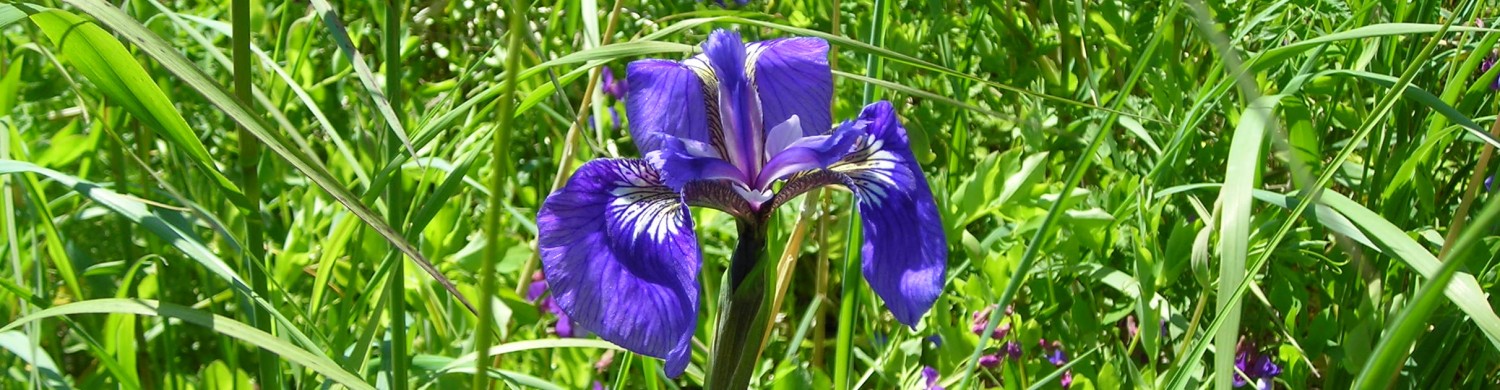
Blue Ribbons

I spent a lot of time last night getting plants and baked goods ready to drive to the State Fair grounds today. It was only last year that I discovered the joy of entering the competitions and seeing what would happen. One of my plants won a blue ribbon last year and I’ve spent the months since pointing that plant out to visitors as my “blue ribbon plant”.

Yet I have many more plants that are healthy and in great shape. Some of them will never be blue ribbon winners at the fair because they are too large for entry into the container-grown plant competitions. Aren’t they as good (or maybe better) than my blue ribbon plant?

Sometimes we categorize people in the same way. Everyone knows a few “blue ribbon people”- who are so creative, smart, caring or whatever that their achievements have received lots of external recognition. We often discuss their accomplishments as a way of covering what we perceive to be our own shortcomings. Maybe our school wasn’t as prestigious, our office as well-located, our promotion as advantageous, our invention as helpful… so we tag along with our “blue ribbon” friends and acquaintances.

This kind of behavior makes us forget what we are good at, all that we have accomplished and the fact that our opinions, assistance and feelings matter just as much. Martin Luther said the woman who scrubbed the floor in front of the altar is as important to God (and God’s work!) as the priest who presides behind the altar. All have sinned and fallen short of the glory of God. (Rom. 3:23) However, God’s grace extends equally to all people- blue ribbons, honorable mentions and no mentions.

So remember that today… There’s a joke that asks what one calls the person graduating last in ranking out of medical school… “Doctor.”

What does one call the last person in any situation? “Beloved by God.”

Renewal

This blog has been quiet for a few weeks as I have had a little “vacation” and made a transition from my internship at Gloria Dei to the position as pastor at the Lutheran Church of Hope. Of course, it’s not all about me- both those congregations have had their own transitions as well.

One of the things I have been remembering lately is a passage from Revelation (that book in the back of the Bible): “And the one seated on the throne said, ‘See, I am making all things new… I am the Alpha and the Omega, the beginning and the end. To the thirsty I will give water as a gift from the spring of the water of life…” (21:5a, 6)

Now I could exegete, or take apart, those verses all day, but mostly I’ve been considering the renewal aspect God’s work. Though our lives have many beginnings and endings, in reality- all things are flowing from the good and creative work of our God. The ministry of congregations does not start over with a new pastor or a new program, but continues- making new and bolder use of the gifts of the Spirit.

In the fall, it always seems like so much is changing, but, look, God does not promise to make all new things, but to make all things new. God’s work renewing and revitalizing work is at hand and within us, even now!

Let us give thanks for that work and pray for the understanding and awareness so that we may participate more fully in it.

Speaking of participation, a blog is a public work. If you read this, I’d like to hear from you. You may comment publicly or anonymously though the comment section below each post or you can email me at lcohpastor@alaska.net and I’ll write back to you. Feel free also to email with suggestions of things you’d like me to comment on or share with other readers!

The Road Less Traveled (Good-bye sermon to Gloria Dei)

Jeremiah 28:5-9; Romans 6:12-23; Matthew 10:40-42

Lately, with so many changes in my life, I’ve had this Robert Frost poem in my mind:

Two roads diverged in a yellow wood,
And sorry I could not travel both
And be one traveler, long I stood
And looked down one as far as I could
To where it bent in the undergrowth;

Then took the other, as just as fair,
And having perhaps the better claim,
Because it was grassy and wanted wear;
Though as for that the passing there
Had worn them really about the same,

And both that morning equally lay
In leaves no step had trodden black.
Oh, I kept the first for another day!
Yet knowing how way leads on to way,
I doubted if I should ever come back.

I shall be telling this with a sigh
Somewhere ages and ages hence;
Two roads diverged in a wood, and I-
I took the one less traveled by,
And that has made all the difference.

This poem isn’t my way of telling you that I am going down a road and will not see you again- not at all. I believe it’s the result of pondering the roads that I’ve been on that lead me to this moment here with you. And the roads you’ve all been on yourselves- life roads you might have chosen or some on which you’ve simply found yourselves.

Different paths are discussed in our readings as well. The prophet Jeremiah tells the prophet Hananiah, “I do hope that all you have prophesied comes true- that the children of Israel are returned from Babylon, but what’s the likelihood of that? You know how people are and how frequently they turn to war and struggle against one another. A prophet who speaks of peace coming- that would be something different and when it happens, we will know that the Lord really did send that prophet.”

Later that year, the prophet Hananiah died because he offered words to the people that were not from God. Jeremiah continued to preach, reminding Israel to turn their hearts to the Lord in hope and devotion despite all that had befallen them- a prophetic road less traveled indeed and a lonely one for Jeremiah.

Jeremiah was hoping for and looking toward a prophet who speak words of peace- not just a laying down of arms, but offer a vision of true reconciliation among people. Jeremiah looked for one who could unite people in the joy and blessed assurance of God’s favor.

Biblical prophecy is not merely prediction, as in: “This will happen next Tuesday”- but is more about showing promises and a pathway. The prophets of the Old Testament continuously remind people of God’s love for them and of God’s desire to be close to them. It wasn’t that God wasn’t walking with God’s people down their road, but that they were still looking for pillars of cloud and fire and missing the still, small voice. A voice saying, “I made you and I love you. You are mine.”

When the Prince of Peace came to earth, carrying that message from God, but in human form- he was a little hard to recognize, even if Jeremiah had still been around to see him, and the King of Prophets’ message even harder to swallow. However, through his life, death and resurrection- he cleared a new road in which sin would no longer have dominion in our lives, but grace, God’s grace would surround us as a constant, traveling companion. So there are steps that precede us down every path we travel.

This is where things get a little tough for contemporary believers, especially Lutherans. We want to have control, to make the choice when the roads diverge and to know that we have chosen the road of faith, of goodness, of God. But we know in our hearts, through the power of the Spirit, that we have all we have because God has chosen us, chosen for us, chosen to be with us.

The theme at camp this week was God’s justice, persistent, equal-minded, forgiving and unexpected- accomplishing all things for us and through us. We do not work for it. Since we are saved by grace through faith, what is our work? What kinds of prophets can we be? What is it that we have to do? But there is work to be done. There are people who need welcoming, who need healing, who simply need cool water. They are why we are here and why we all have the gifts we have, individually and as a congregation.

We are called to the work of recognizing Christ in all those around us. We have the work of forgiving one another, of supporting each other, of loving our neighbors. We are called to the work of proclaiming the peace of Christ- through our daily deeds and words. We are called to baptize and teach our children, instructing them in faith. And some of us have gifts to be leaders in the church and some of us have the gifts of shaping leaders in the church.

That kind of work is often the road less traveled, work without major recognition or even great return. Yet it is on this path that we most often meet God- in the hungry, the hurting and the hopeless. In these tasks, God the Spirit works in us and through us. And though we strive to the best of our very human ability, we know that we fall short. Yet in our weakness, we are given the hope of Christ’s strength and forgiveness and the promise that we cannot be separated from the love of God.

Believing that Christ walks with us in our daily lives and work when the path is wide, smooth and light and when it is narrow, rocky and dark helps us to do walk the paths that appear before us and to make the choices we all must make.

In good times and in bad, we get up day after day and we are amazed at how quickly time passes. As for me, as our paths diverge, knowing that Christ’s love shines in and through this place and that you will continue to seek and grow in that love, having shared this year with and been shaped by the saints of this church… I do believe in the power of Spirit, the forgiveness of sins through Christ and the work of God in the world.

I believe because I have experienced these things with and through you. And in the life of faith, that makes all the difference.

Room to grow

One of the things that seems hardest to accept about our faith is that we can do nothing to earn it or achieve it on our own. In a world that focuses on success and accomplishment, it seems difficult to understand that one of our greatest attributes, faith, is purely a gift and we can’t do anything about it.

In relationship to this theological idea, I’ve been considering the images of the vine and the branches (John 15:5) and the potter and the clay (Isaiah 64:8).

Branches do not grow on their own; they are fed from the main vine and they grow reaching out to other branches and into the larger world. We understand God to be the giver of all gifts- feeding us from the Word and at the table (the Lord’s Supper). The Spirit intercedes in our prayers and is our advocate in all places. God, our Maker, Redeemer and Sustainer is the vine that gives us life and sends us spiraling out beyond our roots to new places where we can flourish. No more can we do this on our own, without God, than could the branches grow without the vine.

So too clay is nothing but formless and void of meaning without a potter, Someone to give shape and meaning to the medium. A potter gives direction to the clay: depth, height and purpose. God gives us gifts, physical, mental and spiritual, so that we might understand the depth, height and purpose of God’s love for us and for all of creation. We cannot do that for ourselves, independent of God, anymore than the clay can make it happen of its own accord.

I hope that thinking of God as the Source of your being and all beings today will bring an interesting thought to your mind. I’m grateful for the way I see my life being shaped and for how I’ve been brought to new growth with all the other vines around me.

Exercise your prayer muscle

I’ve recently begun to make more of an effort to get into shape. This has meant going to the gym every day. I have to make myself go every day so that it will become a habit for me.

When I don’t go to the gym, it’s not really that I don’t want to work out because it’s uncomfortable or I don’t like exercise. It’s really because I get bored and get distracted. I have an extremely long attention span, but staying on the treadmill for 30 minutes requires concentration on something in which I’m not that interested.

As I walking and running today, I was thinking about prayer and how many people talk about their difficulty in praying consistently. I think prayer is an exercise. It’s an exercise of our spiritual muscle, our faith muscles. If you haven’t been doing it for a while, it’s hard. Yet we all (well, most of us) want to be like those prayer warriors we know- the spiritual equivalent of marathon runners.

The thing is, you have to start slow. A short prayer before a meal. A prayer of thanks before bed. A meditation on your day during your shower. Eventually your endurance will build and you will be able to concentrate in longer stretches and listen, as well as speak, to God.

And not everyone can be a marathon runner. Luther reminds us that we can begin our day with “Dear God” and say “amen” just before falling asleep- everything in the middle, that is- our whole day, is our prayer.

Sing On (Sermon 6/1/2008)

Deuteronomy 11:18-21, 26-28; Romans 1:16-17, 3:22b-28; Matthew 7:21-29

My life flows on in endless song; above earth’s lamentation,
I catch the sweet, though far-off hymn that hails a new creation
No storm can shake my in-most calm while to that Rock I’m clinging.
Since Christ is Lord of heaven and earth, how can I keep from singing?

This song has been endlessly flowing through my head this week and I’ve had a somewhat difficult time figuring out why. It’s my “stress” hymn: the song I sing when I feel under a great deal of pressure. I sang it every day when my husband was in Iraq. I sang it when the septic tank overflowed and I was mopping the floor. And I guess I am little stressed now about leaving you and wondering what comes after my time at Gloria Dei.

But what could be stressful about the Bible passages we heard today? Our texts seem to be focused on teaching your children about faith, understanding the meaning of the gospel and realizing there are distractions and detractors all around- who interfere with that message of faith and of the gospel.

Those messages seem clear, but there are complications. What does the writer of Deuteronomy mean by the blessing and the curse? How we will be cursed if we follow gods we have not known? How can we follow them if we don’t know them?

And what about Paul’s phrase in the letter to the Romans: “For in [the gospel] the righteousness of God is revealed through faith for faith…” What does that mean? And we understand that a person is justified by faith apart from work prescribed by the law, but what about those commands we just heard to talk about our faith from sunrise to sunset- with a blessing and curse depending on them.

Then there are those individuals whom Jesus mentions- who are turned away because he does not know them. Though they offer a laundry list of all they did in the name of God, Jesus replies, “You missed the heart of my message, though. You did what you did for yourselves and not for the good of those around you.” But how do we avoid becoming that kind of person ourselves?

The hymn hints at the answers to those questions: “I hear the sweet, though far-off hymn that hails a new creation…” But when does that new creation come and how do we know?

What though my joys and comforts die? The Lord my Savior liveth.
What though the darkness gather round? Songs in the night he giveth.

It’s almost impossible to hear the story of the house on the rock and the house on sand without mentally picturing the destruction of the natural disasters in the world in the past years: from Hurricane Katrina and the tsunami in Indonesia to the recent hurricanes in Myanmar and the earthquake in China. And most of us have our own memories of disasters- personal and public. These events definitely shake out inmost calm and our songs in the night seem to be, “Why have you forsaken me? How could this have happened to those good people?”

The struggles of this life lead us off to follow gods we have not known, but that seem to offer blessing and security. Alcohol, drugs and sex offer an alternative to loneliness, boredom and personal insecurity. Politicians and public figures seem to offer change, sure answers and public security. Some teachers of the faith offer certainty in the place of faith, prosperity in the place of prayer, and crystal clarity in the place of mystery. But in the midst of the real stuff of life, when our joys and comforts die, their words and their altars seem to crumble away- they become sinking sand.

So how can we have the strength to teach our children, to teach each other and to carry to the world the message of the Solid Rock, the love and forgiveness of God in Christ Jesus, when we seem to be weak and worn? We must believe in the message of hope Paul offers in Romans: “For there is no distinction among people, since all have sinned and fallen short of the glory of God- they are now justified by God’s grace as a gift, through the redemption that is in Christ Jesus.”

Just like for Abraham, as Paul says later in Romans, God counts our efforts toward goodness as righteousness. God formed and knows our inmost selves and God knows we are trying, though we continuously fall short. So we have been saved from sin and from our selves by the life, death and resurrection of Jesus Christ. And the Holy Spirit renews us daily, that new creation, so that we might believe in the redemption, in the forgiveness we have received.

When we try, in good faith, to help our neighbors, God works through us, so that Jesus will be able to say to us: “I know you. You visited me, clothed me and fed me. You gave me a phone call and sent me a card. And, even before you did those things, I gave myself, my body and blood, for you. Welcome home.”

The peace of Christ makes fresh my heart, a fountain ever springing!
All things are mine, since I am his! How can I keep from singing?

Reinhold Niebuhr was a theologian who advised presidents and many public figures and he said this in 1952, a time when there were many things that people feared and worried over, despite the relative prosperity of the country at the time. His formula for stress relief is this:

“Nothing that is worth doing can be achieved in our lifetime; therefore we must be saved by hope. Nothing which is true or beautiful or good makes complete sense in any immediate context of history; therefore, we must be saved by faith. Nothing we do, however virtuous, can be accomplished along; therefore, we must be saved by love. No virtuous act is quite as virtuous from the standpoint of our friend as it is from our standpoint; therefore, we must be saved by the final form of love, which is forgiveness.”

The only place we receive that kind of hope, that kind of faith, that kind of love and that kind of forgiveness is from God. Because of God’s righteousness, God’s generosity, those gifts are poured out for us. And those gifts remain solid, come hell or high water. No adjustment for inflation. There is always enough to go around. And we cannot be separated from them. The Spirit gives us faith so that we might believe in this hope that has been poured into our hearts.

We receive the blessings of those gifts, hope, faith, love and forgiveness, when we think about them when we get up and when we go to bed, while we’re eating and when we’re driving, talking to our children, our spouses and our neighbors. We all must remind each of these things. We need to hear the gospel, the good news from one another.

This is the cross- through which we have been saved and joined forever to the God who created and loves us.

Here is the water- that washes us and draws us together.

There is the foretaste of the feast to come- when all things will be made new, all our questions will be answered and the answers will no longer seem as necessary.

We build the houses of hearts on these everlasting truths, on this foundation:

Christ is Lord of heaven and earth.

How can we keep from singing?

Amen.