Category Archives: Uncategorized

A Meditation from St. Francis of Assisi

For All Saints’ Day- a meditation on the Lord’s Prayer from St. Francis of Assisi: 

Our Father. 
Our Creator, Redeemer, Comforter and Savior.
Who art in heaven. 

You are with the angels and the saints, bathing them in your light that they may be enlightened by your love, and dwelling within them that they may be filled with your joy. You are the supreme good, the eternal good, from whom comes all goodness, and with- out whom there is no goodness.
Hallowed be your name. 

May our knowledge of you become ever clearer, that we may know the breadth of your blessings, the length of your promises, the height of your majesty, and the depth of your judgments.
Your kingdom come. 

Rule in our hearts with your grace, that we may become fit subjects for your kingdom. We desire nothing more than to dwell in your kingdom, where we can watch you on your throne, and enjoy your perfect love.
Your will be done, on earth as it is in heaven. 

May we love you with our whole heart by always thinking of you, with our whole soul by always desiring you, with our whole mind by directing all our intentions to you, and with our whole strength by spending all our energies in your service. And may we love our neighbors as ourselves, drawing them to your love, rejoicing in their good fortunes, and caring for them in their misfortunes.
Give us this day our daily bread. 

In memory and understanding and reverence of the love which our Lord Jesus Christ has for us, revealed by his sacrifice for us on the cross, we ask for the perfect bread of his body.
And forgive us our trespasses. 
We know that you forgive us, through the suffering and death of your beloved Son.
As we forgive those who trespass against us. 
Enable us to forgive perfectly and without reserve any wrong that has been committed against us. And strengthen our hearts truly to love our enemies, praying for them and striving to serve them.
And lead us not into temptation. 

Save us not only from obvious and persistent temptations, but also those that are hidden or come suddenly when our guard is lowered.
But deliver us from evil. 

Protect us from past evil, protect us against present evil, and free us from future evil.

Friday Five: Time with Friends Edition

Over at RevGalBlogPals, kathrynzj encourages us to write about five things we like to do with friends. The posts seem to take two directions- what you like to with friends in general and what you like to do with friends who visit your hometown.

In general, I like to travel, eat, read books, walk and have long, long talks with friends.

If out of town friends come to Anchorage, I like to:

1. Go to the Winner Creek trail and (maybe) do the hand tram!

This is not my video, but it’s pretty good. You can see how far you have to go and what the gorge looks like. The hike is fairly easy- a little hilly and beautiful. The tram is optional! 😉

View from the salmon deck

2. Visit the Eagle River Nature Center (and assorted trails). I got married here on the salmon viewing deck. It’s a great place- all supported by volunteers. The ERNC is only about eight miles from my house.

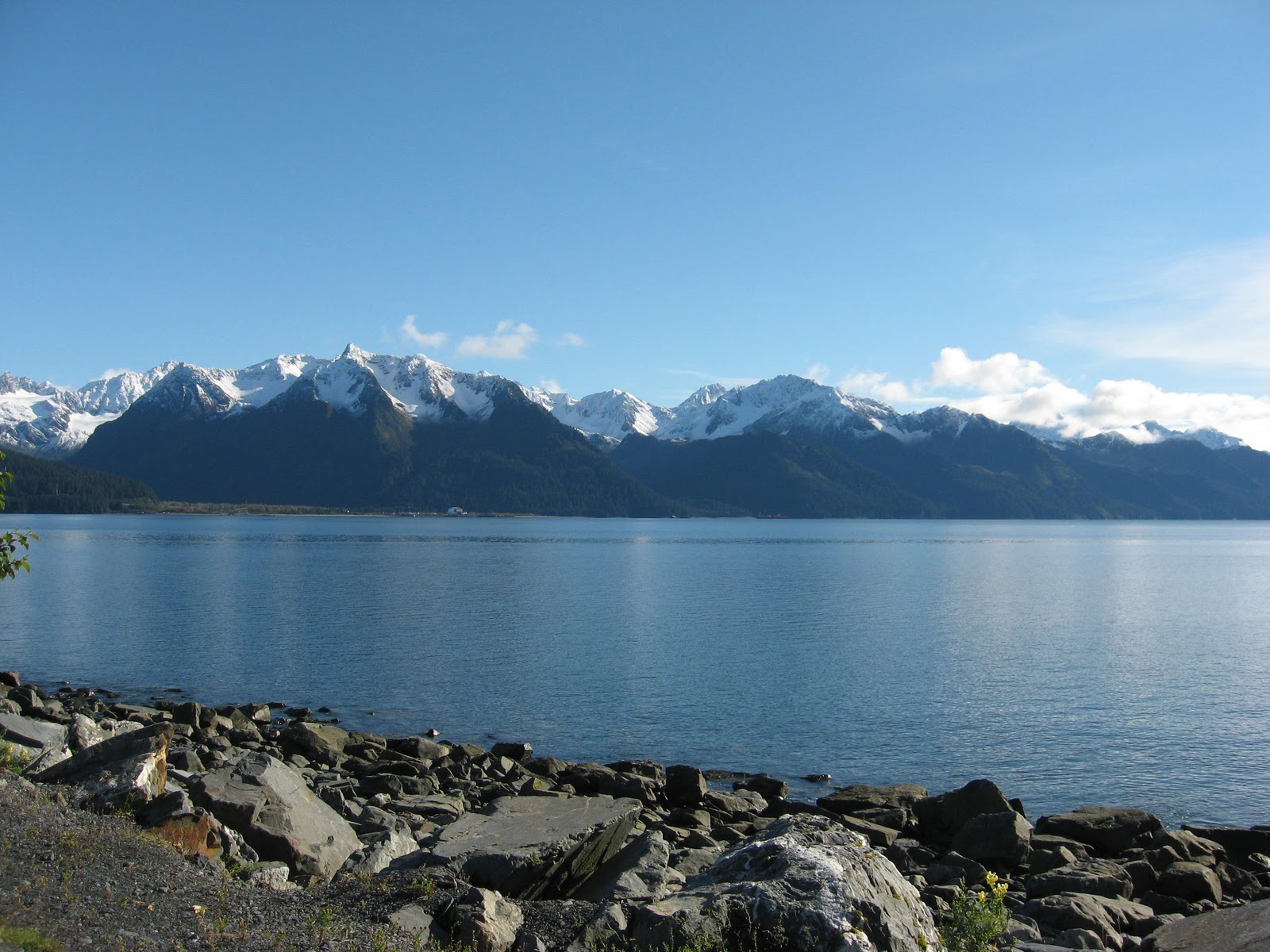
On a clear day in Seward, you can see forever.  

3. Drive to Seward and visit the Sealife Center. Seward is a really neat town. We could walk up to the face of Exit Glacier, eat salmon and halibut and relax at Sweet Darlings with handmade fudge and gelato! Mmm.

The face of Exit Glacier

4.  Drink a spiced ginger mojito at Simon and Seaforts– my favorite restaurant.

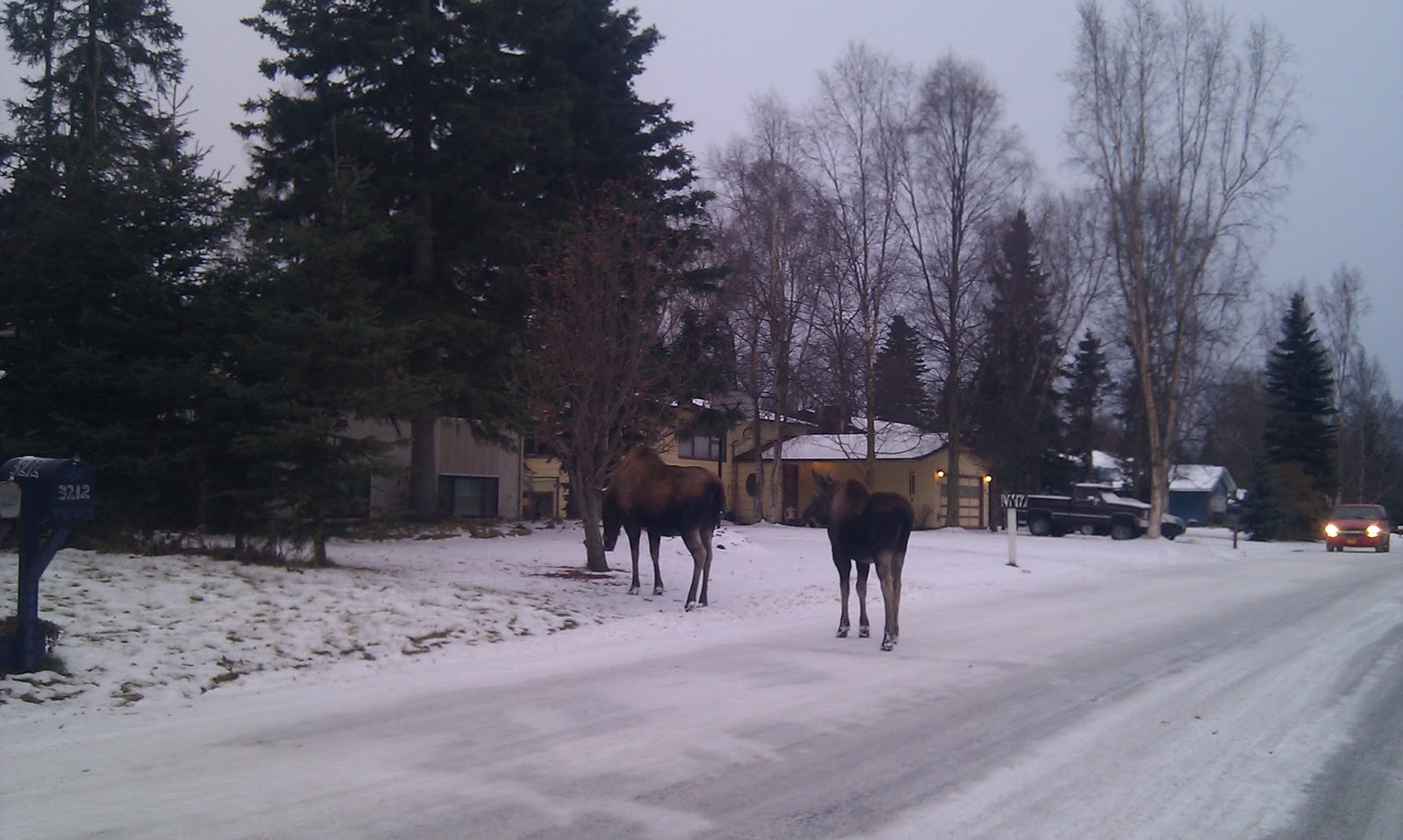
5. Walk a long way or a short way on the Coastal trail. We might see a moose. Maybe a bear. And we’d definitely go to Earthquake Park, where you can still see some of the devastation from the ’64 Earthquake.

When are you coming?

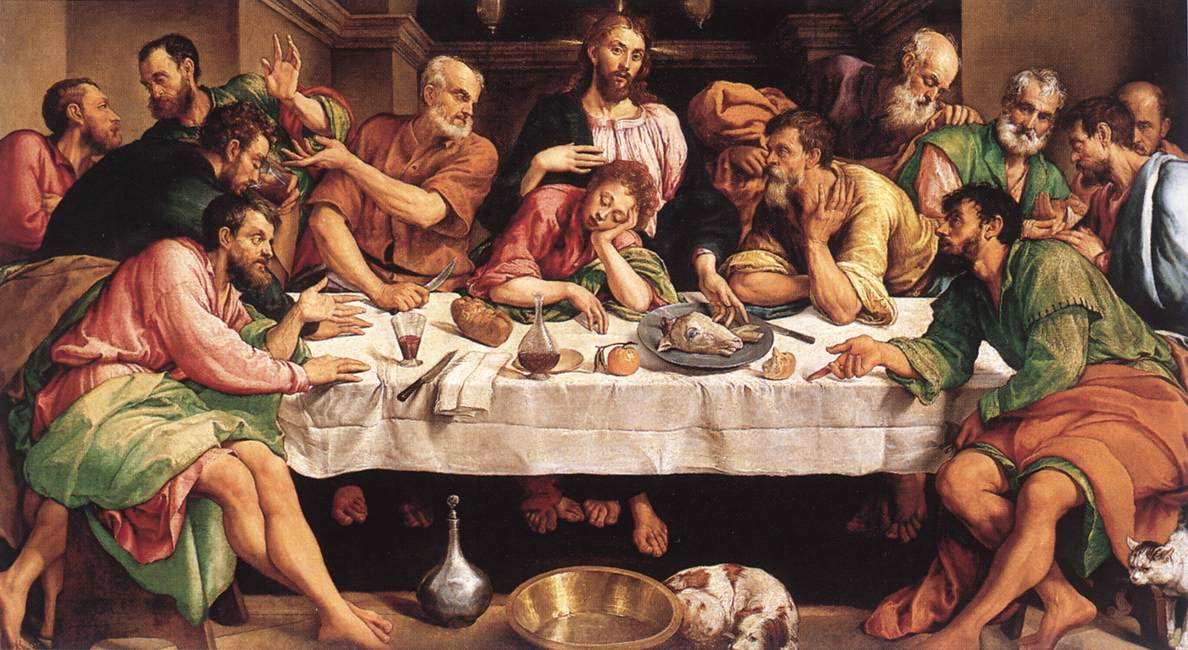
L’Ultima Cena

L’ultima Cena is the name of the painting you may know as “The Last Supper”. The Italian uses the phrase “ultimate” as in final, not as in awesome (though I enjoy a parsley salad and some lamb, so it may well have been awesome).

It never fails to move me to think about Jesus, gathered with those he loved, in that upper room- smoky and close- consuming their history and sanctifying their future. Powerful stuff.

On a more mundane thought, the NaBloPoMo prompt for the day is: “What would you want for your last meal?”

What would my ultimate, ultimate last meal be?

In truth, I’d prefer not to know it was my last. That would the best seasoning of all. I love food in general, so it’s hard to narrow it down to one meal. Several courses?

I’d like Greek salad with lemon and oil dressing, heavy on the lemon. Then a open-faced, hot turkey sandwich, with gravy. Mashed potatoes. Cranberry sauce. Steamed broccoli. And chocolate cream pie.

Comfort food, I guess. As I am writing this, it occurs to me that I haven’t eaten that meal in any form in recent memory. Maybe it’s just a craving.

It’s been a long time since I went more than a week without communion, but I can remember distinctly the last time I did. When I was on maternity leave, I didn’t go to church. While pastors came to visit, no one brought communion and I didn’t think to ask. I did start to crave it after a while. It wasn’t just the bread and wine, though, it was the experience of being at the table, of hearing the words, of sharing with another or others in something basic and mysterious.

In early Christianity (and still in some places), one strove to die with the elements in one’s mouth or only just there. Could there be a better last meal, a more ultimate meal? Comfort food and great company. L’ultima cena, indeed.

Death cannot destroy

For some reason, I’m thinking of both All Saints and the first law of thermodynamics today. 

Aren’t you? 
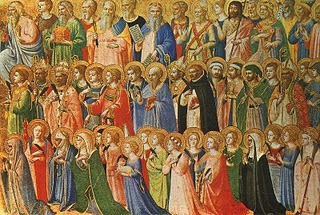
Today is the Feast of All Saints, the day upon which we celebrate the lives of the faithful who have gone on to their reward. I want to be able to say that I am celebrating, but mostly I am missing people today. My grandparents, a mentor, friends, classmates… all gone too soon to my way of thinking. 
The first law of thermodynamics is that energy can be transformed, but it cannot be created or destroyed. I could talk more about heat and energy conservation- the principles of thermodynamics- but that’s not what I want to say. 
Energy can be transformed, but it cannot be created or destroyed. 
There’s no way to talk about this without seeming a little out there, but stick with me. Scientifically, I know that our bodies decay, but spiritually I believe death is not the end God intends for us. We are transformed in ways we don’t understand after death. I can’t speculate as to how or where or even when, but I have a hard time thinking that we are fearfully and wonderfully made for a span of a few short years and that’s it. 
(Neither do I assume eternity is a like a long church service.) 
In thinking of the saints I have known, today I am pondering how God has transformed their energy. The work of their lives affected me and it touches people with whom I interact- sometimes daily. Their energy, in part, transfers to me and others who knew and loved them. 
And I think God is still using them- not just through the memories and works that remain, but in some way that is beyond our comprehension. 
In Revelation, the saints intercede for the believers who remain on earth. Perhaps they are praying for us. Maybe they are worshipping with us. Maybe they are doing work on a plane as yet beyond our understanding. 
However, on this day, I’m comforted by believing that their lives have been transformed, but not destroyed. That their energy is altered, but still powerful. That their lives continue to matter, even beyond our memories. 

Grant them eternal rest, O Lord, and let light perpetual shine upon them. 

Doing It Wrong

Yesterday I was in a meeting and we talking about Synod Assembly (the BIG annual joint congregations church meeting). When we were trying to figure out how to include more young people in the meeting, someone mentioned “the boring parts”.

I retorted, “You mean the part where we’re doing the work of the church?”

Someone later said, “What did you call it ‘the work of the Lord’?”

I said, “No, the work of the Lord and the work of the church sometimes overlap, but are not interchangeable.”

Work of the church: stewardship (care of) financial, spiritual, physical and emotional resources.

Work of the Lord: care of neighbor and fulfilling the Great Commission (not necessarily simultaneously).

Yes, church meetings can have slow parts. Not everyone is interested in or understands budget discussions. Not everyone comprehends the, sometimes, technical wording of resolutions or the use of shibboleths to show who’s in and who’s out.

The necessity of planning for the future and talking about details is sometimes the work of the church, on the local and national scale. Leaders must be chose and decisions must be made and dollars must be accounted for.

True enough, people who don’t have control elsewhere in their lives often bring it to a church meeting where they can yell about what we’re spending on toilet paper or whatever. Forgiving them… that’s doing the work of the Lord. Figuring out how to appease them and move on before the meeting lasts four hours… that’s the work of the church.

Often pastors find themselves groveling to people to fill church council/board/trustee spots. The prayer that goes into this is, “Pleeeeeeease, God, let So and so say yes.” People are intimidated by the title of church leadership and/or they’ve heard that the meetings are BORING!

Church leadership takes energy, vision and prayer. If you’re depending on the pastor to supply that, it won’t work. The pastor is not the Messiah. He or she can’t save the church single-handedly.

If the work or the discussion seems boring or intense, CHANGE it. Pause to sing a song or say a prayer. Encourage the judicious use of “calling the question“. Don’t allow moaning and groaning to precede a meeting.

I’m not Pollyanna enough to say that meetings are ALL GREAT, ALL the TIME. However, a church meeting shouldn’t be a sprint- covering all the ground, but no room for the Spirit. Neither should it be an ultra-marathon, where at some point everyone has zoned out and you’re only debating for the sake of debate.

Not every bit of conversation at most workplaces or in most families is fun, but some conversations have to be had. The opposite of fun isn’t boring. We can have profound, meaningful discussions on finances, vision, expectations and the future that are motivating, well-paced and well-lead.

The real question is not “Can church meetings NOT be boring?”, but “Are you willing to put the effort and challenge forward to change the culture of church meetings?”

Maybe changing how we do the work of the church IS the work of the Lord for this day.

Friday Five: Your Workspace Edition

Over at RevGalBlogPals, Revkjarla writes: I don’t know about you, but I am a notoriously messy creative worker.  My workspace at home, and at my office is always littered with books and papers and mail and pens and keys and mugs….and tchotchkes (momentos, weird things, etc.)   I am looking right now at a pair of dice that someone gave me that have “God” on each side, so that anyway you roll ’em, you end up with God.  Different, right?   
So, this Friday Five is all about YOUR tchotchkes in your workplace.  Describe five things in/on your workspace (however you define workspace–I tend to spill over onto bedside tables, end tables, coffee tables…create wherever I land) that are special to you!   Bonus points for pictures!


 Oh, honey, the disaster of my desk means my workspace usually looks like this. I’m a member of the Flat Surface Society, meaning if there’s a flat surface, I’ll stack stuff on it. And I’m not likely to change. I clean my desk post- Christmas and post-Easter, every year. 🙂 

 Here are my tchotchkes…


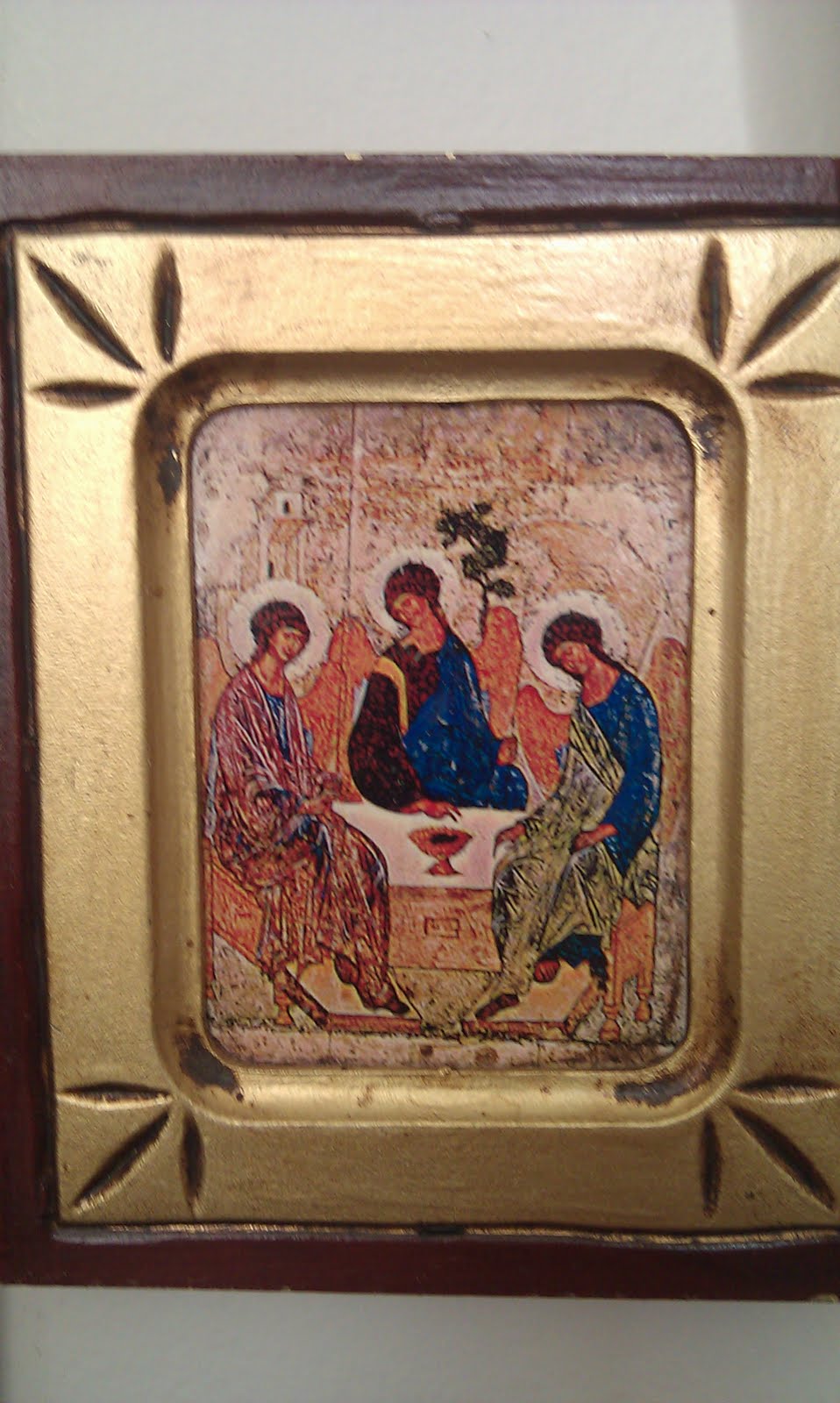
An icon of the Holy Trinity or of  Jesus and the travelers to Emmaus. It all depends on your view of it. 
A large rock given to me as a gift from a local United Methodist pastor. There are holes drilled through the rock and small dish glued to the bottom to hold lamp oil. The wicks are fed down through the holes. I love it and I don’t light it often, but I like having it on my desk. 
A little large to qualify as tchotchkes, but nevertheless- these are my Mother’s Day hats from our preschool. Every year we have a Mother’s Day tea (Grandmas, Aunts, Friends, etc) and the kids have made these great hats. I suppose I will eventually have a wall-full! 
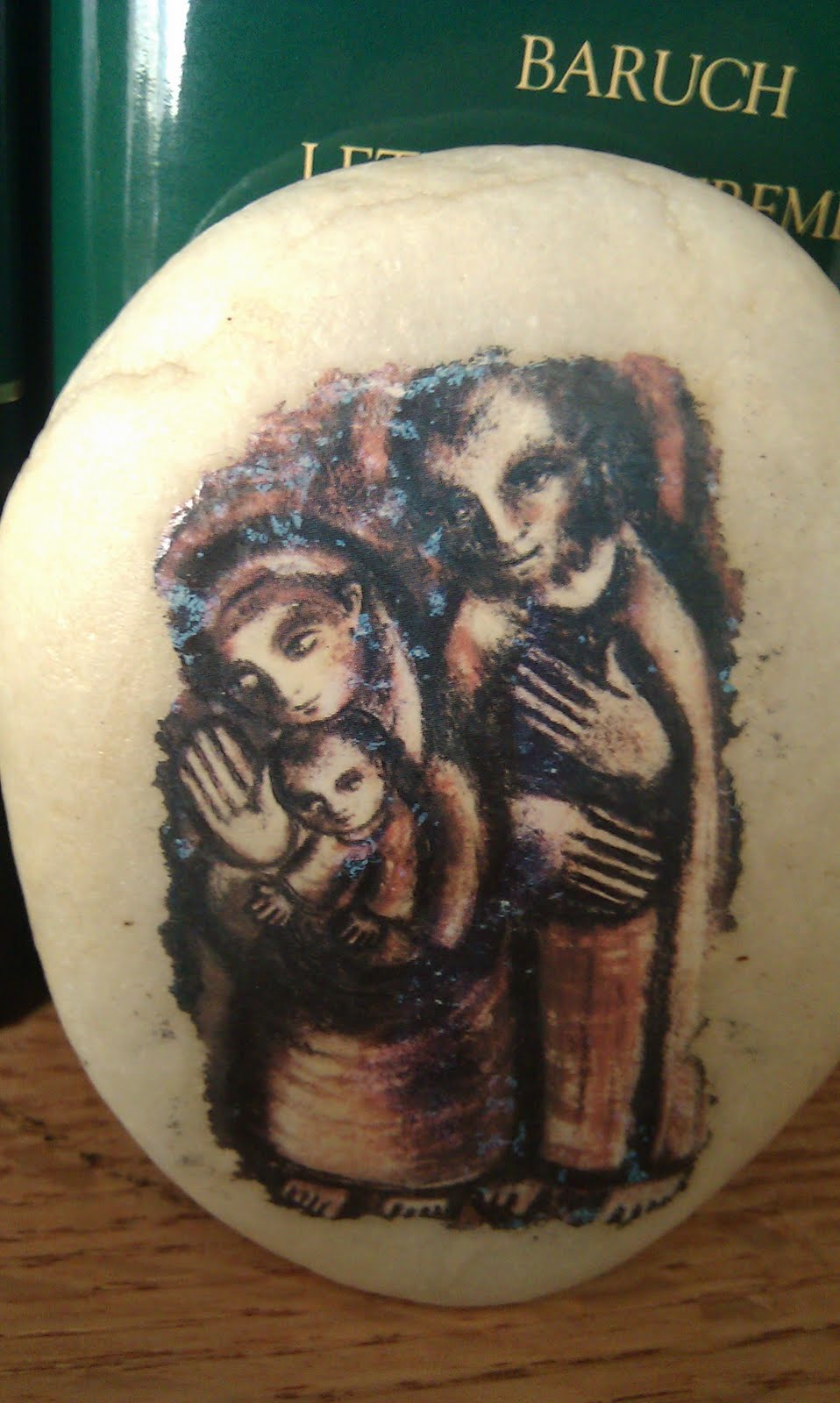
This is a beach rock from Nome with an iconic picture of the Holy Family decoupaged onto it. I received it (along with 2 others) from the three Little Sisters of Charity who lived in Nome, Alaska during the time I lived there as well. I housesat their cats when they went out of town. The rock makes me think of the Little Sisters, the prayer room in their house which I used more than once, and my time in Nome. 
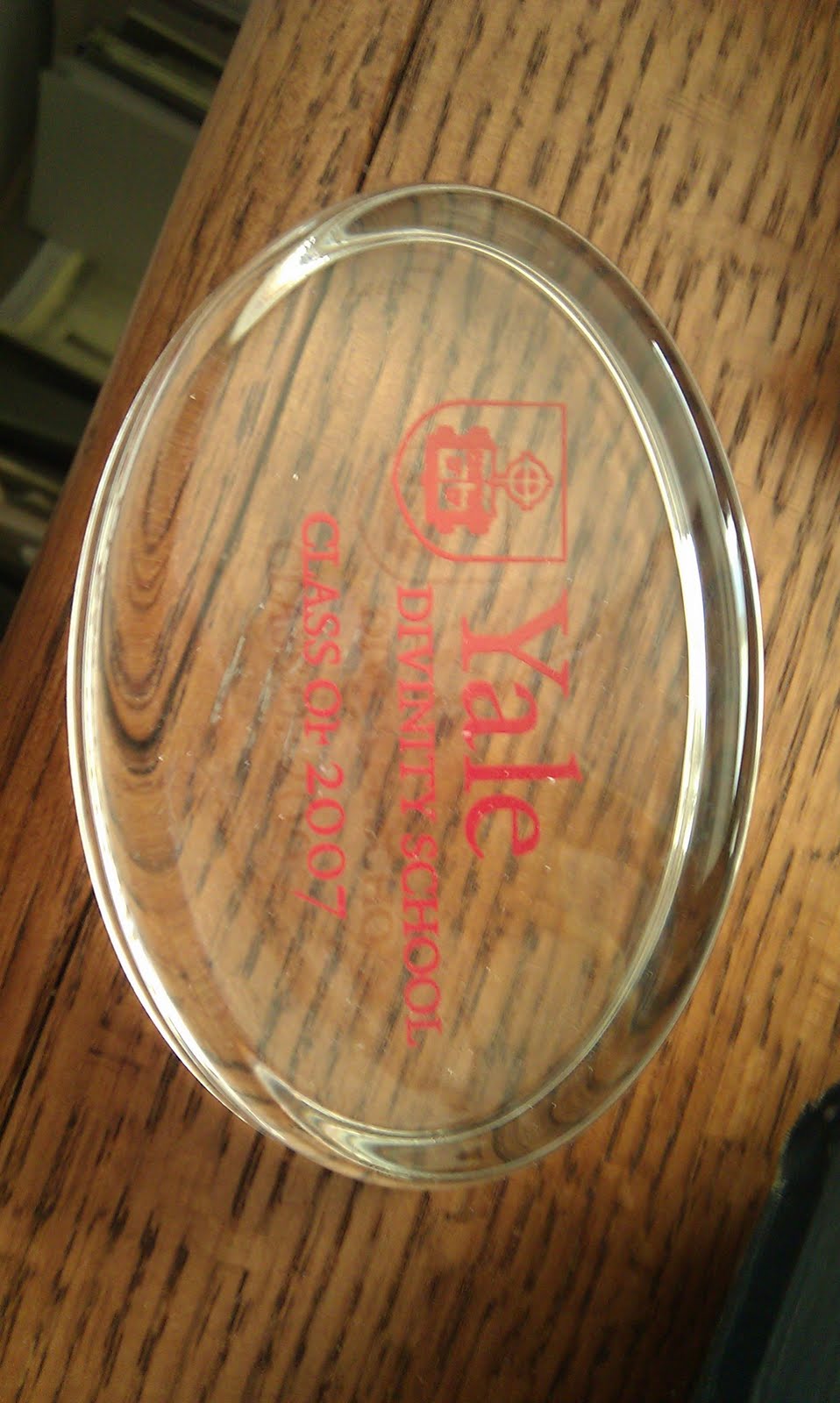
I couldn’t seem to get this picture to  load with the correct orientation. Oh, well. This glass paperweight is the only sign within my office of the school where I received my Master of Divinity. I’m proud to have to gone to Yale Divinity School and it’s not a secret, but my diploma (written in Latin) seems a bit overdone and I haven’t yet hung the sketch of the quad that was gifted me. So the paperweight lingers on my desk, often covered with papers (ironic, isn’t it). And it brings many memories when it surfaces. 

What Am I Missing?

In the past week, I’ve been reading In the Garden of Beasts, a book set in 1933-1934 Germany. The book discusses William E. Dodd, the American ambassador to Germany as Hitler rose in power. He and his family have to sort out what is true and who is telling the truth in a critical age of shadowy figures and subterfuge. This in non-fiction.

As I read In the Garden of Beasts, I’m disheartened by the correspondence that goes back and forth between high powered American government officials and regular civilians that ignores or downplays Germany’s actions against Jews and other “unclean” races. Not only do people seem to dismiss the allegations, very often the letters reveal confessions of personal ambivalence or outright antagonism toward Jewish people. The main concern of the American government is primarily Germany’s potential default on war and reconstruction debts and, secondarily, Germany’s failure to reduce their armaments. The people who sound the trumpets about the plans toward Aryan supremacy and ethnic cleansing are dismissed as exaggerating or misunderstanding the work a few ruffians. The ambassador’s daughter, Martha, even believes that the comments are rumors directed at keeping Germany down because the wonderful country and people of her experience cannot be participating in systemic violence.

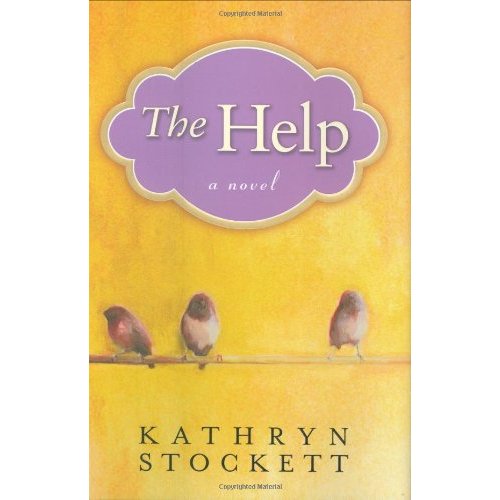
I also went with friends to The Help, a movie based on the book with the same name. My bookclub read this book last July, before there were rumors of the movie. The Help deals with the complex relationships and the power dynamics between white employers and African-American maids in Jackson, Mississippi in the early sixties. (That is a GLOSS if there ever was one.)

In The Help, a young white woman is encouraged to interview and write about the experience of as many black maids as she can before the whole “civil rights thing blows over”. In the backdrop of the story, Medgar Evers is killed and instructions for non-violent resistance are beginning to spread. Simultaneously, the Junior League is raising money for “starving children in Africa” as well as promoting a “health initiative” to encourage the help to have their own bathrooms- “for health reasons”.

All this makes me think, “What am I missing?” What’s going on today that will be obvious to my son or grandchild, but I’m missing. Which emails have I glanced past asking for my help that are the actual issues of my generation?

I know I can’t do everything. True story. Is there ethnic cleansing happening in the world today? Yes. Have we moved into a new era of racial understanding? Not so much. Are there starving children in Africa, Asia, Anchorage? Yes. Are there regimes to oppose? Yes. Is it likely that I pass by people each day who are affected by sex trafficking, drug sales, poverty, mental illness, stop-loss, wage freezes, reductions-in-force (laid off), and lack of education? Yes.

I think of the things I know I care about and they are mostly related to my own experience. Then I know there are things that cross my mind occasionally, usually because they are important to someone who is important to me. Then there are a wealth of things that I don’t notice (or that I might contribute to) because I’m not looking. Or worse, because I dismiss them, believing they are minor and will blow over soon. Is there something obvious that I’m missing?

Again, I can’t do everything. (I’m telling myself that, not you.) However, what I’m watching and reading these days has me re-evaluating what I am doing. You?

Questions from the Dark

Following a recent local tragedy in which a young family (husband, wife, and two daughters) were killed in a plane crash, I’ve been talking with people affected by the tragedy. In many ways, an accident like this has a broad ripple affect beyond even secondary and tertiary relationships. People remember when they have been in similar situations or their own fears around death (their own, of their loved ones) rise to the surface.

Inevitably the question arises, “Why did God cause this to happen?” And its corollary: “How can this be a part of God’s plan?”

This is a sure-fire pastor stumper to which there is no great, comforting answer. Truthfully, I don’t believe God caused this tragedy to happen and I don’t think it was part of the plan. I think accidents happen because God allows us to use our free will and also allows the same of the people around us. The decisions we make (good, bad or neutral) can affect others just as their decisions affect us.

I think the harder question and my own question is, “Why didn’t God stop this?”

I can understand germ theory. I get that accidents happen. I understand (mostly) laws of motion and thermodynamics. I even appreciate that God allows the natural world to work in its own way, to its own consequences- some of which we can change and some of which we can’t.

Yet, I do believe that God can alter a course, if God decides to so. So why doesn’t that happen more often (or at all)?

I don’t know.

I do believe God has a plan, but mostly I think it is long-term. We are co-creators, stewards of the earth, caretakers of our neighbors, employing our free will in the details, but God has the big picture under control.

Things may well be swayed from God’s desire for us and for creation, but we cannot change the arc of salvation, judgment or grace.

I think of Elijah, demanding an answer of God (1 Kings 18:9-18), as to whether God would allow Elijah’s enemies to kill him. God comes to Elijah in silence. This makes me wonder if, when God is silent, we are either unable to hear or we are asking the wrong questions.

Nevertheless, I do not have all the answers.

This I believe: Accidents happen. Was God there? Yes. Are they with God? Yes. Did God cause this? No. Could God have stopped this? Yes, God was capable of doing so. Why didn’t God stop this? I don’t know.

I, myself, pray that preserves my faith until that time when it is no longer necessary. When I have answers, but the questions no longer matter.