
This Friday Five (my first in a LOOOONG time) is from Deb: RevGal Jan is under the weather, so we are swapping weeks for the Friday Five. (Feel better, Jan!) Actually, I want to thank her because she inspired me when she recently shared this poem by Rumi:
It’s your road, and yours alone.
Others may walk it with you,
but no one can walk it for you.
So in thinking about our life’s journey, and the rhythm of our lives, here’s five questions on this theme…
1. What “road” is in your immediate future?
The road I’m currently traveling is one out of depression. I’m trusting that it’s an out road because the path is unclear, but seems soft and in diffused light. I’m not feeling my way in darkness any more.
So many people think mental illness (depression in particular) can be overcome by an act of willfulness. When people say that or imply it, I think of Jesus casting out a demon in Mark 9. When the disciples ask why they weren’t able to do it, Jesus says, “This kind can only come out by fasting and prayer.”
That kind did, but other kinds of demons may require different approaches toward exorcism. The road I’m traveling now needs prayer and counseling, along with other assistance from friends and family. The road may be long and I have to travel it, but others are walking with me.
2. Where have you been “traveling” a lot lately — and are you going back there?
No, I will not be revisiting the places that I have traveled lately if I can help. The land of fear and anxiety, the dwelling place of exhaustion and hopelessness, the tar pits of anger and self-doubt. I know those landscapes will probably send their own postcards to me occasionally, but I am endeavoring not to visit again.
As for non-metaphorical traveling, we have not done much with a new baby in tow. We are hoping to have a family camping trip in the next month.
3. Who are your fellow travelers?
Family, friends, midwife, counselor, colleagues, Holy Spirit.
4. Who are the unintentional companions (or hitchhikers) that you find on the road with you?
Hannah Swensen, the baker/detective of the mystery series by Joanne Fluke, is walking along with me. Her stories are engaging, funny, and light. I went through a month of not reading (a serious sign) and her warm little novels helped me move back into feeling like myself.
I discovered a few months ago that I have Autonomous Sensory Meridian Response (ASMR). I’ve had this my whole life. If I hear someone talk in a certain way or listen to a certain combination of sounds, a relaxing wave sort of sweeps over me starting from the top of my head. It makes me feel warm all over and is VERY soothing. It’s not sexual- kind of the opposite because I feel so liquid and limpid when it occurs. Apparently, I’m not the only one with this and I discovered (WHOO-HOO) the variety of ASMR videos on YouTube around the time that I most needed them. Listening to someone speak in a soft voice about tea or bath soaps or watching someone whisper and draw a fake plan for home improvement is very soothing. Thus, some of the “whisperers” have been companions with me. WARNING: If you don’t have ASMR, the videos will seem odd (or annoying or humorous) to you.
5. As a family, we always recite “the traveler’s prayer” — a tongue-in-cheek petition as we pull out of the driveway (“Lord, whatever we have forgotten, may it not be important!”) What have you forgotten lately, and did it matter?
I don’t know if I’ve forgotten anything lately. I’ve been writing many notes to myself to try to avoid that. However, I occasionally forget about my efforts toward positive thinking. I recite this poem by Ron Padgett to myself:
Nothing in that drawer.
Nothing in that drawer.
Nothing in that drawer.
Nothing in that drawer.
Nothing in that drawer.
Nothing in that drawer.
Nothing in that drawer.
Nothing in that drawer.
Nothing in that drawer.
Nothing in that drawer.
Nothing in that drawer.
Nothing in that drawer.
Nothing in that drawer.
Nothing in that drawer.
Yes, that’s the poem. When I read it or recite it to myself in a moment of panic or high anxiety, I’m able to imagine myself closing a drawer on my dark thoughts. There’s nothing in there for me. Nothing that’s helpful. Nothing that brings life. I imagine the Holy Spirit’s soft voice whispering to me, “There’s nothing in that drawer.”
BONUS: Share a photo of a road you’ve traveled. Or of traveling companions who have made the journey special. Or perhaps there’s a song or another poem that suits your journey. If so, please share!
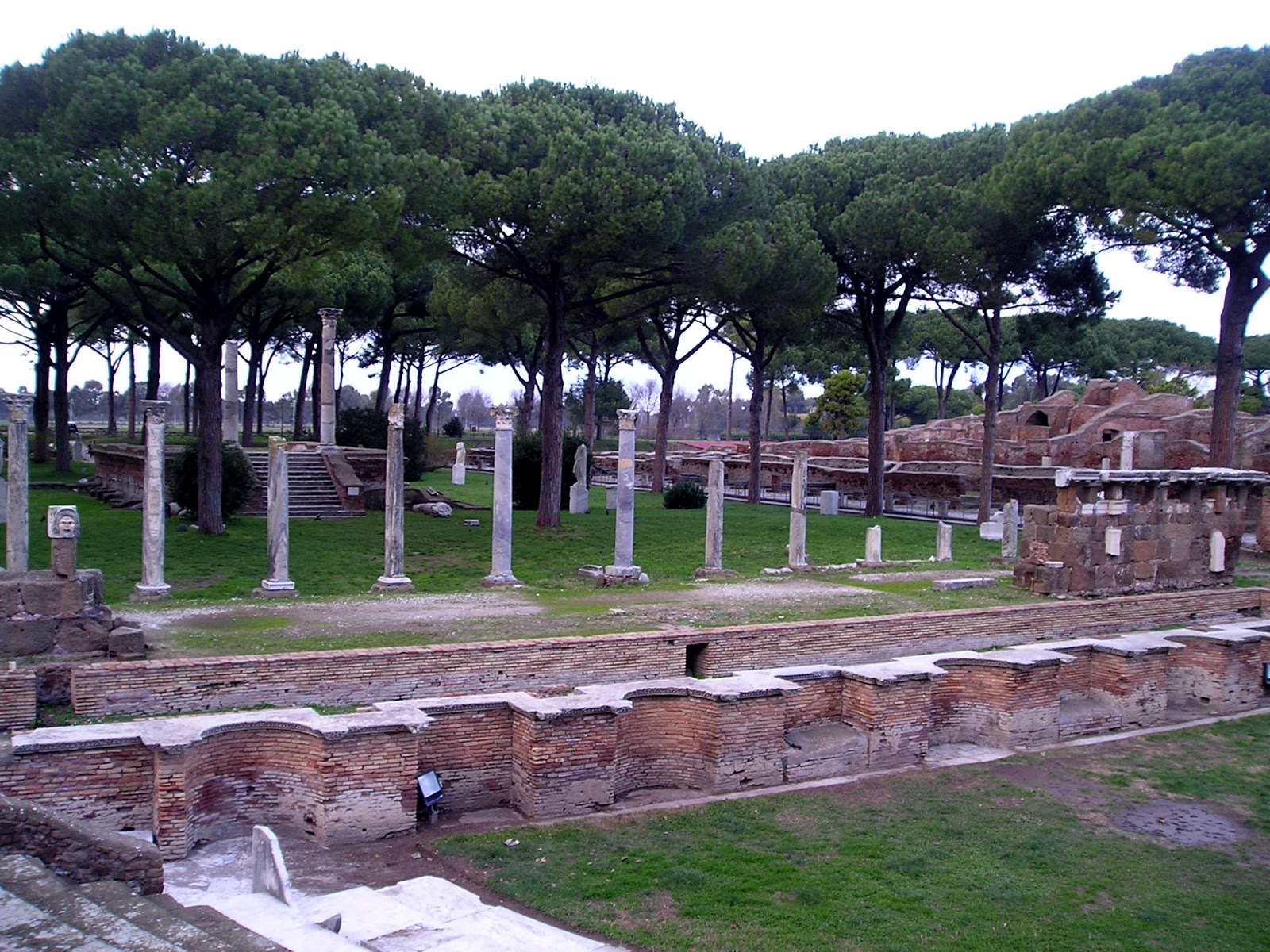
I like looking at this picture of Ostia Antica(from my 2005 visit). The ancient streets and walkways- tiled and smoothed dirt- make me think of people who may walk after me. I’m able to see myself floating in history- part of what was and what will be all while being part of what is. This is very centering and makes me feel closer to the heart of God.
 Faith, Grace, and Hope