Category Archives: Mark

Sunday Sermon: Not Dead Yet

Epiphany 5, Narrative Lectionary B
5 February 2012
Mark 6:1-29
            I am an adventurous eater. This past Monday, in Progreso, Mexico, I walked through the town and I was in search of one of my favorite foods: ceviche. I adore the combination of raw fish, with cilantro, onions, and tomatoes, marinated in lime juice. It gives me the shivers to think about it. So there I was, with a friend, in the center of the town market, where only locals were shopping and eating. I find a stand that sells ceviche and I buy an enormous plate, with homemade taco chips and a Mexican coke. My friend is a vegetarian and wouldn’t touch my plate of citrus shrimp with a ten-foot-pole. She watches as I scoop up the first bite and put it in my mouth and roll my eyes in delight.
            As I try not to make a spectacle of myself, I tell her that I will try almost any food at least once. There are some foods the origins of which I would prefer not to know until I eat them, but I will try them. Ceviche, though, is my favorite. I know I’m rolling a large set of dice to eat raw fish in a Mexican market, but to me, the risk is worth it. (I know what bad fish tastes like and not to keep going.) I told my friend that each time I don’t get sick it makes me bolder. In truth, if I got sick, I wouldn’t stop eating ceviche, I just wouldn’t eat at the place that made me sick anymore. Each time could be the bad fish time that knocks me flat, but I’m not dead yet. (What a life motto!)
            What does this have to do with today’s reading? Think of the Jesus of Mark’s gospel- a very human Jesus who has been setting the countryside on fire with the help of the Holy Spirit. Now he comes to his hometown. On the outskirts of Nazareth, he’s probably playing the scenario in his head in which he is warmly greeted, his teachings praised and admired, his mother honored, and people he’s known for years relieved of suffering. On the other hand, his hometown is likely expecting a hero from whom they can gain enough notoriety to become a place on the map.
NAZARETH: Birthplace of the Messiah! See his carpentry! Drink from his cup! See his shul! Threads from his cloak for sale! Collect the whole set of Jesus earthenware!
            People are not impressed by his message of forgiveness of sins and his miracles of healing. They insult him by calling him referring only to his mother (“Son of Mary”) and not his father. His healings are ineffective, except for a few people whom I imagine coming to him in the middle of the night and asking for relief.
            I think Jesus is having an epiphany. This is not going to go smoothly. In his own hometown, he gets some bad fish. Does this undo his message or his mission? It doesn’t but it makes it a little harder to push forward. It becomes a little clearer that not everyone wants to hear the proclamation of the kingdom, the good news of God’s nearness, the possibility of renewal in repentance and forgiveness. Jesus goes on, despite the incident. He’s not dead yet.
            He sends out the disciples in mission as well. Something for us to remember is that the disciples are going out with good news, with a gospel message that has nothing to do with resurrection. The resurrection hasn’t happened yet, so the good news they offer is precisely about the action God is doing in the world AT THAT TIME and how people can be a part of it, through repentance, forgiveness, and healing. Their message isn’t about the afterlife, rewards, or mystery, but concrete change in present-day life.
            However, Jesus warns them, not everyone will want to hear this message. Occasionally the disciples will run into some bad fish. They are to shake off their shoes and go on. If they are not dead yet, then they are not done proclaiming.
            Then we come to a flashback. The last time we saw John the Baptizer was at the end of Chapter 1 of Mark. He was arrested. Now we learn that he was arrested because he spoke out against the marriage of Herod Antipas and Herodias. Herodias had been married to Herod’s brother, Philip, but she decided Herod was more upwardly mobile. So she divorced Philip (strike 1), married his brother (strike 2), and plotted against John the Baptizer who dared to call her on her sin (strike 3).
            The dance of her daughter might not be the sexy dance of the seven veils that we always see portrayed, but an enthusiastic demonstration of talent or nationalism by a young daughter making her father proud. Herod likely thought she would ask for a pony, but instead she consults with her mother and receives the head of John on a platter. Not exactly what Herod (or likely the daughter) had in mind.
            John got some bad fish. And it killed him. Herod could have redeemed John, but he didn’t. He could redeem his actions later when Jesus is brought before him, but he won’t have the nerve to do so then either. Herodias is a bad fish and her rot has infected her family.
            So what does this story have to do with us, besides really stretching out my ceviche metaphor?
            I hardly ever give specifics on how you should act. We are all different people, in whom the Spirit moves in different ways. The ministry to which you are called may not be the word of the Lord for me. However, I’m going to share with you how this moves me and I think it will affect you as well.
            If I
1)   am a bold eater,
2)   believe in the hope of the resurrection,
3)   trust in the presence of God in the world from day to day
then why am I not living more boldly?
Why am I timid in speaking the truth?
Why don’t I live as boldly as I would eat?
If my standard for eating is: “I’m not dead yet”, why is this not even more my standard for faithful living?
I am willing to risk my life for raw fish. Shouldn’t I be willing to do the same thing for Jesus, through whom I believe that death is not the end, but a new beginning?
Not everyone is going to hear what I am saying. Some people who hear it will not like it. However, I am not called to quietude, but full proclamation, sinning boldly, and loving Christ more boldly still.
            Now is the time! Now is the day of our salvation. Today we are sent out to proclaim the truth of God’s mercy, forgiveness, and supply to the entire world and to do it in BOLD, DRAMATIC, LOUD, LOVING ways. We are called to serve our neighbors in all kinds of ways. We hesitate and the moments are lost, but this doesn’t have to be.
            The Spirit is with us. Let us live boldly. We are not dead yet. 

Sunday Sermon: Costs and Benefits

Reading: Mark 5: 1-20
Everything we do has costs and benefits. In each decision we make, we weigh the pros and cons, coming up with a little balance sheet. For example, it’s late. If we order pizza, we don’t have to cook and there’s only a little clean up afterwards. There’s a bonus, too, in that it comes to us. On the other hand, we have to spend the money, we’re not eating food we already have, and we always eat too much pizza when we order it.
Even decisions that seem automatic have costs and benefits. Do I go to the bathroom right now or wait five minutes to finish this task? In all situations, we weigh costs and benefits and then make a decision. That’s what the people did in today’s gospel story. Jesus gets into a boat and he crosses over to the “country of the Gerasenes”. This means that he is expanded his ministry into Gentile territory.  How do we know that? The presence of pigs is a big clue. This isn’t one or two pigs- it’s 2000- the livelihood (and food) of most of the village. This village also has a town crazy man, who has been plagued by demons for years. When the original readers of Mark’s gospel heard this story, they would have picked up on several different things we need explained. A legion is a group of six thousand (6,000) Roman soldiers. Not only, then, does the man have a large number of demons, but the story is constructed to have the hearers think about how Rome has “possessed” their land. They would also recall how they, like the Gerasene demoniac, had hoped the Messiah would bring an exorcism. However, in this story, the people weigh the costs and benefits of having Jesus in town and the cost is too great.
Gerasenes
Costs
Benefits
Pigs (livelihood)
Healed Man
Change
6000 demons gone
Community order
God in their midst
Stability
Change

What does it cost the Gerasenes to have Jesus in their territory? First, it cost their livelihood. Pigs can swim, but apparently not demon-possessed pigs. It’s like Jesus
shut down the mill- this affects the whole town- not just the man who came for healing. This is very high cost. Secondly, Jesus brings change. He takes the livelihood of the town and heals the crazy man, he upsets the order of things and how they’ve been handled for years. Lastly, Jesus is messing with their stability. They have an understanding of God, through either their own practices or what Jewish leaders tell them. They probably have a town hierarchy. Jesus rocks the boat in a big way.

On the plus side, they do have a healed man who can be restored to family and friends, if they’re accepting of him. They are rid of 6,000 demons. (Though, it’s arguable that they demons were really only bothering one person.) They have God in their midst. (But do they know that?) Finally, again, Jesus is bringing change. Change to the status quo can be a huge benefit, if people are able to accept it. The people of the town weighed this situation in the balance and they were afraid. The benefits did not outweigh the costs that they could see, so they ran Jesus out of town.
That’s okay, though, because Mark is a sixteen chapter gospel and this is only the start of chapter five. After this, people will totally be able to perceive what Jesus has to offer and they will laud him as Emmanuel, God-with-us…
Wait, what? That’s not how it will happen?
Well, what about today?
Us
Costs
Benefits
Time
Relationships
Certainty
God in our midst
Control
Change
Physical resources
Light
Your life is not your own
Consolation
We too have to weigh the costs and benefits of our life in faith. Believing in God, trusting in Jesus, and relying on the Spirit all take their tolls. The first cost is the greatest. It takes time to be in relationship, whether deep or superficial. It takes time to pray, to listen, to help, to praise, to wrestle. Sometimes we just want to sleep in or do it tomorrow or wait until the kids leave home.
In faithful living, we sacrifice certainty. While we continue to believe in scientific discovery, expanding human knowledge, and deeper intellectual understanding, we also come to know that there are just some unknowns, some mysteries that will always be beyond human comprehension. We don’t understand how Jesus is present in communion or how God acts in baptism, we only know that these things have been promised to us and we go on in faith.
In faith, we circle the reality that we are not in control. Each of us has to remind ourselves of this daily, just as we are reminded of the One who is. In remembering that all we have is a gift, we spend our physical resources. The costs of money, energy, goods, and services are part of what living faithfully entails. Each expenditure reminds us, again, that our life is not our own.
These huge costs are weighed against the benefit of relationships- with our Creator, Redeemer, and Sustainer and with other people. Faith brings us into unexpected quarters and finds us with unplanned allies. We are encouraged, enticed, and sometimes forced to interact and commune with those whom God loves, even if we do not know how that’s possible. In these relationships, we encounter Emmanuel, God-with-us. Jesus promises to meet us in people all around us and so he shows up, invited and unexpected.
Just like for the Gerasenes, Jesus brings change. Salvation is an event and a process and we who are being saved are also being changed, becoming more fully the people God intends us to be. In the life of faith, we are participants in this change through obedience, repentance, and boldness in love. We are brought more fully into the light no darkness can overcome. We are consoled in our knowledge of grace, our belief in the life of the world to come, and God’s work in Jesus Christ.
We constantly weigh these costs and benefits. Do the benefits outweigh the costs? We all want to say, “Amen! Hallelujah!” Yet, we know plenty of times when we were unable to perceive the benefits or unable to bear the costs.
There is one more being in this scenario. One other who weighs costs and benefits and makes decisions.
God
Costs
Benefits
Everything
Relationship with all creation
God’s desire is for relationship with the entirety of creation, to bring justice and peace to the world that God has created and loved. What does it cost God to have that relationship? It costs everything.
We cannot know the mind of God, but if we consider the actions of which we know…
The outpouring of the Trinity into the creation
The frustration we see in the histories and in the prophets
The hope with which God comes into our world as Jesus the Christ
The triumph over the power of death and the grave
The continuous expectation that creation will respond to grace and mercy
How is this any less than everything?
We look at our cost and benefit list and it seems difficult. And it is. That’s true. We are only able to incur the costs because we have already received the benefits. This is the knowledge we have that the Gerasenes did not, because we are Easter people- already rejoicing in resurrection.  
We are able to pay the costs because we have been loved first, received grace first, been born out of a desire and call for relationship. We are able to love because we have first been loved… by the One who is Love.
The thing is, God has decided repeatedly… on your behalf, on mine, for the sake of the world… the cost is worth it. Every. Time. 
Amen.

The Gospel I Need to Hear (Sermon for 1/8/12)

Sermon for Epiphany 1, Text: Mark 2:1-22

          Sometimes I need a sermon myself. I don’t mean that I need one written for me because I’m tired or uninspired. I mean that I need to hear one.  Usually, I have four or five of you in mind and I hope that the Spirit speaks to all of you through the written and spoken words on Sunday. Yet, sometimes I ended up preaching the Word that I needed to hear and I hope something came to you as well.
            Today, as we look at the stories of people who meet Jesus, I felt like I should be honest about what I want to hear. Perhaps you have the same plea as you listen to these stories. We have a story of friends interceding, a paralyzed man walking, doubtful scribes, uncertain disciples, and adoring crowds. These are the people Jesus meets and it’s hard to decide which thread to follow. Healing, forgiveness, welcome, celebration, correction, renewal, restoration, resurrection- any and all of these are messages I want to receive. How about you?
            Pastor, speak to me of healing. I need to hear that miracles can still happen, that they do still happen, that they will still happen. I want to hear, again, that God heals through medicine  and through miracles and, sometimes through death, through death. Assure me, with sincerity, of the double significance of this gospel story. First, Jesus releases the man from the sins that plague and disturb him- a powerful symbol of the power and grace of God. 

          In order to prove that his power was of God, Jesus then healed his physical ailment, cured whatever bound him to his pallet. In the face of cancer and all manner of other illnesses, Preacher, tell me with confidence that the healing power of God in Jesus is not limited to a house in Capernaum, but that it transcends space and time and the bounds of our understanding. This is the gospel I need today.


            Pastor, speak to me of Epiphany- of a dawning light and a great understanding. In my daily life, I hear a lot of people talking and it all begins to sound the same. I remain hopeful, but cynicism and frustration curls the edges of my hope. I feel kind of like a Pharisee, because I just want something to make sense and to fulfill my expectations. Structure, continuity and tradition provide reliability and stability in chaotic times. A season of new understanding, of A-ha! moments, of bright inspirations is exactly what I need, but not necessarily what I want. 

          Preach to me about the meaning of Emmanuel- God with us. Remind me that there is nowhere I can go that God has not preceded me, nowhere that Jesus does not accompany me, nowhere that the Spirit does not receive me. This is the gospel I need today.
            Pastor, speak to me of sin and of release. Speak the hard truth about sin- about its power to separate us from our neighbors and to make us feel separated from God. Look me in the eye and tell me that sin is action and intention, both concrete and nebulous. Use words that are familiar, but help me understand in a new way that sin is the things I have done and left undone, said and remained quiet about, things I have given too freely and things I have withheld. 

            Now preach to me about release. I don’t want to hear about forgiveness only, about a formula or words that make things right. I want a powerful, truthful, toe-curling honesty about release- release from the fear of death, release from the captivity of sin, release from the mistakes of the past, release into the freedom of a new future in God. Speak to me of the release that is offered through Jesus, every day, every minute. Pastor, speak to me of amazing grace and do not stop. This is the gospel I need today.


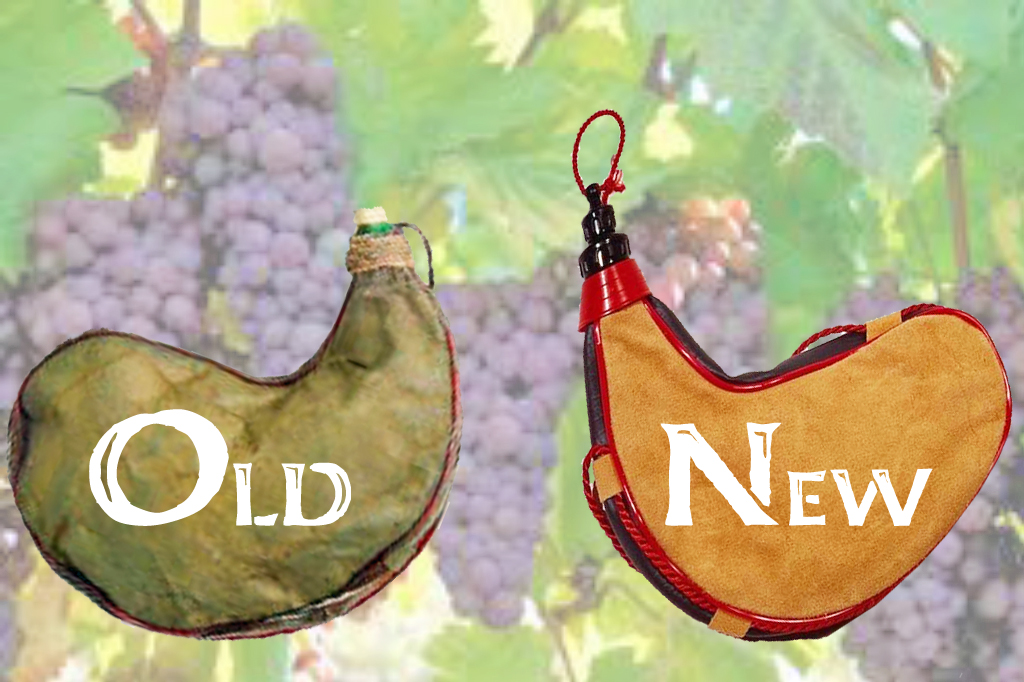
            Pastor, speak to me of resurrection. I know that is the wrong season, that we have not yet trudged through Lent to the gleaming white of Easter morning. Nevertheless, I look at today’s gospel and its words of feasting and celebration. I read of new wineskins to receive new wine. This kind of new life makes me think of renewal. Remind me again that God has promised not to make all new things, but to make all things new. Could it be, Pastor, that resurrection happens within us before it happens to us? 

             Is it possible that God-with-us in the person of Jesus was bringing new life to Levi, to John’s disciples, to the outcasts, and even to the Pharisees before the tomb was thrown open? Help me to chew over the idea that spiritual resurrection comes before the resurrection of the body, but is just as important. Tell me in no uncertain terms that God was resurrecting through Jesus Christ long before Easter Sunday. Resurrecting faith, resurrecting community, resurrecting hope, resurrecting relationship. Tell me this is not a metaphor. This is the gospel I need today.
            Pastor, I like it when Jesus says, “I have come not to call the righteous, but the sinners.” I like that a lot, except that I would like to be a little bit righteous. Isn’t Lutheran theology that we are all righteous and sinners at the same time? So aren’t I a little bit righteous? Break it to me gently, one more time, that all have sinned and fallen short of the glory of God. Ugh. Again. All have sinned and fallen short of the glory of God. 

            Okay, I’m ready to hear that my perceptions of myself (and of others) fill up my wineskin and get in the way of the fresh wine that Jesus would put in there. Bring it on home, Pastor, and tie together the truths that I have to release what I think of myself and others, so that I can be open to the healing, the epiphanies, and the resurrection that God has in front of me. Not only that God has in front of me, Preacher, but that God is doing in me and around me. Not only in me and around me, but perhaps, Pastor, with God’s grace and gifts, through me and with me. Today, I am one of the people whom Jesus meets. This is the gospel I need today.
Amen.