Category Archives: hope

Hope Looks like My Pruned Lilac Tree


Job 14:7-9 (out of context) NRSV
For there is hope for a tree, 
Though its root grows old in the earth, 
If it is cut down- that it will sprout again, 
and that its shoots will not cease. 
and its stump dies in the ground, yet at the scent of water it will bud
and put forth branches like a young plant. 
……………………………………


Interpretation:


The scent of hope is 
Water, wafts on the fragrant
Breath of the Spirit.


Friday Five: Be On Your Way

This Friday Five (my first in a LOOOONG time) is from Deb: RevGal Jan is under the weather, so we are swapping weeks for the Friday Five. (Feel better, Jan!) Actually, I want to thank her because she inspired me when she recently shared this poem by Rumi:
It’s your road, and yours alone.
Others may walk it with you,
but no one can walk it for you.
So in thinking about our life’s journey, and the rhythm of our lives, here’s five questions on this theme…
1. What “road” is in your immediate future? 
The road I’m currently traveling is one out of depression. I’m trusting that it’s an out road because the path is unclear, but seems soft and in diffused light. I’m not feeling my way in darkness any more.
So many people think mental illness (depression in particular) can be overcome by an act of willfulness. When people say that or imply it, I think of Jesus casting out a demon in Mark 9. When the disciples ask why they weren’t able to do it, Jesus says, “This kind can only come out by fasting and prayer.”
That kind did, but other kinds of demons may require different approaches toward exorcism. The road I’m traveling now needs prayer and counseling, along with other assistance from friends and family. The road may be long and I have to travel it, but others are walking with me.
2. Where have you been “traveling” a lot lately — and are you going back there? 
No, I will not be revisiting the places that I have traveled lately if I can help. The land of fear and anxiety, the dwelling place of exhaustion and hopelessness, the tar pits of anger and self-doubt. I know those landscapes will probably send their own postcards to me occasionally, but I am endeavoring not to visit again.
As for non-metaphorical traveling, we have not done much with a new baby in tow. We are hoping to have a family camping trip in the next month.
3.  Who are your fellow travelers? 
Family, friends, midwife, counselor, colleagues, Holy Spirit.
4.  Who are the unintentional companions (or hitchhikers) that you find on the road with you? 
Hannah Swensen, the baker/detective of the mystery series by Joanne Fluke, is walking along with me. Her stories are engaging, funny, and light. I went through a month of not reading (a serious sign) and her warm little novels helped me move back into feeling like myself.
I discovered a few months ago that I have Autonomous Sensory Meridian Response (ASMR). I’ve had this my whole life. If I hear someone talk in a certain way or listen to a certain combination of sounds, a relaxing wave sort of sweeps over me starting from the top of my head. It makes me feel warm all over and is VERY soothing. It’s not sexual- kind of the opposite because I feel so liquid and limpid when it occurs. Apparently, I’m not the only one with this and I discovered (WHOO-HOO) the variety of ASMR videos on YouTube around the time that I most needed them. Listening to someone speak in a soft voice about tea or bath soaps or watching someone whisper and draw a fake plan for home improvement is very soothing. Thus, some of the “whisperers” have been companions with me.  WARNING: If you don’t have ASMR, the videos will seem odd (or annoying or humorous) to you.
5.  As a family, we always recite “the traveler’s prayer” — a tongue-in-cheek petition as we pull out of the driveway (“Lord, whatever we have forgotten, may it not be important!”) What have you forgotten lately, and did it matter?
I don’t know if I’ve forgotten anything lately. I’ve been writing many notes to myself to try to avoid that. However, I occasionally forget about my efforts toward positive thinking. I recite this poem by Ron Padgett to myself:
Nothing in that drawer.
Yes, that’s the poem. When I read it or recite it to myself in a moment of panic or high anxiety, I’m able to imagine myself closing a drawer on my dark thoughts. There’s nothing in there for me. Nothing that’s helpful. Nothing that brings life. I imagine the Holy Spirit’s soft voice whispering to me, “There’s nothing in that drawer.”
BONUS: Share a photo of a road you’ve traveled. Or of traveling companions who have made the journey special. Or perhaps there’s a song or another poem that suits your journey. If so, please share!


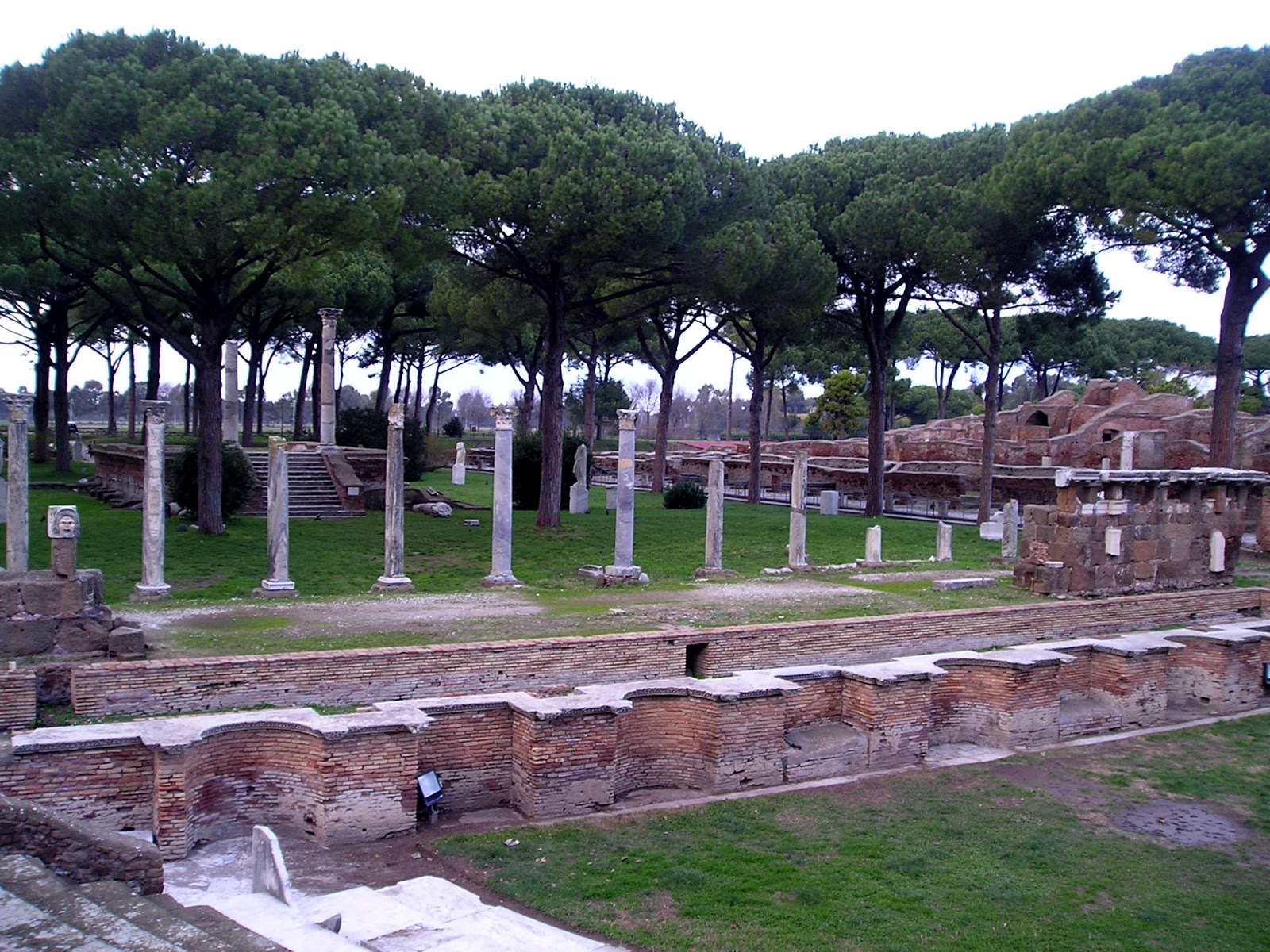
I like looking at this picture of Ostia Antica(from my 2005 visit). The ancient streets and walkways- tiled and smoothed dirt- make me think of people who may walk after me. I’m able to see myself floating in history- part of what was and what will be all while being part of what is. This is very centering and makes me feel closer to the heart of God. 


The Boundaries of Grace

5 Easter
Narrative Lectionary, Year C

Acts 15:1-17
            The disciples are determining the purpose of their congregation. Is it to make Gentiles (Greek, Roman, any non-Jewish believer) into Jews? Or is it to take people of all stripes who are prepared to act in the name of Jesus and to move forward and out in faith? The purpose might seem clear to us, but it was as fraught a discussion as we occasionally find in congregations and in denominations today. This is the first synod assembly (so to speak) recorded in the early church and they have real issues on their hands.
            They have to determine the boundaries of God’s grace and the marks of the recipients of that grace. They are trying to respect the traditions and history of those gathered, history that is part of how God’s work and presence in the world has been revealed.  The disciples are also trying to understand the exponential pace at which the Spirit is bringing people into faith.            
            In this critical time, they are trying to determine how to tell who is included and what is required of those who say they believe? Should they be brought into the community of faith via circumcision, the sign of one of God’s earlier covenants with Israel? Are there dietary restrictions or certain worship rites? How will the new believers show their dedication to the Way of Jesus?
            How do we know who has received God’s grace? If there are no visible physical markers, perhaps there are markers in one’s life. Surely a person who is especially blessed has received God’s grace. After all, we hear that phrase, “There, but for the grace of God, go I” applied to people for whom we have sympathy, who are struggling in some way. When the nuance of that phrase is unpacked, it reveals that if God’s grace has kept us from a certain circumstance, then any unfortunate suffering soul is clearly without God’s grace. There, but for the grace of God… implies that there are places and people that are without God’s grace. And we can tell because of how they are suffering.
            The family that can’t receive food stamps (SNAP) because they are a few dollars over the income limit… The woman or man who makes the choice to sell sex because it seems easier than other options… The person who gets hurt or killed on a trail you’ve hiked many times… The person who gets caught in a bad spot that you went through only minutes before… The person who took the flight that crashed, but you just missed… The person who dies from suicide, a desperation you’ve felt before… The person who dies from complications of a surgery that you sailed through…
            There, but for the grace of God… except were any of these people without God’s grace? Would we dare, would we presume to say that God did not care about these people? That God’s Spirit was withdrawn from them? That they were forsaken? Either the grace of God is open and expansive and all-encompassing… or God is capricious and malevolent and extends mercy to a select few (who can live into very exacting standards).
            We want to believe the former- in a gracious God. And yet we live in a world that acts on the latter premise- that God’s favor is spotty. If it was expansive, why would there be suffering in the world? And then the worst of both beliefs- that God’s grace is for all, but you have to reach a state by pulling yourself to it.
This is precisely the problem that Peter points out in Acts, “My brothers, you know that in the early days God made a choice among you, that I should be the one through whom the Gentiles would hear the message of the good news and become believers.  And God, who knows the human heart, testified to them by giving them the Holy Spirit, just as he did to us; and in cleansing their hearts by faith he has made no distinction between them and us. Now therefore why are you putting God to the test by placing on the neck of the disciples a yoke that neither our ancestors nor we have been able to bear? On the contrary, we believe that we will be saved through the grace of the Lord Jesus, just as they will.”
            We are specifically warned against testing God’s grace through judging our neighbors circumstances. Specifically warned against believing that a person’s struggling, suffering, pain, or despair is reflective of God’s opinion of them. There is only one way to show that we are not testing the grace of God. We trust in grace and so we act upon it. God’s work in our hands… God’s grace in our actions… God’s mercy in our words and deeds.
            By trusting in God’s faithfulness, as revealed in Jesus, we are brought into the same river of faithful action that swept up the first disciples. The grace of God extends to all, Jew and Greek, slave and free, male and female. In the community of the Way of Jesus, here and elsewhere, we preach the love of God for all and we practice it with one another. Then we carry it out to the world that wants to believe that physical health, financial well-being, and mental stability are the obvious markers of God’s grace, when any of these things may fail. There, but for the grace of God… goes no one. Surely a God who would go to the lengths of coming into the world as person to teach and to heal and then to be resurrected… surely that God desires that all people should experience the light of grace.
            The purpose of this assembly is steep ourselves in the faithfulness of God, to absorb trust and hope and then to stride out- refreshed by Word and water, community and communion. Strengthened, we set to the work of revealing that no one is outside of God’s grace. We feed, we clothe, we advocate, we listen, we invite, we pray.
            If we are not doing these things, then we are testing God. We are testing whether God’s grace is sufficient for all people. We are hoarding the gifts we have received and waiting to see what the Lord will do. God does not fail tests. God will not fail our neighbor, but we can shortchange ourselves in responding to God’s invitation and being frontline witnesses to the way that God’s grace makes all things new.
            The purpose of the church is to bring people together into the Way of Jesus and then to live that Way in the world. The inclusion of Gentiles, as they were, into the community of the faithful was a revolution we cannot comprehend. The Spirit does not stop its work of reformation and renewal, of provocation and invitation. The grace of God is on the move and disciples, then and now, are called to be at the frontlines of the work of boundary expansion.
Amen.

Dying For and Dying To (Sermon, Easter 3)

Acts 6:1-14, 7:44-60
            Once there was a church full of people who loved Jesus and who tried to love one another. They had the best of intentions in all they did, in worship and in serving others. They even hosted a food pantry of sorts with fresh food that was passed out so that all could eat and be satisfied.
            Of course, behind the scenes, things were less rosy. There were some who wished that church could be the way it always was. Too many changes made them upset. They felt that the congregation needed to slow down, heed what had always worked, and focus on their community.
            There were others who felt that innovation was needed, that the church needed to be more open and outward-focused. These people were interested in different styles of worship and new areas of service. They struggled with how slowly things seemed to change and were frustrated by their inability to change everything all at once.
            Then the leaders wanted to help, but were stretched in too many directions. Not all the homebound were being visited, not everyone who needed help was being seen, and when the leaders focused more on administrative tasks- the worship suffered. The community struggled to get things done, to get things right, and to get along with one another.
            This description, of course, is of the church in early Acts. The Christians who were from Jewish backgrounds had memories of the temple worship and a sense of tradition. They were the ones who had always “belonged” and they felt that honoring those traditions was critical to the future of the community that followed Jesus. The Hellenists, Gentile Christian who spoke Greek, were newer to the community, but were equal contributors. They showed up and volunteered and were truly dedicated. They felt that in return for their dedication- their families and relatives should receive the same considerations (like being a part of the distribution of goods).
            The apostles and leaders in the community wanted to be dedicated to teaching and preaching about Jesus, but when they get caught up in the other workings of the community- they aren’t able to study and pray in a way that leads to effective leadership. In order to remedy that situation, they divide up some of the tasks. In particular, seven men are appointed to head up the food distribution- the passing out of goods that everyone has brought together for the good of the order.
            Stephen is one of those seven. He is assigned to distribute food, but he cannot refrain from preaching as he does it. Instead of just handing out the bread and the fruit, he talks about why they are doing this and the motivation behind their community living. He makes some people very angry by pointing out how they are still ignoring the work of God in the world, just as people have done since the world’s beginning. He offends the wrong people and they kill him. He dies for and in the Lord. (And he does so with Saul looking on and approving.)
            Despite the struggles and divisions in the early church over all kinds of things, the Holy Spirit continued to work through them so that people continued to be brought to the faith. Yes, more of them died. Many more were killed for their faithful actions. It had little to with what they believed and lots to do with what they were willing to do to be a part of God’s work of justice and peace in their towns and cities. In order to live out the way of discipleship, some died for the faith and some died to their ideas of the faith.
            Everyone who decided to follow the way of Jesus had to let go of certain ideas, certain convictions, certain assumptions about the world, about other people, about life in community. They had to die- to perish the thoughts- so that the new life of Christ could grow in them. That new life comes with a lot of extra growth that needs much room.
           The community of Christ today is called to the same new life. What are we willing to die to so that the community of Christ will grow? Do we have the conviction of Stephen to continue to talk of Christ, even when it’s not officially our job and when it makes others angry? Are we willing to let go of the way things have always been so that things may become the way God is shaping them to be?
            What would you give up to see new people learning about the love and life in God? What about our life in Christ would you die for and what should you die to?
            We cannot expect that the God of renewal and reformation intends for the church to remain the same. We cannot hope that the Spirit of fire and water will leave things unaltered and unaffected by time and circumstance. We dare not rest on the idea that the Christ of healing and justice will allow us to sit back and organize our creeds while the world struggles in darkness.
            The life of faith is a life of action. A life of action has seasons of growth and seasons of dying. What in this community, in the larger church, in each of our lives is dying so that God’s new growth can spring forth?
            Despite the divisions, the arguments, and the deep grief over change, the early church worked forward in the Spirit to keep the way of life in Jesus the Christ alive and changing their world. We are called to no less of a life of action in discipleship. In fact, we are called to the very same life of healing, sharing, and working for justice. And the very same Spirit is at work in us… carrying us through deaths (of people, of ideas, of traditions) and bringing forth new and abundant life.
Amen.  

This sermon was inspired by this blog post by Jan Edmiston: http://www.ecclesio.com/2013/03/a-risky-invitation-jan-edmiston/. I’ve been thinking about this since I first read it- weeks ago. 

Born that We No More May Die

I’m having trouble sleeping these days. Part of it is the late stage of being pregnant, but the other part is the pictures that keep running through my mind.
Not a picture of my friend
The first is picture of a friend of mine, her significant other and their baby, a baby who was stillborn last week, just before full-term. In the picture, she is clutching the baby, wrapped up, close to her chest and her SO is leaned over them both, his head touching hers and his eyes on the baby. It is a nativity to behold. 
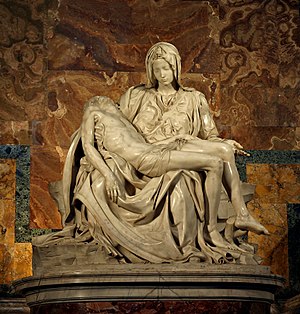
The second image is the Pietà, Michaelangelo’s to be specific. I keep thinking of this image in connection with the violent deaths of the children of Sandy Hook, Connecticut. It is likely that most of those parents were not able to cradle the bodies of their babies- stopped from doing so because of the cause of death and the condition of the bodies. Thus, I think of that image of Mary cradling the grown Jesus and remembering in her mind how she held him so many times before. I know those parents are remembering every moment they held their children. The other thoughts that are probably running through their minds are too hard for me to imagine. Not impossible to imagine, but too hard for me to consider and still let go of my own toddler and refuse to live in fear.
These images are not only interfering with my sleep, but they are marching into the forefront of my mind as I try to prepare for Christmas. One of the things that I wrestle with all the time, theologically and personally, is the connection between Christmas and Easter. More specifically, the connection between Christmas and Good Friday. I do not accept that Jesus was born, destined for the cross. I am not resigned to the idea that betrayal and crucifixion were inevitable. My faith is anchored, beyond the veil, in the trust that God is bigger than all things, was revealing that power before Jesus, and that the Messiah came into the world to be the clear sign of that power and a clear revelation of God’s expectations of creation.
Death, violent or otherwise, was never a part of God’s intentions for creation. With our scientific minds (and I love science), we understand a cycle of birth, decay, and death. Yet, our faith teaches that this is not preordained. We are not born to die. We are born for life. We are gifted with faith for abundant life. Somehow, in some way, the Christmas story is the heart of this truth- that God came into the world in an expected way, so that we might believe and live. When death tries to trump that truth, life wins. Love wins. Joseph does not stone Mary. The childhood illnesses that could have claimed Jesus’ life do not succeed. The devil’s temptations do not stand. The threats of detractors do not hold water. The cross and tomb are not the final word. Incarnation leads to not to crucifixion, but to resurrection. Life wins.
In this season of grieving, personal and public, for my friends, for people I do not know, for our world, I do believe that life wins. The story of God’s entrance into the world as one of us is not the beginning of that theme, but the powerful plot twist that no one expected and that surprises us still.
Every death, every stillbirth, every child, every 110-year-old, is a death that is too soon when it precedes God’s final renewal of heaven and earth. Yet these deaths are not the final word. That Word is God’s. The Word that has always been with God, indeed the Word that is God, is life. Life.
There comes a point where I don’t have anything else to say and so I have to stop talking. The grief is too real. The pain is too sharp. The explanations are weak or non-existent.
And still hope flickers.
And still we say, “Come, Lord Jesus.”
And still Life shines through the darkness. And the darkness cannot overcome it.

A Prayer for Suicide Prevention

On World Suicide Prevention Day: 

God of all space and time,
There is darkness that exists which feels impenetrable.
Darkness that seems to overcome all light.
Darkness which swallows the will to live,
The desire to go on,
The possibility of grace,
The existence of hope.
There is darkness in this world, in some hearts, in some minds…
Darkness which makes a person feel separated from You and from Love.
You have created a light which no darkness can overcome,
But sometimes the darkness seems too great.
On this day, be with those who feel surrounded by darkness…
Who are afraid to speak of their plans,
Who are pondering in their hearts what seems the only end to their pain.
Be with those who have reached out, but not been believed.
Be with people who are left behind, who have questions, who blame themselves.
Send your Spirit of consolation and hope into the world on this day,
Turn up the Light of Love- burnish and banish the darkness,
Strengthen all to speak, to listen, to hold, and to share.
Holy God, we ask for the kind of peace- in hearts, minds, and all creation- that can only come from you.
Gracious God, hear our prayer.
And in your mercy, answer us.

Cross-posted at RevGalPrayerPals

Mary Magdalene, Apostle to the Apostles

            This past spring, a mom from the preschool came back into the church after dropping off her child. In the corner of our parking lot, she had found a woman bent over and crying. Bringing her into the church office, the mother said that the woman was in pain from a broken tooth. The woman was obviously in a lot of pain and had sores on her face and her hands.
            She said that she had been in so much pain she wasn’t able to work. When we asked what she did, she looked at us and said, “I’m a working girl.” She waited for the judgment we didn’t have time to give because we were trying to figure out how to help her. The mom offered to drive her over to Safeway for some Orajel (pain killer) and some food. In the meantime, I made calls to find some help. I tried the Mary Magdalene center, but got no answer.
            I called LSSA and received the names of some dentists who might do low-cost or pro-bono work. However, we concluded that the entire situation might be better if we could get the woman to go to the emergency room and perhaps receive care, food, and contact with a social worker. I did not think we would end her professional career that day, but I hoped we might offer some light.
            Eventually, the mom came back to the church alone and very upset. After receiving the medication to make her tooth stop hurting, the woman wanted to go back to work. She was worried about the people who had her things and to whom she owed money. It was tough to console the mom who returned, who had been so hopeful that we would be able to save the woman. She cried to me, “How could she want to go back?”
            Because she does not know anything different right now, I said, but you helped her see a little something different today. And that will stay in her mind. It is hard to watch people who really want to help feel rejected and confused, but it happens in the work of reaching out to people in a broken world.
            I kept thinking about both those women this week when I was pondering Mary Magdalene in my heart- the bruised “working girl” and the very clean-cut preschool mom. As most of you know, I have a personal crusade to make it known far and wide that in the gospel accounts, Mary Magdalene is NOT (NOT!) a working girl (prostitute). In church history, she’s often been conflated with Mary of Bethany and the woman who anoints Jesus’ feet. While this did narrow down the number of characters in the Scripture, making it easier to keep everyone untangled, it gave Mary Magdalene a reputation she didn’t earn and threw into the shadows the one she did.
            In Luke 8, Mary (called Magdalene) has seven demons cast out of her by Jesus and then she, with several other women, begin to follow him as disciples. There is no mention of what the demons were. Presumably, like other demons encountered in Scripture, they are afflictions that prevent her functioning in society. They could be things like depression or anxiety, things we might recognize as psychological. They could be physical ailments- bleeding, epilepsy, screaming fits. They could be Satan trying to prevent her from becoming the instrument of God that she’s about to become.
            Nevertheless, she is freed from these demons and follows Jesus. Imagine what that was like for her. She had been invisible to society and now, suddenly, she was seen and known by the eyes of God in Jesus. She was restored, not only to wholeness, but to companionship, to community, to communion. Her body is whole because the body of Jesus, the body of God, came near and brought her consolation and healing.
            After her exorcism, we next see Mary Magdalene at the tomb. And she’s there in all the gospel accounts. She will not abandon the body that brought her own self back to life. Sometimes she’s with other women, sometimes she’s the first one there. I occasionally wonder if she ever left after Good Friday- after they laid him in the tomb. Maybe she never went home, but lingered in the shadows, in fitful waking and sleeping and sobbing, until Easter morning.
            This is the story that people need to know about Mary Magdalene. That she encountered the risen Christ and that she, she, carried the good news of resurrection to the other apostles- who were hiding in fear. That Jesus ate with prostitutes and tax collectors are facts that we can get from other stories and other characters. We do not need that good news from Mary Magdalene.
            What we need from her is the tower of faith that stood in grief by the tomb. The pillar of strength that recognized the face of her teacher, her rabbouni! The urging of the Spirit that hurried her feet over packed roads, singing, “He is risen! He is risen indeed!” The truth people need to hear about the story of Mary of  Magdala is not an exaggerated claim about what she might have been, but the bare facts of who she was- the Apostle to the Apostles, the first post- Easter evangelist, the foundation of the church because of the story she carried.
            If we elevate her too much, we risk her seeming too saintly, too out of reach. Yet, with Mary Magdalene, I do not think that will happen. When the other apostles seem uncertain or bombastic, unfaithful or confused, the eyes of the church turn to Mary Magdalene- who had real, physical experiences of healing, forgiveness, and hope.
             A working girl on Spenard doesn’t need to know, yet, that Jesus was a friend to prostitutes. She needs to know that the people who claim to follow Jesus are. People who are struggling, looking for hope, lingering because change does not seem possible need to know that the people who claim to follow Jesus are on their side. And in as much as we help anyone, we should never be doing it because it is what we think Jesus would want us to do. We should be doing because of what we know has been done for us through Jesus. And how did we come to know of this grace, this Easter hope, this work of forgiveness?
            Through the words of the first preacher, Mary Magdalene- who dared to follow Jesus, who dared to stay at the foot of the cross, who was prepared to honor the body of her Lord fallen- but met that body risen. Her story needs no embellishment or conflation, but it is powerful through the test of time. And if we dare to be like her, to trust in the healing that we have received and to seek the risen Christ, our story will stand as well.
            People want to know God’s history, and how will they hear it unless someone speaks it to them? People long to know that a light shines in the darkness and the darkness has not, cannot, will not overcome it.
            With Mary Magdalene, like Mary Magdalene, I tell you, “Christ is risen.”
He is risen indeed.
Amen. 

A Moveable Feast (Second Easter Service)

Mark 16:1-8
            Do you know why the date of Easter changes? It has to do with the cycle of the moon and the church calendar. Easter is the first Sunday after the first full moon after the vernal equinox. For the most part that means Easter falls somewhere between March 22 and April 25. Of course, and this is one of the best parts, the churches that use this date for Easter have what’s known as an “ecclesiastical calendar”, meaning the church occasionally has slightly different lunar dates than the astronomical calendar, kept by, well, astronomers. But for the most part, the formula has held true since 325 A.D. (for churches using the Gregorian calendar).
            Easter has earned a special name, since it does not have a fixed date. It is referred to as a moveable feast. Moveable feast. And all the dates that are coordinated with Easter’s date are also moveable feasts: Transfiguration, Ash Wednesday, Holy Week, Ascension, Pentecost, and Holy Trinity Sunday. All moveable feasts because their celebration is always a given number of days from Easter. (For example, Ash Wednesday is always the Wednesday before the sixth Sunday ahead of Easter.)
            Why am I talking so much about calendars? It’s actually not the calendar part I care about. It’s the name: moveable feast. It sounds like a picnic on the go, something that comes with us, that we can carry, that carries us. A moveable feast sounds like a banquet, a glorious table spread with all kinds of amazing foods. But when you’ve been really hungry or exhausted, a moveable feast is a shared crust of bread and the slug of liquid that makes you feel like you can keep going. Easter is both of these kinds of feasts.
            Mary Magdalene, Mary- the mother of James, and Salome were not in a feasting mood as they headed toward the tomb for that first sunrise service, a service of laying on of hands and prayer. They probably ate very little the day before, since it was the Sabbath and because they were probably still stunned from the crucifixion. At some point during that day, each of them quietly set aside ointments, cloths, spices in a little basket. Not a feast, just little odds and ends to tend Jesus’ body, to mend it, to commend it to God through washing and prayer. Tears pouring down their faces, they crept out of their houses at first light, before their families were awakened. Instructions were given to oldest daughters and daughters-in-law about the morning meal. And then the quiet slap of sandals on hardened dirt streets.
            The mother of James probably thought she was the only one, until Salome hurried to catch up to her. They both saw the figure of Mary Magdalene ahead of them and scurried to be by the side of that beloved apostle on the way. Still stunned by how abruptly it had all ended, the ringing of the hammer on the nails in their minds… the feel of Jesus’ body gone cold as they laid it in the tomb… the confusion as to where the disciples had gone… was it true about Judas… how will they move the stone. It was all too much. These women were not ready for a feast of any kind.
            But, ready or not, they arrived to hear of resurrection. They come with one task in mind, if they can accomplish it. That task proves worthless, all their planning, their grieved collection of materials. The task they came to do is moot and they are given another task, but it’s too much to absorb. We want to imagine them leaping in excitement and leaving the symbols of sorrow in their wake, a trail of spices, cloths, and broken perfume bottles leading to the empty tomb.
            They are stunned and afraid. What if this is a trick? What if Jesus’ body has been stolen? Do they go tell the apostles, who will doubtless come to the same conclusion and, possibly, accuse the women of knowing what happened? What do they do? Only minutes before they had a momentous task, honoring the body of Jesus. Now they have a different, monumental task… becoming the body of Christ. Carrying words as a balm, hope as the fragrance, faith as a spice. They nibble at the edges of this feast, easing the hunger of their grief.
            Why does the angel tell them to go his disciples and Peter? Is it because Peter is special, is elevated, or because Peter denied Jesus and it’s important to express plainly that he is still in the fold. He is still a sheep of Jesus’ own flock, a lamb of God’s own fold, a sinner who has now been redeemed. The messenger is clarifying for the women that there are no side tables at God’s feast, no people who wait for scraps in the kitchen, no one who will be turned away from the banquet of resurrection. Even Peter has a place at the Easter feast, when it reaches him through the witness of the women.
            That’s the thing about a moveable feast. It comes whether you’re ready or not. Whether you are in your own extended Lenten season, wrestling with crucifixion, lying in the tomb- unable to rise, the moveable feast comes. A moveable feast offers us hope until we can taste joy. A moveable feast offers expectation until we can drink from faith. A moveable feast fills us with courage until we are stuffed from encounter.
             
            Easter is the moveable feast that brings us the food for our souls when we need it and when we can receive it. Sometimes in April. Sometimes in September. Sometimes in December and January. The news of resurrection comes to us in our deep hunger and edges us into fullness, into renewal, into strength.
            Who would believe the story of three women who say they saw a heavenly messenger at the empty tomb of an itinerant preacher from the backwater of Nazareth? Who will listen to that story? Who will take their word?
            People who are hungry for forgiveness. People who thirst to believe God is still acting in the world. People who believe in the possibility of redemption. People who crave justice and peace. People smell the scent of equality and long to have their fill. People who have tasted of true freedom and want to revel in it again. That’s who will listen to their story. That’s who will believe them. People who are hungry for the feast of Easter. Hungry for it on the first Sunday after the first full moon after the vernal equinox. Hungry for it on the day after. And after that. And after that.
            Do you dare to believe that this is a moveable feast for you? That is for the person beside you and beside them? That this feast has moved from an empty tomb to Galilee to Judea to all of Palestine to the entire world? Do we dare to speak up and say this is a feast to which everyone is invited?
            Our hymns and our words mainly speak of Easter joy, but that first Easter (and maybe every one since) wasn’t about joy. It was about hope. The hope in the truth of the resurrection. The hope in the triumph of the God of life over the power of death. The hope of grace and forgiveness and the family of God. You may not always feel like feasting on first Sunday after the first full moon after the vernal equinox, but we can believe the feast is there.
The moveable feast of resurrection, of Easter is bound human limitations, then or now.
When is resurrection?
When is Easter?
Thanks be to God that the moveable feast of Easter is always right when the world needs it to be.
Amen. 

Ready or Not, Resurrection (Early Easter Service)

Mark 16:1-8
            What happens when you’re not in the mood for Easter? What if the smells are too strong, the colors too bright, the alleluias too loud? We are all a little used to people talking about not feeling the Christmas spirit, but who doesn’t want new life… who doesn’t thrill at the sound of the trumpet… who isn’t ready for resurrection?
            Sometimes our own Lent goes on beyond forty days. Sometimes, in our own lives, our own passion story, our own feeling of crucifixion… exposure and abandonment… is not over in a week or three days. Sometimes resurrection comes, but we are not ready to get up. We are not ready to tell the story.
            The women heading toward the tomb for that first sunrise service, a service of laying on of hands and prayer… those women were not prepared for resurrection. They may have spent the whole day before, the Sabbath day, longing to be at the tomb. Maybe it was too far too walk for the Sabbath or perhaps the work was not permitted. So each of them quietly set aside ointments, cloths, spices in a little basket. Tears pouring down their faces, they crept out of their houses at first light, before their families were awakened. Instructions were given to oldest daughters and daughters-in-law about the morning meal. And then the quiet slap of sandals on hardened dirt streets.
            The mother of James probably thought she was the only one, until Salome hurried to catch up to her. They both saw the figure of Mary Magdalene ahead of them and scurried to be by the side of that beloved apostle on the way. Still stunned by how abruptly it had all ended, the ringing of the hammer on the nails in their minds… the feel of Jesus’ body gone cold as they laid it in the tomb… the confusion as to where the disciples had gone… was it true about Judas… how will they move the stone. It was all too much. These women were not ready for resurrection.
            But, ready or not, they arrived to hear of resurrection. They come with one task in mind, if they can accomplish it. That task proves worthless, all their planning, their grieved collection of materials. The task they came to do is moot and they are given another task, but it’s too much to absorb. We want to imagine them leaping in excitement and leaving the symbols of sorrow in their wake, a trail of spices, cloths, and broken perfume bottles leading to the empty tomb.
            They are stunned and afraid. What if this is a trick? What if Jesus’ body has been stolen? Do they go tell the apostles, who will doubtless come to the same conclusion and, possibly, accuse the women of knowing what happened? What do they do? Only minutes before they had a momentous task, honoring the body of Jesus. Now they have a different, monumental task… becoming the body of Christ. Carrying words as a balm, hope as the fragrance, faith as a spice.
            Did they go to the disciples right away? Did they make a plan to meet later in the week and talk about what happened? Did they return to their respective houses, already moving with morning activity, and slip back into their routines, knowing things were different, but unsure how to put that difference into words?
            Knowing things are different, but unsure how to put that difference into words is the Easter story for most of us. Sometimes we receive the news of resurrection, but we’re trying to understand how it applies to us. How it makes us free. How it brings us restoration, hope, and faith.
            Stories of grief have to be repeated until understanding comes, until relief arrives, until a light shines in the darkness. The women probably met again… maybe that afternoon, maybe a few days later. They had to get ready for resurrection. Because it happened when they were unprepared. It happens in the same way to us.
            Whatever our state of belief, of grief, of celebration, Christ’s resurrection comes to us, comes to all creation, whether we are ready or not. And here’s the good news about resurrection… we cannot stop it, we cannot slow its work, we will not stem its grace or welcome. Ready or not, we have been swept into the stream of Easter hope. The Spirit keeps us floating until we are ready to swim.
           
Easter is here, but resurrection is still coming, still washing over us, still be absorbed in us so that, like the women at the tomb, we too may take on the task of telling the story and becoming the body of Christ.
Amen.