Category Archives: grief

Born that We No More May Die

I’m having trouble sleeping these days. Part of it is the late stage of being pregnant, but the other part is the pictures that keep running through my mind.
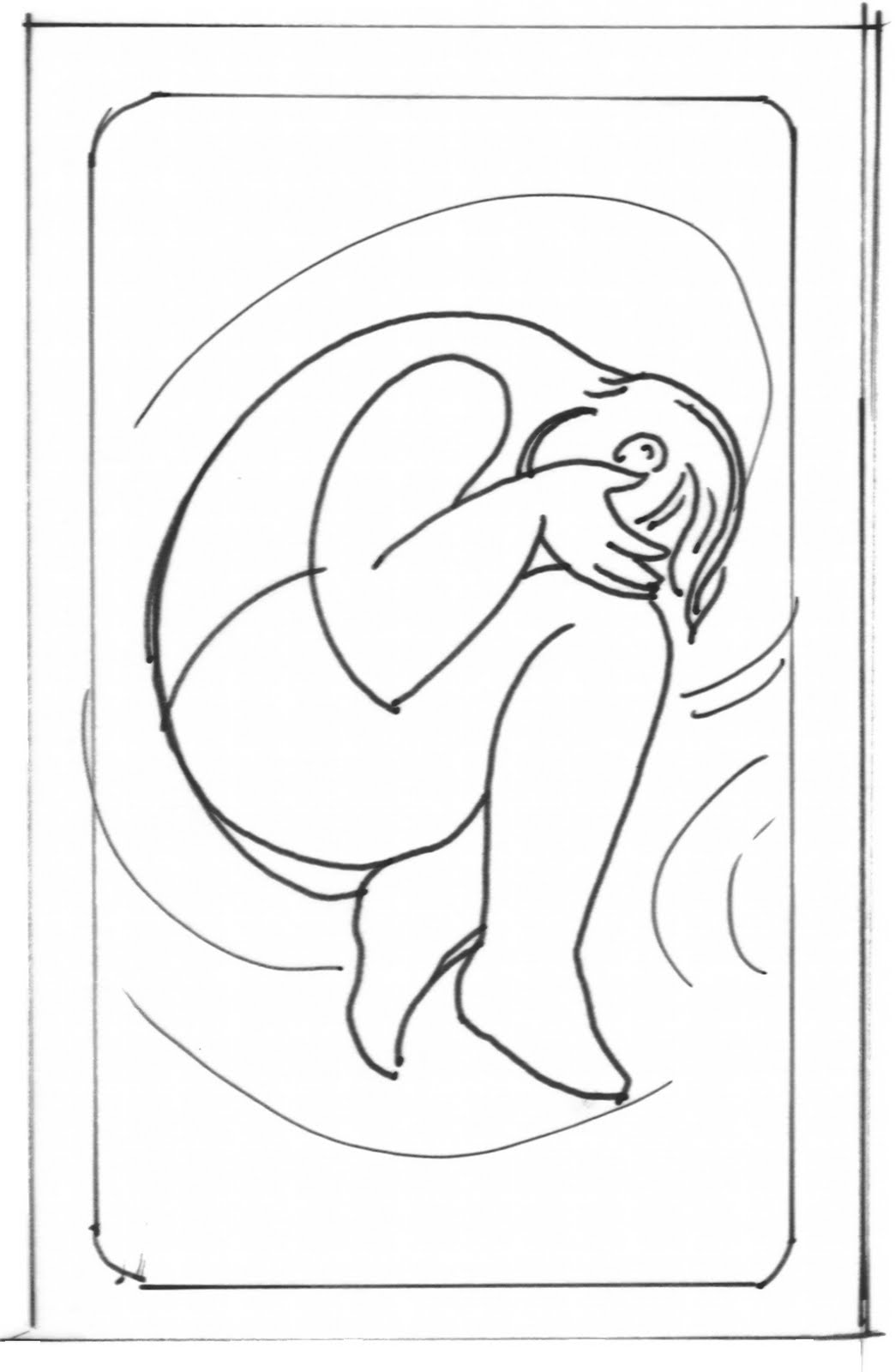
Not a picture of my friend
The first is picture of a friend of mine, her significant other and their baby, a baby who was stillborn last week, just before full-term. In the picture, she is clutching the baby, wrapped up, close to her chest and her SO is leaned over them both, his head touching hers and his eyes on the baby. It is a nativity to behold. 
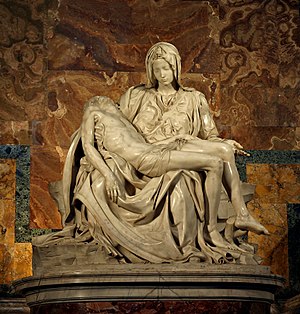
The second image is the Pietà, Michaelangelo’s to be specific. I keep thinking of this image in connection with the violent deaths of the children of Sandy Hook, Connecticut. It is likely that most of those parents were not able to cradle the bodies of their babies- stopped from doing so because of the cause of death and the condition of the bodies. Thus, I think of that image of Mary cradling the grown Jesus and remembering in her mind how she held him so many times before. I know those parents are remembering every moment they held their children. The other thoughts that are probably running through their minds are too hard for me to imagine. Not impossible to imagine, but too hard for me to consider and still let go of my own toddler and refuse to live in fear.
These images are not only interfering with my sleep, but they are marching into the forefront of my mind as I try to prepare for Christmas. One of the things that I wrestle with all the time, theologically and personally, is the connection between Christmas and Easter. More specifically, the connection between Christmas and Good Friday. I do not accept that Jesus was born, destined for the cross. I am not resigned to the idea that betrayal and crucifixion were inevitable. My faith is anchored, beyond the veil, in the trust that God is bigger than all things, was revealing that power before Jesus, and that the Messiah came into the world to be the clear sign of that power and a clear revelation of God’s expectations of creation.
Death, violent or otherwise, was never a part of God’s intentions for creation. With our scientific minds (and I love science), we understand a cycle of birth, decay, and death. Yet, our faith teaches that this is not preordained. We are not born to die. We are born for life. We are gifted with faith for abundant life. Somehow, in some way, the Christmas story is the heart of this truth- that God came into the world in an expected way, so that we might believe and live. When death tries to trump that truth, life wins. Love wins. Joseph does not stone Mary. The childhood illnesses that could have claimed Jesus’ life do not succeed. The devil’s temptations do not stand. The threats of detractors do not hold water. The cross and tomb are not the final word. Incarnation leads to not to crucifixion, but to resurrection. Life wins.
In this season of grieving, personal and public, for my friends, for people I do not know, for our world, I do believe that life wins. The story of God’s entrance into the world as one of us is not the beginning of that theme, but the powerful plot twist that no one expected and that surprises us still.
Every death, every stillbirth, every child, every 110-year-old, is a death that is too soon when it precedes God’s final renewal of heaven and earth. Yet these deaths are not the final word. That Word is God’s. The Word that has always been with God, indeed the Word that is God, is life. Life.
There comes a point where I don’t have anything else to say and so I have to stop talking. The grief is too real. The pain is too sharp. The explanations are weak or non-existent.
And still hope flickers.
And still we say, “Come, Lord Jesus.”
And still Life shines through the darkness. And the darkness cannot overcome it.

Mary Magdalene: Witness to the Crucifixion

 Our Lutheran Community Good Friday service for this year was themed: “Witness to the Crucifixion”. As the story was read, we heard from Judas, Pilate’s wife, Barrabas, Mary (Jesus’ mother), the Roman centurion, and Mary Magdalene. It was unbelievably powerful stuff to hear the words of the characters pour forth with emotion: anger, grief, glee, resentment, curiosity, expectation, loss. 

I spoke as Mary Magdalene and I was the last witness, lingering at the tomb. It’s been an emotional week, but in those moments when I was thinking as the Magdalen- I thought of having such deep love for Jesus and knowing nothing of resurrection, of believing all on which I had built my hopes was gone. I was devastated and the following words are what I spoke, through tears and some sobs. At one point, I tore my wrap- rending my garments- until I laid down in the dried palms from Palm Sunday- slain in grief. Ah, Mary Magdalene- a hero to me on Good Friday and in the days to come… 

           I am the last one at the tomb. I cannot leave. There are two Roman guards, but they don’t see me. They could- I’m not hiding. But they don’t want to.
            The other disciples have left. The other women have left. Only me- hovering around, unseen and unacknowledged. There are the visible disciples- Peter, Judas, Andrew, James, and John. And then there are the invisible disciples… the ones the visible disciples and others tried not to see.
            Do you know what it’s like to feel invisible? To know that you are in a crowd of people who do not know you and, therefore, do not see you. Worse can you imagine the feeling of forced invisibility? When you know people can see you, know who you are, but choose to ignore you… choose to “not” see you… decide that you do not merit acknowledgement… you are invisible.
            And if you are invisible to people, you may as well be invisible to God. This is how I felt, constantly, before Jesus… before he cast out the demons that plagued me. When that pain and torment fled, I felt my body re-appear. My eyes came back… because Jesus met them and then so did other people. My hands came back… because Jesus would pass food to me and take food from me… and then so did other people. My feet came back… reappeared because I could walk next to someone, with the others who followed Jesus. My voice made noise again… words that were heard, received, responded to… by Jesus and by others. My face came back- as it was touched and kissed by Jesus.
            Slowly my body reappeared and I was no longer missing, no longer unseen. I was made visible by Love, by living words of hope… I was made visible by Jesus and when Jesus saw you, everyone around him saw you. More, though, and this is the part that’s hard to explain… when Jesus saw you, it felt like God saw you. Saw right through you and not only were you visible, but you were bare and exposed, not naked… just visible and… known…
            Now… now… Now the eyes that saw me, saw everything are closed. The hands that touched and cradled and fed are pierced and still. The feet that led and walked beside and nudged… the feet are still. They stopped bleeding before we got to the tomb.  The mouth, the mouth that poured forth words of love… words like no other… words of welcome… of hope… of God with us right now… that mouth is silent. Silent! The warm lips that offered a kiss of peace are cold and still. His mouth! Rabbouni!
(Clothing torn here)
            How can the world exist without him? How can this be the same place that beheld and held that body?
Who will see me? Who will see us?
Who will speak of hope and of God’s love?
Who will feed the people that no one sees?
Who will heal?
Who will stay awake in the night with those who cannot sleep?
            How can we live without Jesus, without his body among us? How can we go on without him? How will I live without the One that made me visible? Does my body exist without the Body that made me whole?
            I cannot leave this tomb. How can I abandon his body? As long as I stay here, at this tomb, he is not alone. If I stay, he is still visible, even behind the stone. I know he’s there. If I stay, Jesus’ body is still real. And as long as his body is real, so is mine. 

Ten Years Later

In the summer of 2002, I worked in New York City through Lutheran Disaster Response (then Lutheran Disaster Relief) leading day camps in congregations that had experienced serious loss on 9/11/01. Not just the loss of the understanding of the world as they knew it, but loss of life.

I worked with children who had parents who came home and parents who didn’t. I talked to spouses who waited and were reunited. And some who weren’t.

All week I tried to put some order into my feelings. I never tell these stories. They are too raw, too hard, too stark. Two weeks after the camps ended, I moved to Nome, Alaska. I didn’t process when I could have and trying to do so now is like trying to rework plaster that has set.

So as I turned over the hard shape of this experience this week, I wrote this in my journal:

Anyway, I want to write a blog post about my memories, but I am not sure what to say or how to talk about the end of my memories. That I had to shut some of them away so that I could move forward. There are memories that are paralyzing in their truth. We have to dim them, fade their edges, fondly tuck them away and allow a burnished fire to peek through the keyhole of our memory trunk. We cannot live with their undimmed fullness in our lives. It is too much. This is not to say that we would ever forget. We just are incapable of remembering so intensely that it hurts. Constantly.

In order to live, in order to do service to life and to the memory of the dead, we go on and we put on foot in front of the other. We are not disrespectful. We have not forgotten. As long as we breathe, we remember, but we also want to live.

In living, we allow those who have died, both too soon and in their time, to continue in us. Through DNA and stories, through impressions and legacies, through gifts and habits.

That is all I have to say. 

Amen. 

Book Review: The Long Goodbye

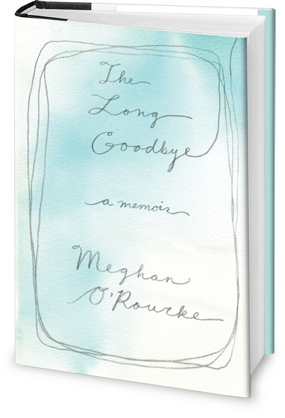
This month’s book review is of The Long Goodbye: A Memoir by Megan O’Rourke. Amazon’s description of the book is here. Information on O’Rourke is here. Yes, this is another book by a person writing about a universal experience from their point-of-view. I find that while experiences are corporate, journeys are individual. In The Long Goodbye, in particular, we meet a young woman (early 30s) who wants to believe that her thinking isn’t magical, that the right combination of intellectual pursuits, physical stretching and emotional openness will bring her mother back to life. It doesn’t. Grab a Kleenex or two and a comforting beverage. O’Rourke’s grief landscape is austere and harsh, with emotion-whipped rocky outcroppings and deep caverns of despair.
I came to this book somewhat reluctantly. I read O’Rourke’s initial forays into discussing her grief on Slate magazine and, doing my own grieving at the time, I found them inaccessible and, seemingly, self-indulgent. I could not connect with her pain and found no anchor in her writing to process my own.
Some of that work was incorporated into the book, but I did not recognize it in the longer form. I also found the book to have a depth and breadth I didn’t remember from the articles. I suspect that, for me, this was a better time to read this work and, perhaps, for O’Rourke a bit of time made the difference as well.
O’Rourke is a poet and her writing is full of metaphor that is heart-wrenching and inspiring in its attempts to describe the realities of watching one’s mother die and living in a world without the vessel that brought you into being. She writes, “I also felt that if I told the story of her death, I could understand it better, make sense of it- perhaps even change it. What had happened still seemed implausible: A person was present your entire life, and then one day she disappeared and never came back. It resisted belief. Even when a death is foreseen, I was surprised to find, it still feels sudden- an instant that could have gone differently.” (p. 139)  
The first half of the book is O’Rourke’s memory of her mother’s diagnosis of colon cancer and her death. The second half is O’Rourke’s grief and attempt to gain a handle on her emotional reaction, which both challenges and baffles her. As she feels the role-reversal as a child caring for a parent’s intimate needs, O’Rourke notes that she needs a mother, her mother, to help her process the fact that her mother is dying. She wants the final weeks and days to be full of meaning and tinged with significance. Instead, she finds herself watching television with her mother, talking about Christmas decorations, feeling frustrated. “Time doesn’t obey our commands. You cannot make it holy just because it is disappearing.” (81)
O’Rourke comes from a family that has little connection to a religious community. Her mother has, in part, turned away from the Roman Catholicism of her youth and so O’Rourke describes in detail the family’s love of reading, their outdoor summers, their love of one another. These are the objects of her devotion, the things that define her faith. The depth of these experiences is vast, but their breadth cannot quite cover the shock of the loss of her mother. O’Rourke notes that her brothers and her father all grieve differently and differently still from her. They all have the same injury, she says, but each manifests different symptoms (104).
In the months after her mother’s death, O’Rourke finds herself skeptical about rituals and yet longing for markers to note her emotions, the truth of her experience and inexplicability of what has happened and what lies beyond. She writes of her envy of her Jewish friends who have the Kaddish, of the words and prayers that give one’s mourning some shape and recognition. She writes, “I longed for rituals not only to indicate I was still in mourning but also to have a nonpsychological way of commemorating and expressing my loss. Without ritual, the only way to share a loss was to talk about it… At times, though, this sharing felt invasive. I did not want to be pitied. In those moments, I wanted a way to show my grief rather than tell it.” (157)
There is truth in what she says about our culture’s inability to deal with death. In our fear of doing the wrong thing, we often do nothing. All but the most religious among us have no desire to think on the inevitability of death. All but those of the strongest faith cling to the life of which we know, still having a tiny amount of uncertainty about the life to come in which we believe. Furthermore, in this day and age, death is as prevalent as ever, but in our Western culture it remains distant for many people until it is actually personal. We can avoid wakes and funerals for a long time until death comes to our nearest and dearest.
I often hear people talk about the fact that they long for a way for people to understand that they are dealing with a death without them having to say so. Mourning clothes, wreathes, pins… all these things served as societal markers to remind us to be gentle with grieving persons. Now, in our rawness, we are expected to yield in traffic, to be pushed in the grocery store, to pay our bills on time, yet all the while wanting to scream, “But my BELOVED DIED. I cannot see them. They are not here. I don’t want to do this. NONE OF THIS MATTERS.”
One of the metaphors that captured O’Rourke’s imagination was from C.S. Lewis’s A Grief Observed (among the best, if not THE best, books about dealing with personal grief). Lewis writes that a loss, the death of a beloved, is a like an amputation. “If the blood doesn’t stop gushing soon after the operation, you will die. To survive means, by definition, that the blood has stopped. But the amputation is still there.” (279)
One of the things that I frequently encounter is people who are surprised at how long the intensity of grief goes on. If we use the image of amputation, it becomes somewhat easier to comprehend that a grieving person is learning a new way to live. You may remain in the same neighborhood, but your address has changed. You may now reside in the “House of Deceased Spouse” or “My Mother is Dead” or “My Child No Longer Lives”. The new residence resembles your old one, but the layout is different enough to trip you up a little bit for much longer than you expect. The familiar look seems sinister because you can’t comprehend how anything could remain the same or, worse, move forward when you desperately long for markers of the change and for a pause in the world.
I have not even begun to convey the beauty of much of the writing in this book. O’Rourke’s book is worth reading if you’re interested in reading another perspective on dealing with grief. It is beautifully written. It is not the kind of book that you give someone (most people) immediately following a death. They need space and the rawness of this book may not be helpful in the immediate aftermath following a death. I think O’Rourke also stirs up good discussion points for people of faith. What are our mourning markers beyond the funeral or memorial service? How do we help our friends and neighbors at anniversaries and in bleak nights? What kind of words can we use to discuss grief and our fears? What light of truth can we bring to the world about tenderness to the grieving? What can we offer to those who are tangentially connected to faith communities?
Fine print: I purchased a copy of this book for review. All thoughts are my own. I have not been compensated in any way for anything said in this review. All quotations come from:
O’Rourke, Meghan. The Long Goodbye: A Memoir. Riverhead Books, New York, NY. 2011.

Originally posted on 5/23/11 at RevGalBlogPals.