Category Archives: Books

Tension

I have been re-reading parts of Victoria Sweet’s God’s Hotel for two months now. I’ve maxed the renewal time of my local library and finally decided to buy my own copy. Though the book is about the last almshouse in the United States, located in San Francisco, it is about more than healthcare. I strongly recommend this book.

Sweet writes about the spiritual and emotional dimensions of caring for the chronically ill. She studies the work of Hildegard of Bingen and considers how the tools of ancient medicine apply to practice today. In a sermon here, I talked about Sweet’s understanding of the difference between anima and spiritus.

She also details the tension between different factions in the hospital, between doctors and nurses, administration and city government, willing patients and resistant patients. Though many of the decisions for the future of the hospital are necessary, but lamentable- Sweet reflects on the writing of Florence Nightingale regarding the necessity of tension in medicine.

Nightingale wrote:

“A patient is much better cared for in an institution where there is the perpetual rub between doctors and nurses and nuns; between students, matrons, governors, treasurers, and casual visitors, between secular and spiritual authorities… than in a hospital under the best governed order in existence.” (Nightingale, Notes on Hospitals, 184).

Sweet interprets: 

“But then I remembered what Florence Nightingale had written about the struggle between medicine and nursing and administration. That struggle was irresolvable and should not be resolved, she said, because it was in the patients’ best interest. If medicine ever won control of the hospital, too much would be practiced on the patient; if administration, too little; if nursing, medical progress would be curtailed in the interest of the spiritual and emotional care of the patient.” (Sweet, God’s Hotel, 327). 


Part of the reason I’ve kept this book for so long is for the passages like this. I turn this over and over in my mind and I wonder about the necessary tension in the church. What is the critical balance between laity, clergy/rostered leaders, and administration/judicatories? How do we balance the interests of all and how do we discern to whom God is speaking and who thinks the sound of their voice is God speaking? 
There is also the balance between history, tradition, and spontaneity, between styles of music, prayer, and preaching, between interpretation, meditation, and contemplation. 
Some of the truly difficult work of the church is learning to live with the tensions, when to give and who should give, and how to move forward. And in all this, we must also remember not to let the work of the church interfere with the work of the Lord. 

Sweet, Victoria. God’s Hotel: A Doctor, A Hospital, and a Pilgrimage to the Heart of Medicine. Riverhead Books, New York. 2012. p. 327, 372
Books of 2011

In 2011, I read 155 new books. Here are my top 10 recommendations from what I read, in no particular order:

1. True Grit I read this book prior to seeing the movie and I’m glad I did. Matty is the center of the book and her nerve, strength, and determination makes her better than a classic heroine. The biblical references, the smart writing, and the sharp dialogue moved this book into one of my all-time favorites. Each time I re-read it, I find something new.

2. God’s Harvard: A Christian College on a Mission to Save America This is a history of Patrick Henry College and some of its recent attendees and alumni. The details of this story reveal the sense of call certain people feel, through their faith, into public service. That lifestyle then impresses itself into the kind of lawmakers Patrick Henry students support and that they wish to be. The details of this book, the personal stories, will remain with me for a long time to come.

3. Bossypants This was as funny and inspiring as I had hoped. I think many people expected this to be hilarious and were disappointed, but I found Fey’s dry observations and witty reflections about her life and work very enjoyable.

4. Unbroken I had not read very many stories about World War 2’s Pacific theater. This story of an American former Olympian turned POW in Japan was riveting, terrifying, and inspiring. It’s not just his survival that moves the reader, but the details of how people can treat other people.

5. The Friends We Keep This book made me think about God’s relationship with non-human animals in a new and different way. I reviewed it here.

6. Major Pettigrew’s Last Stand I don’t often read character-driven novels, but the gentle truth of this novel swept over me. It is about an elderly English widower as he comes to grip with the changing face and faces of his village and in his life.

7. The Blue Bear This is a provocative story of friendship and loss. Some recent Alaskan history may not be interesting to all readers, but the story of Lynn Schooler and Michio Hoshino is transformative in its ebbs and flows. 4 out of 5 tissues.

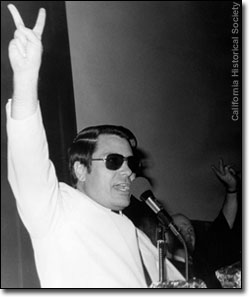
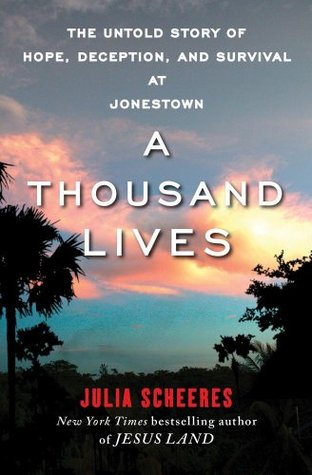
8. A Thousand Lives This book about Jonestown gave me the shivers. Jim Jones’s powers of manipulation were terrifying, even years removed. I reviewed this book here.

9. A Canticle for Leibowitz I know that I missed a lot reading this through the first couple times. Written in the 1960s, it projects into an apocalyptic future where the remainders of the 20th century- like grocery notes, blueprints, and letters- become the artifacts of religion.

10. Those Who Save Us The last book I completed this year was a novel novel. Told about a mother and a daughter, it follows a German woman who is in the Resistance, but also maintains a relationship with an SS officer so that she and her daughter can have food. Revelatory about the struggles and moral dilemmas people face in a time of war, the books also mulled over how lifelong grudges, community outsiders, and our ability to understand the actions of our ancestors and predecessors.

Book Review: A Thousand Lives


When I heard Julia Scheeres had a new book coming out, I jumped on it. I read  her memoir, Jesus Landseveral years ago and found it fascinating. I was even more eager to read the new book: A Thousand Lives: The Untold Story of Hope, Deception and Survival at Jonestown. I was not disappointed. Scheeres was working on a novel about a charismatic preacher from Indiana, when she looked up Jim Jones and then discovered the released, but untapped FBI archives, audio files and documents, of Jonestown.
In her introduction, Scheeres writes, “I believe that true stories are more powerful, in a meaningful, existential way, than made-up ones. Learning about other people’s lives somehow puts one’s own life into sharper relief… You won’t find the word cult in this book, unless I’m directly citing a source that uses the word… The word cult only discourages intellectual curiosity and empathy. As one survivor told me, nobody joins a cult.”
As I read this book, that last sentence came to me over and over: “Nobody joins a cult.” The book opens with a brief description of people arriving in Guyana to go to Jonestown. It quickly flashes back, then, to the early life of Jim Jones and his attraction to the church. He was drawn to the power and attention given to the man behind the pulpit and the physical aspects of devotion in Pentecostalism (speaking in tongues, slain the Spirit, dancing and prophesying). He began preaching in his late teens and proclaimed a message of God’s call to racial integration.
It was Jones’s push toward racial harmony that drew people to his church. In the book, many people recount how the Peoples Temple Full Gospel Church was their first encounter with black and white people worshipping together. The success of Jones’s ministry and its focus on neighborhood service drew much attention and many accolades. Many people were willing to give freely to such a mission and that initial dedication is what many of his followers would recall when they later thought Jones was straying from his message and, possibly, his sanity.
Jones later proclaims himself as “the one they call God” by denouncing the violence and segregation of the Bible (he repeatedly points to its “support” of slavery). When he moves his congregation from Indiana to California, everything becomes about loyalty to him. Even in the Indianapolis congregation, Jones presses people to lie on the floor one Sunday to test their trust in and faithfulness to him. This is one of the first signs of his maniacal behavior and the demands he will place on his followers. Even as evidence of Jones’s deceptions and pressures became evident, Scheeres writes:
True believers had an answer for everything. They excused Jones’s peculiarities with the maxim, the end justifies the means. The beatings, the swats- it was all showmanship, they said. The disciplines didn’t really hurt. Jones’s antics- like stomping on a Bible or [swearing during a sermon] – were all theater. He likes to get a rise out of people to force them to pay attention. Those members who were offended by his increasingly bizarre and cruel behavior kept quiet, and in their silence, seemed to condone it. (p. 88f)
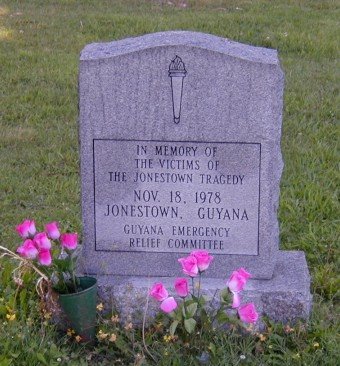
Eventually as people move to Guyana, the book becomes like a horror movie. I could barely contain myself from screaming, “Don’t get on the plane! Escape through the jungle! Don’t eat the sandwich! Don’t drink the Kool-aid!” That last line is what most people know, if anything, about Jonestown- that nearly 1,000 people died there in November 1978 because they followed their leader, who was obviously crazy. People who are old enough to remember the story may recall a few other details- the number of children killed, the assassination of Congressman Leo Ryan, the pictures of the dead spread out in a field.
“Don’t drink the Kool-aid” is hardly the complete legacy of Jonestown, idealized to many who died there as a socialist paradise where everyone contributed and received according to their abilities and needs. Even as Jones obviously unraveled, people alternately agreed with him because they believed in the truth he had preached at one time or because they want him to leave them alone. Jones held two suicide “drills” in before the actual incident. People were routinely harassed into voting to “support revolutionary suicide” so many times that it ceased to become shocking. You know the ending to this book, but you don’t know the story.
One thing that I kept turning over in my mind as I read this book was the knowledge of the cults we have seen and that continue to exist since Jonestown. A thousand people died, manipulated to death by a drugged madman convinced he was God. And since we’ve had Branch Davidians, Heaven’s Gate, and several others (names intentionally omitted). My inability to complete the previous sentence in the way I want brings me to my point in recommending this book: just because people are clean and tidy or are technically protected under the First Amendment doesn’t mean they are not in a cult. No one joins a cult, but almost no one is able to voluntarily leave one. If you’re like me at all, names and pictures are coming to your mind of current organizations, supposedly religious in nature, that manipulate, mentally torture and extort those who join.
When we dismiss the people of Jonestown as weak-willed, we are ignoring the truth that history repeats itself and the only way to stop the cycle is to speak the truth. Loudly. Frequently. In all times and places (or close to it). Many people are still  surprised to be encouraged (or allowed) to ask questions in church and to examine the truth in which we claim to believe. Our ability to question and even doubt does not undo what is true, especially about God. The more questions are encouraged, the less anyone person can claim to have all the answers. That can be unnerving, but it can also be empowering. And it’s the only way to prevent the success of cult mind control. 
A Thousand Lives gave me the shivers… because of what’s in the past and what could easily be in the future. Probably not a book for a women’s circle, but possibly good for your book group, for fans of true crime or contemporary history, or anyone who wonders how things like this could (and do) happen.
Scheeres, Julia. A Thousand Lives: The Untold Story of Hope, Deception and Survival at Jonestown. Free Press; New York, NY. October 2011
Reviewed copy purchased by reviewer. 
A version of this review first posted at RevGalBlogPals on 10/24/11. 

Book Review: The Long Goodbye

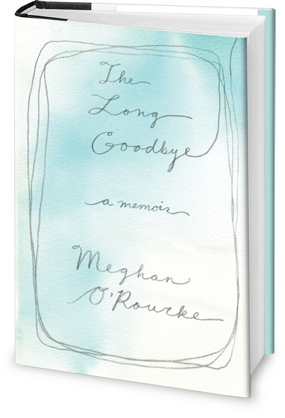
This month’s book review is of The Long Goodbye: A Memoir by Megan O’Rourke. Amazon’s description of the book is here. Information on O’Rourke is here. Yes, this is another book by a person writing about a universal experience from their point-of-view. I find that while experiences are corporate, journeys are individual. In The Long Goodbye, in particular, we meet a young woman (early 30s) who wants to believe that her thinking isn’t magical, that the right combination of intellectual pursuits, physical stretching and emotional openness will bring her mother back to life. It doesn’t. Grab a Kleenex or two and a comforting beverage. O’Rourke’s grief landscape is austere and harsh, with emotion-whipped rocky outcroppings and deep caverns of despair.
I came to this book somewhat reluctantly. I read O’Rourke’s initial forays into discussing her grief on Slate magazine and, doing my own grieving at the time, I found them inaccessible and, seemingly, self-indulgent. I could not connect with her pain and found no anchor in her writing to process my own.
Some of that work was incorporated into the book, but I did not recognize it in the longer form. I also found the book to have a depth and breadth I didn’t remember from the articles. I suspect that, for me, this was a better time to read this work and, perhaps, for O’Rourke a bit of time made the difference as well.
O’Rourke is a poet and her writing is full of metaphor that is heart-wrenching and inspiring in its attempts to describe the realities of watching one’s mother die and living in a world without the vessel that brought you into being. She writes, “I also felt that if I told the story of her death, I could understand it better, make sense of it- perhaps even change it. What had happened still seemed implausible: A person was present your entire life, and then one day she disappeared and never came back. It resisted belief. Even when a death is foreseen, I was surprised to find, it still feels sudden- an instant that could have gone differently.” (p. 139)  
The first half of the book is O’Rourke’s memory of her mother’s diagnosis of colon cancer and her death. The second half is O’Rourke’s grief and attempt to gain a handle on her emotional reaction, which both challenges and baffles her. As she feels the role-reversal as a child caring for a parent’s intimate needs, O’Rourke notes that she needs a mother, her mother, to help her process the fact that her mother is dying. She wants the final weeks and days to be full of meaning and tinged with significance. Instead, she finds herself watching television with her mother, talking about Christmas decorations, feeling frustrated. “Time doesn’t obey our commands. You cannot make it holy just because it is disappearing.” (81)
O’Rourke comes from a family that has little connection to a religious community. Her mother has, in part, turned away from the Roman Catholicism of her youth and so O’Rourke describes in detail the family’s love of reading, their outdoor summers, their love of one another. These are the objects of her devotion, the things that define her faith. The depth of these experiences is vast, but their breadth cannot quite cover the shock of the loss of her mother. O’Rourke notes that her brothers and her father all grieve differently and differently still from her. They all have the same injury, she says, but each manifests different symptoms (104).
In the months after her mother’s death, O’Rourke finds herself skeptical about rituals and yet longing for markers to note her emotions, the truth of her experience and inexplicability of what has happened and what lies beyond. She writes of her envy of her Jewish friends who have the Kaddish, of the words and prayers that give one’s mourning some shape and recognition. She writes, “I longed for rituals not only to indicate I was still in mourning but also to have a nonpsychological way of commemorating and expressing my loss. Without ritual, the only way to share a loss was to talk about it… At times, though, this sharing felt invasive. I did not want to be pitied. In those moments, I wanted a way to show my grief rather than tell it.” (157)
There is truth in what she says about our culture’s inability to deal with death. In our fear of doing the wrong thing, we often do nothing. All but the most religious among us have no desire to think on the inevitability of death. All but those of the strongest faith cling to the life of which we know, still having a tiny amount of uncertainty about the life to come in which we believe. Furthermore, in this day and age, death is as prevalent as ever, but in our Western culture it remains distant for many people until it is actually personal. We can avoid wakes and funerals for a long time until death comes to our nearest and dearest.
I often hear people talk about the fact that they long for a way for people to understand that they are dealing with a death without them having to say so. Mourning clothes, wreathes, pins… all these things served as societal markers to remind us to be gentle with grieving persons. Now, in our rawness, we are expected to yield in traffic, to be pushed in the grocery store, to pay our bills on time, yet all the while wanting to scream, “But my BELOVED DIED. I cannot see them. They are not here. I don’t want to do this. NONE OF THIS MATTERS.”
One of the metaphors that captured O’Rourke’s imagination was from C.S. Lewis’s A Grief Observed (among the best, if not THE best, books about dealing with personal grief). Lewis writes that a loss, the death of a beloved, is a like an amputation. “If the blood doesn’t stop gushing soon after the operation, you will die. To survive means, by definition, that the blood has stopped. But the amputation is still there.” (279)
One of the things that I frequently encounter is people who are surprised at how long the intensity of grief goes on. If we use the image of amputation, it becomes somewhat easier to comprehend that a grieving person is learning a new way to live. You may remain in the same neighborhood, but your address has changed. You may now reside in the “House of Deceased Spouse” or “My Mother is Dead” or “My Child No Longer Lives”. The new residence resembles your old one, but the layout is different enough to trip you up a little bit for much longer than you expect. The familiar look seems sinister because you can’t comprehend how anything could remain the same or, worse, move forward when you desperately long for markers of the change and for a pause in the world.
I have not even begun to convey the beauty of much of the writing in this book. O’Rourke’s book is worth reading if you’re interested in reading another perspective on dealing with grief. It is beautifully written. It is not the kind of book that you give someone (most people) immediately following a death. They need space and the rawness of this book may not be helpful in the immediate aftermath following a death. I think O’Rourke also stirs up good discussion points for people of faith. What are our mourning markers beyond the funeral or memorial service? How do we help our friends and neighbors at anniversaries and in bleak nights? What kind of words can we use to discuss grief and our fears? What light of truth can we bring to the world about tenderness to the grieving? What can we offer to those who are tangentially connected to faith communities?
Fine print: I purchased a copy of this book for review. All thoughts are my own. I have not been compensated in any way for anything said in this review. All quotations come from:
O’Rourke, Meghan. The Long Goodbye: A Memoir. Riverhead Books, New York, NY. 2011.

Originally posted on 5/23/11 at RevGalBlogPals.

Two Favorite Authors

I needed a NaBloPoMo prompt today: Who’s your favorite author, why and what work of  his or hers would you recommend reading first?

I’m going to give two. These authors are currently my favorite, non-theological writers. When I enjoy someone’s writing style, I tend to ravenously consume all their works and monitor their website for upcoming works. The two authors I’ll discuss, in brief, today are Tony Horwitz and Bill Bryson. (Links are to their respective websites.)

I was first introduced to Tony Horwitz through Confederates in the Attic (Pantheon, 1998). Intrigued by the grimacing Confederate on the front, I began reading the story of how the author dug into his own love of Civil War history to find out why the War Between the States continues to have skirmishes (so to speak). Horwitz’s style might best be classified somewhere between travel writing and historical expose´. I have pressed Confederates on every reading friend I have. I think it’s well-written and carefully exposes the nuances of why people participate in Civil War reenactments, frequently as Confederates, the continuing struggles around the Confederate flag (the battle flag of the Army of Northern Virginia) and the haunting feeling present on many battlefields from the War of Northern Aggression.

Horwitz has a great writing voice and style, humorous and smooth, conveying lots of information without being overly didactic. I’ve read everything he’s got out and I definitely recommend starting with Confederates. Blue Latitudes, about Captain Cook, is also very enjoyable.

Bill Bryson was my bridge over the Swamp Homesickness when I lived, briefly, in England. Because he’s lived there for a significant portion of his life, he is slightly more prominent in bookstore placement in England than here in his home country. His self-deprecating style of travel writing (through Europe, Australia, US, Appalachian Trail) is engaging and warm. I do own all his books, including the tiny one on Africa and the ones for writers. I’ll admit that I still haven’t made it all the way through A Short History Nearly Everything. And I’m about halfway through At Home: A Short History of Private Life, his most recent work detailing the history of home layouts and basic household items. It’s great, but a little dense.

I’ve mentioned A Walk in the Woods and In a Sunburned Country more than once in this blog. Respectively, these details travels through and history of the Appalachian Trail and Australia. I think they’re the best. I also love The Lost Continent: Travels in Small-town America  and Neither Here nor There: Travels in Europe. He also wrote an autobiography about his childhood in America in the 50s: The Life and Times of the Thunderbolt Kid.

With BB, you’ll either like him or you won’t. His voice and style are fairly constant, particularly with the travel books.

At this stage in my life, I enjoy learning while I’m reading, but I don’t like to work in my pleasure reading. Both these writers provide a lot of information and make that information accessible and approachable through their writing voices.